Grandma Odessa Picked Up the Brush. Licorice Knew Exactly What Time It Was.
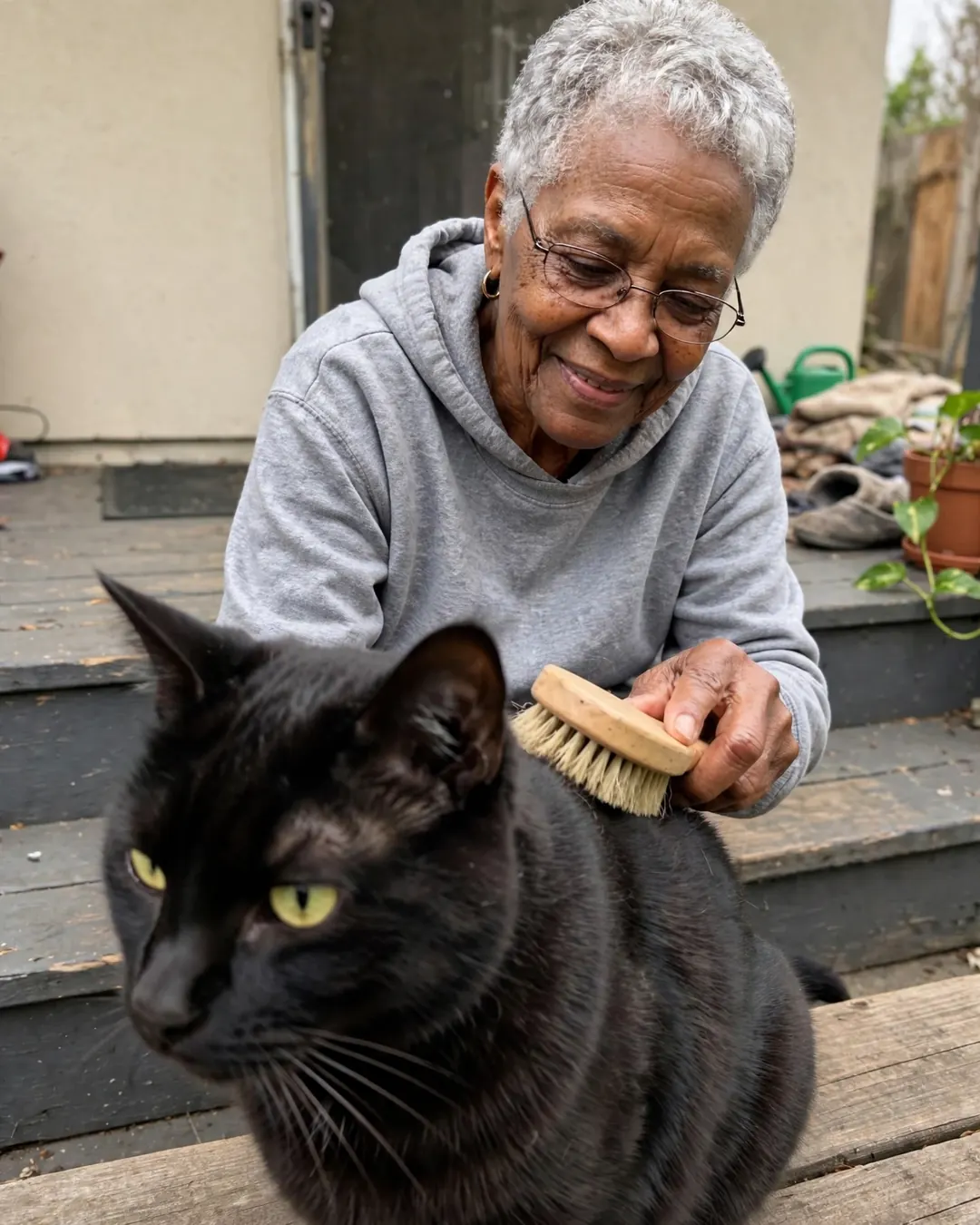
Grooming time on the back steps is a slow, unhurried ritual. Grandma Odessa sits on the gray-painted wood in a soft hoodie, glasses on, smiling as she runs a wooden-handled bristle brush down Licorice's back. The black cat sits squarely in the foreground, eyes narrowed to contented golden slits, his whole body leaning just slightly into each stroke. His coat is starting to gleam. Behind them, a green watering can, a pair of shoes, a rumpled blanket, and a pot of trailing ivy sit beside the door, all bathed in gray, overcast light.
Regular brushing does a lot more than make a cat look sharp. It removes loose fur, which can mean fewer hairballs and less hair on the furniture, and it spreads the skin's natural oils through the coat for a healthy shine. Short-haired cats often do well with weekly brushing, while long-haired cats usually need it more often to prevent mats. Brushing is also a chance to notice lumps, scabs, fleas, or changes in the skin early, and anything unusual is worth mentioning to your vet. Keep sessions short and pleasant, especially at first, and stop before your cat gets fidgety.
For older cats who can't twist and groom quite as easily as they used to, a little help from a gentle human hand is especially welcome. Licorice seems to agree completely. Ten quiet minutes on the steps, and both of them look like they've had a spa day.