Grandpa Walter Left the Back Door Open at Feeding Time. The Hens Walked Right In.
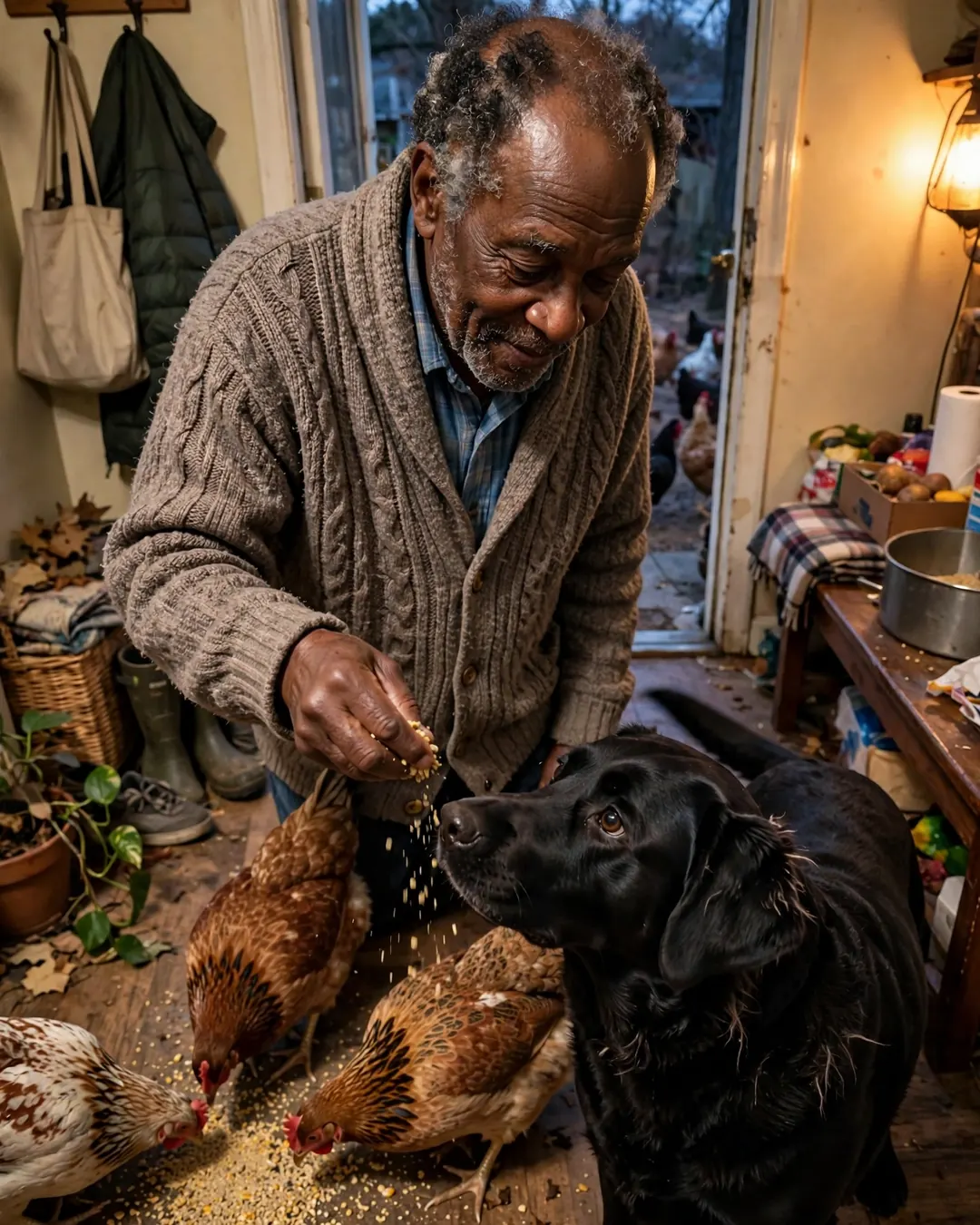
The back door is wide open, a few more chickens are strolling in from the yard, and the mudroom has become the coziest henhouse in town. Coats and a canvas tote hang from hooks, a lantern glows on the wall, and a wooden bench holds a pot, paper towels, and a crate of odds and ends. Grandpa Walter, in a gray-brown cable cardigan over a plaid shirt, sprinkles a stream of golden grain onto the floorboards with a soft smile. Two russet hens peck busily at his feet, and a speckled white one waits her turn. Duke sits right in the middle of it all, black nose lowered, watching the falling feed with calm, solemn curiosity.
Labrador Retrievers were bred to work closely with hunters, finding and retrieving birds, so interest in feathered things runs deep in the breed. At the same time, Labs are generally known for their gentle, friendly temperament, and many learn to live calmly alongside backyard flocks with proper training. The key is a slow, supervised introduction: start with the dog leashed and at a distance, reward relaxed behavior, and gradually let the dog get closer as long as everyone stays calm. Even a trustworthy dog should not be left alone with chickens, since a sudden flap can spark instinct. Teaching a strong leave it and settle helps a lot.
Duke has clearly been through the training, and he wears his good manners well. The hens peck, Walter smiles, and one patient Lab keeps careful watch over the whole cheerful scene.