Grandma Started Swaying by the Kitchen Counter, and Pip Joined In His Own Way
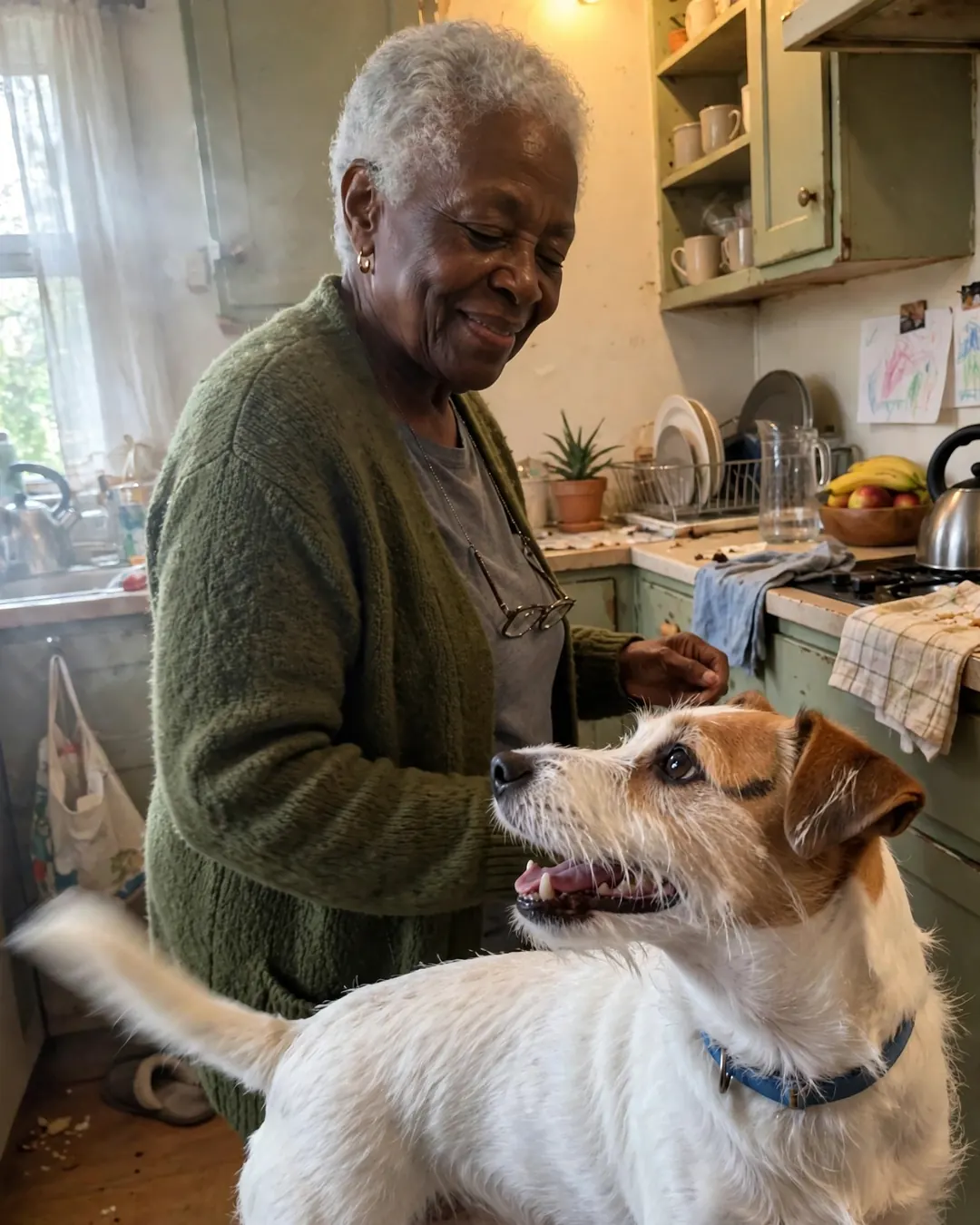
Sage-green cabinets, open shelves stacked with white mugs, a kettle on the stove, and a bowl of bananas on the counter: Odessa's kitchen is warm and lived in, and right now it is full of good cheer. She sways a little as she stands by the counter in her moss-green cardigan, glasses tucked into the neckline, laughing down at Pip. He has pressed right up against her, mouth open in a big panting grin, blue collar bright against his white coat, tail swinging high behind him like a happy metronome. One of her hands rests lightly on his head as if they are sharing a private joke.
A wagging tail usually signals excitement and interest, but it is worth reading the whole dog. A loose, wide wag with a relaxed body and soft eyes, like Pip's here, generally means a happy, friendly mood. A stiff, high, fast flick of the tail paired with a tense body can mean something quite different, such as arousal or uncertainty. Ears, mouth, posture, and the situation all add context. Learning these signals helps people of every age enjoy dogs safely, and it is a fun thing to teach grandchildren, too: watch the whole dog, not just the tail.
Whatever song is playing in Odessa's head, Pip is clearly on the same beat. There is nothing on the stove yet, but the kitchen already feels full. Some of the best moments at home are just two friends being glad to see each other.