Grandma Doris Asked Her Weimaraner for a Paw. He Answered Like a Gentleman.
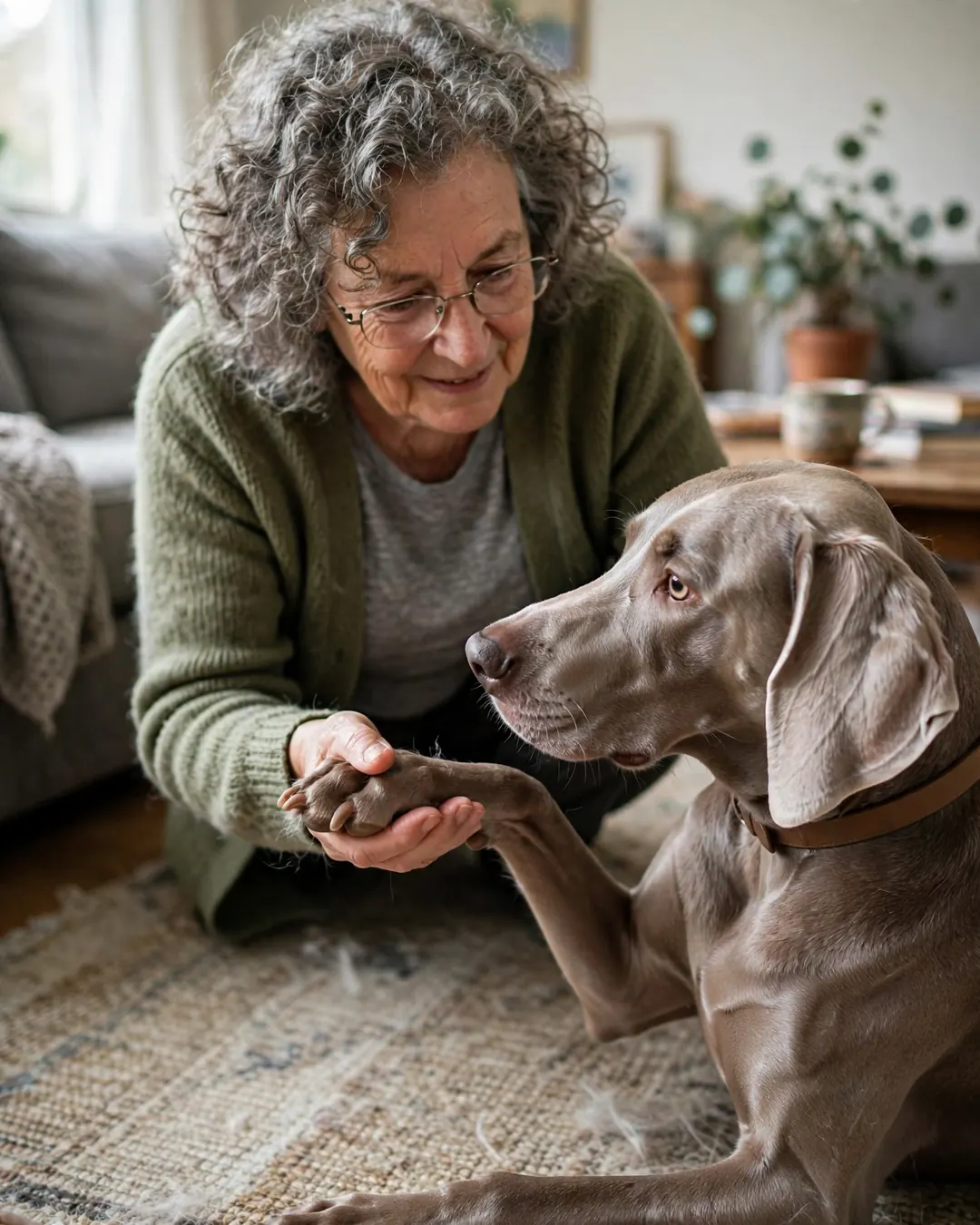
Down on the woven living room rug, Grandma Doris has one silver paw resting in her palm and a patient smile on her face. Her Weimaraner, Pewter, holds the pose like a gentleman at a dance, amber eyes fixed on her and ears hanging soft and loose. She wears a moss green cardigan and her reading glasses have slid a little down her nose. Behind them, a grey sofa, a knitted throw and a mug on the side table suggest this lesson has been going on for a while, with plenty of breaks.
Weimaraners are bright, people-focused dogs that were originally bred to work closely with hunters, and that history shows in how much they love a job. Short, upbeat training sessions suit them best. Ask for the behavior, reward it right away with a small treat or warm praise, and stop while the dog is still having fun. Because they are sensitive and attached to their people, harsh corrections tend to backfire, while calm repetition builds confidence. A simple trick like shake also gives an energetic dog a bit of mental exercise on days when the weather keeps everyone indoors.
Teaching tricks can be good for the person, too. Getting down on the floor, counting treats and celebrating small wins keeps the mind busy and the afternoon cheerful. For a dog like Pewter, the real reward may be those few minutes of undivided attention from his favorite human.
Judging by that steady paw and those hopeful eyes, he has this one figured out. The next lesson might be about who gets the last cookie.