Everyone Said Cats Don't Do Tricks. Grandma Hazel Sat Down on the Rug Anyway.
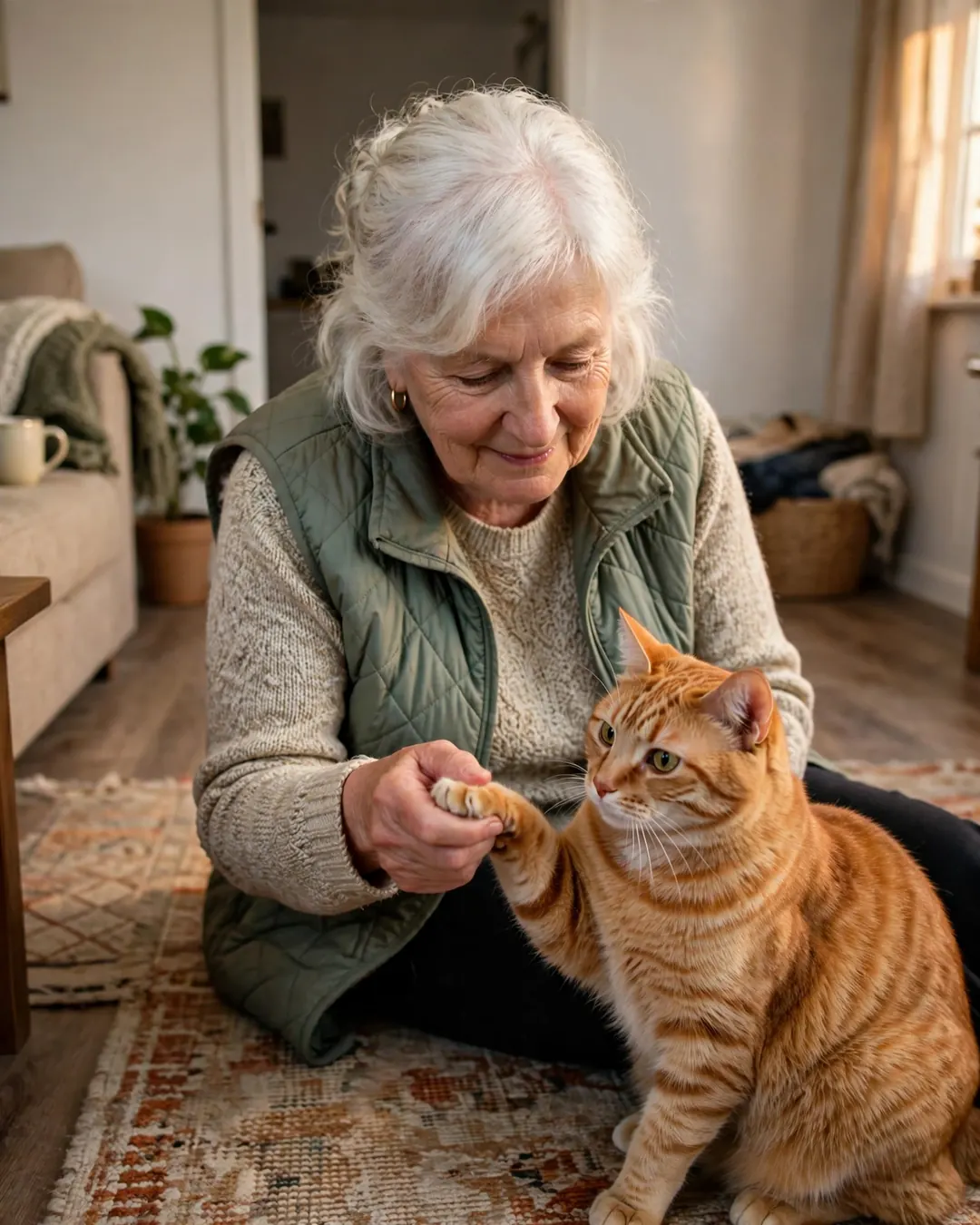
On a patterned rug in a sunlit living room, Grandma Hazel is holding a small orange paw between her fingers, and she looks delighted. She sits cross-legged in a sage quilted vest over an oatmeal sweater, her white hair softly pinned back. Marmalade sits upright in front of her, one paw lifted into her hand, golden eyes turned toward her face with surprising cooperation. A beige sofa with a draped throw, a mug on the side table, a potted plant and a woven basket fill the cozy room around them.
Cats can absolutely learn tricks, even if they are famous for doing things on their own terms. The key is short sessions, a quiet setting and a reward the cat truly values, such as a tiny piece of a favorite treat. Many trainers use a clicker or a consistent word to mark the exact moment the cat does the right thing, then follow it with the reward. Gently tapping the paw and rewarding any lift is a common way to start teaching shake. Training like this provides mental stimulation, which helps indoor cats stay engaged and can strengthen the bond between cat and owner. Patience is everything.
Working with a pet on a simple trick is also a fun way for older adults to stay active and focused. A small success, like a paw placed in a hand, can brighten the whole day.
Marmalade may only do this when he feels like it, but today he is feeling generous. Hazel has the proof right in her palm.