The Walk Ran Long, and Rusty Decided He Was Finished Walking
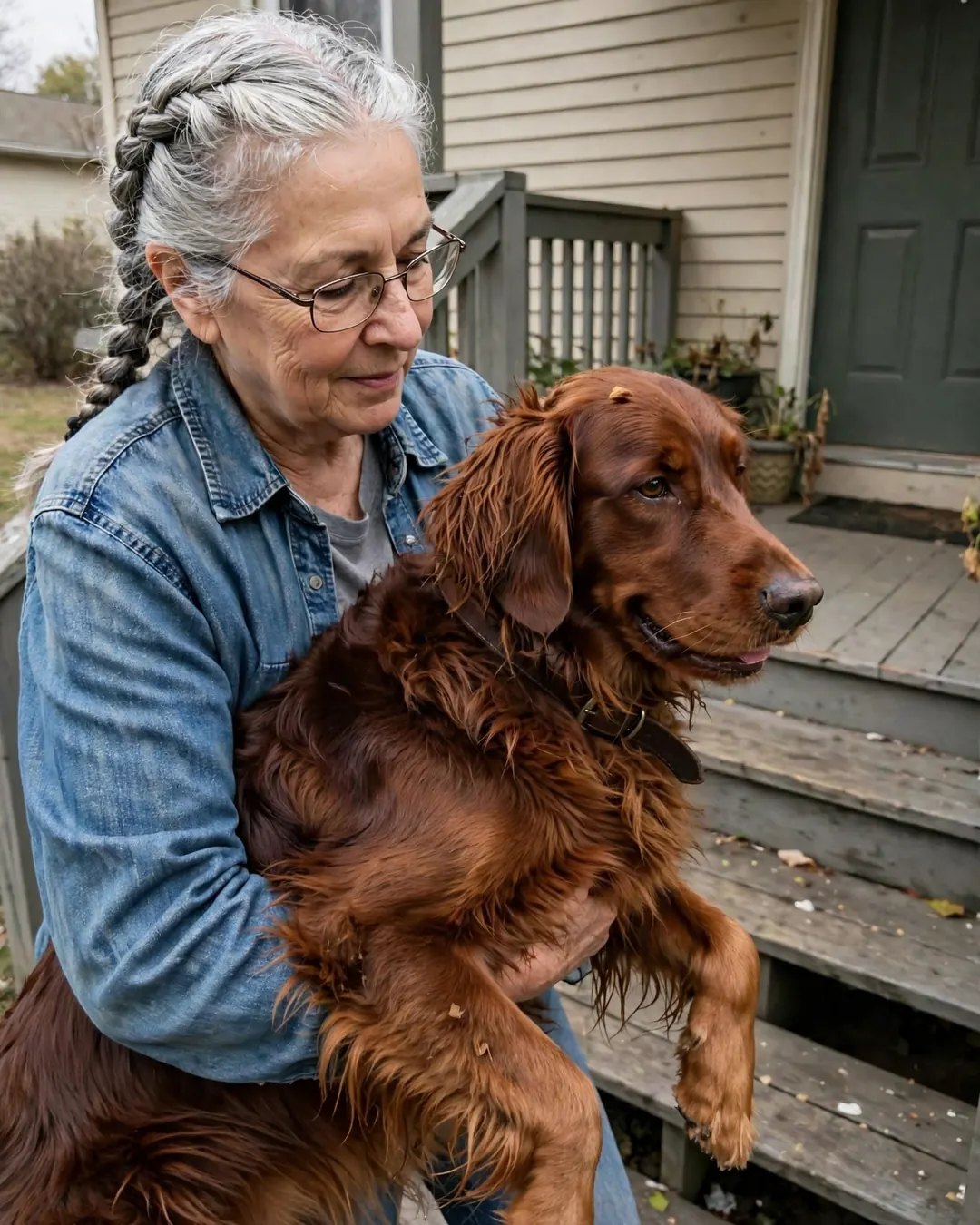
Some walks run longer than planned, and this was one of them. Ruth has scooped up Rusty in both arms and is hauling all of him up the gray wooden porch steps toward the front door, her glasses slipping down her nose and her braid swinging over her shoulder. His coat is damp and sprinkled with bits of dry leaf, his back legs dangle, and his front paws hang over her arm like a sleepy toddler's. He does not look sorry about any of it. Head up, eyes half closed, he wears the satisfied expression of a dog who has decided his walking is done for the day and the rest is someone else's job.
Lifting a large dog takes care, both for the person and the pet. A safer technique is to bend at the knees rather than the waist, support the chest with one arm and the hindquarters with the other, and keep the dog close to your body. For many people, especially older adults or anyone with back trouble, a sturdy ramp, a lifting harness with a handle, or a helper is a much better option. If a dog suddenly seems unwilling or unable to climb stairs, or tires much faster than usual on walks, it may be a sign of joint pain or another issue worth checking. Talk to your vet about what is behind the change.
Today, though, it looks like plain happy exhaustion. Rusty will be on his bed by the door within minutes, and Ruth will earn herself a cup of tea and a well-deserved sit-down.