Grandpa Earl Just Learned How to Take a Selfie. Skye Made Sure She Was In It.
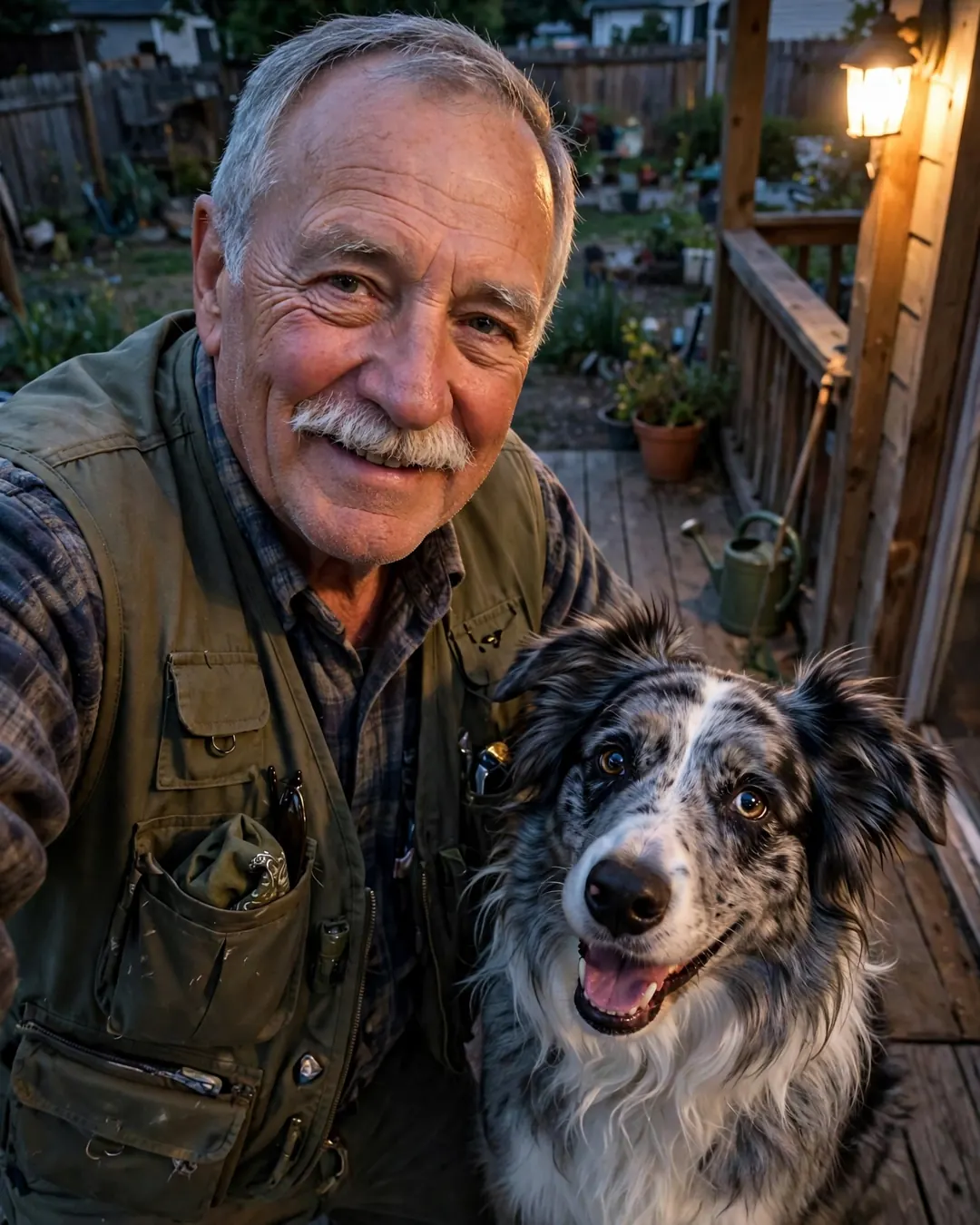
The porch lantern has just flickered on, and the garden beyond the railing is fading into blue evening shadow. Earl has decided this is the moment to try a selfie, holding the phone out at arm's length with the uncertain confidence of a man who learned this skill last week. He leans in with a crinkle-eyed grin, his weathered face close to the lens, fishing vest pockets stuffed as usual. Skye has wedged herself in right beside his shoulder, mouth open in a wide, happy pant, one blue eye and one brown catching the light. A watering can and potted herbs sit along the porch boards behind them, the day's gardening done.
Eyes of two different colors, called heterochromia, show up fairly often in merle dogs, including Border Collies and Australian Shepherds. The merle pattern can dilute pigment in the eyes as well as the coat, producing blue, partly blue, or mismatched eyes. In most dogs it is simply a striking look with no effect on health. Responsible breeders avoid pairing two merle dogs together, because that combination can raise the risk of hearing and vision problems in puppies. If you ever notice a sudden change in your dog's eye color or cloudiness, though, that is worth a visit to your vet, since it can signal an underlying issue.
Whether the selfie turns out in focus is anyone's guess. Earl may have a thumb in the corner of the frame. But two happy faces squeezed together on a summer evening is the kind of picture that ends up on the fridge regardless.