Opal Was Carving Something Small. Butterscotch Was Watching Every Curl Fall.
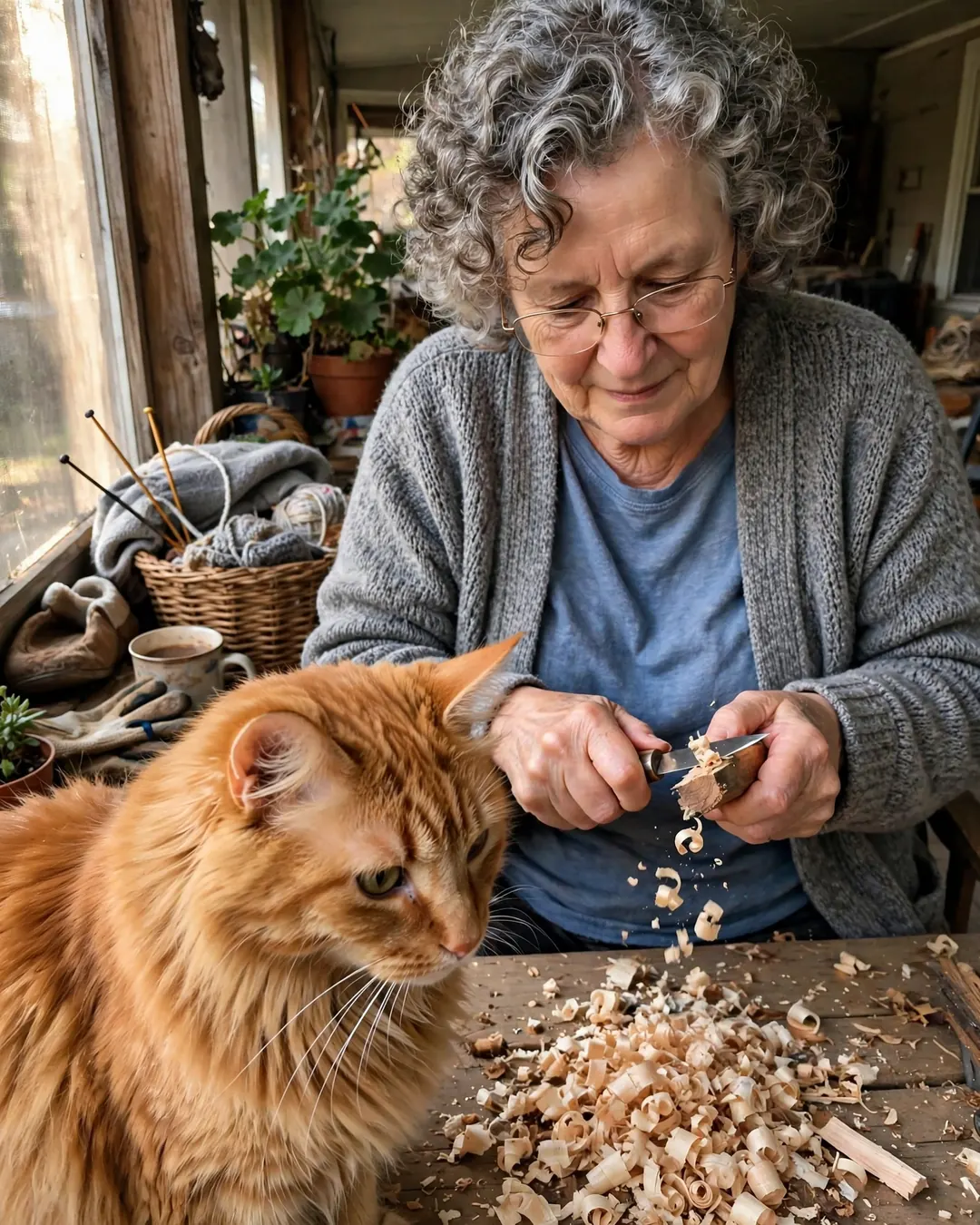
Pale curls of wood pile up on the old worktable as Opal carefully draws her small knife along a block of wood, shaping it bit by bit. She sits by the sunny porch windows in a grey cardigan and blue tee, her curly grey hair glowing in the light and her reading glasses low on her nose. Butterscotch has pressed in close to the table's edge, his big orange head tilted down toward the growing mound of shavings. His whiskers are forward and his eyes are narrowed in deep fascination, as if each curl that drops might suddenly come to life. A basket of yarn with knitting needles, a mug, and leafy plants crowd the windowsill.
Hobbies that keep the hands busy, like whittling, knitting, or model building, are a lovely way to spend time, and cats often love to supervise. A few safety habits help. Carving knives are extremely sharp, so it's best to keep a cat off the work surface while you're cutting, and to store blades away as soon as you're done. Plain wood shavings are mostly harmless to sniff, but chewing splinters can hurt a cat's mouth, and stained, painted, or treated wood should be kept well away. Sweeping up shavings after each session also keeps them out of food bowls and fur.
Butterscotch may not know what Opal is carving, but he's clearly the most dedicated member of the workshop. Perhaps the finished piece will be a little wooden cat.