Opal Inspected Every Apple on the Tree. Butterscotch Took the Ground Floor.
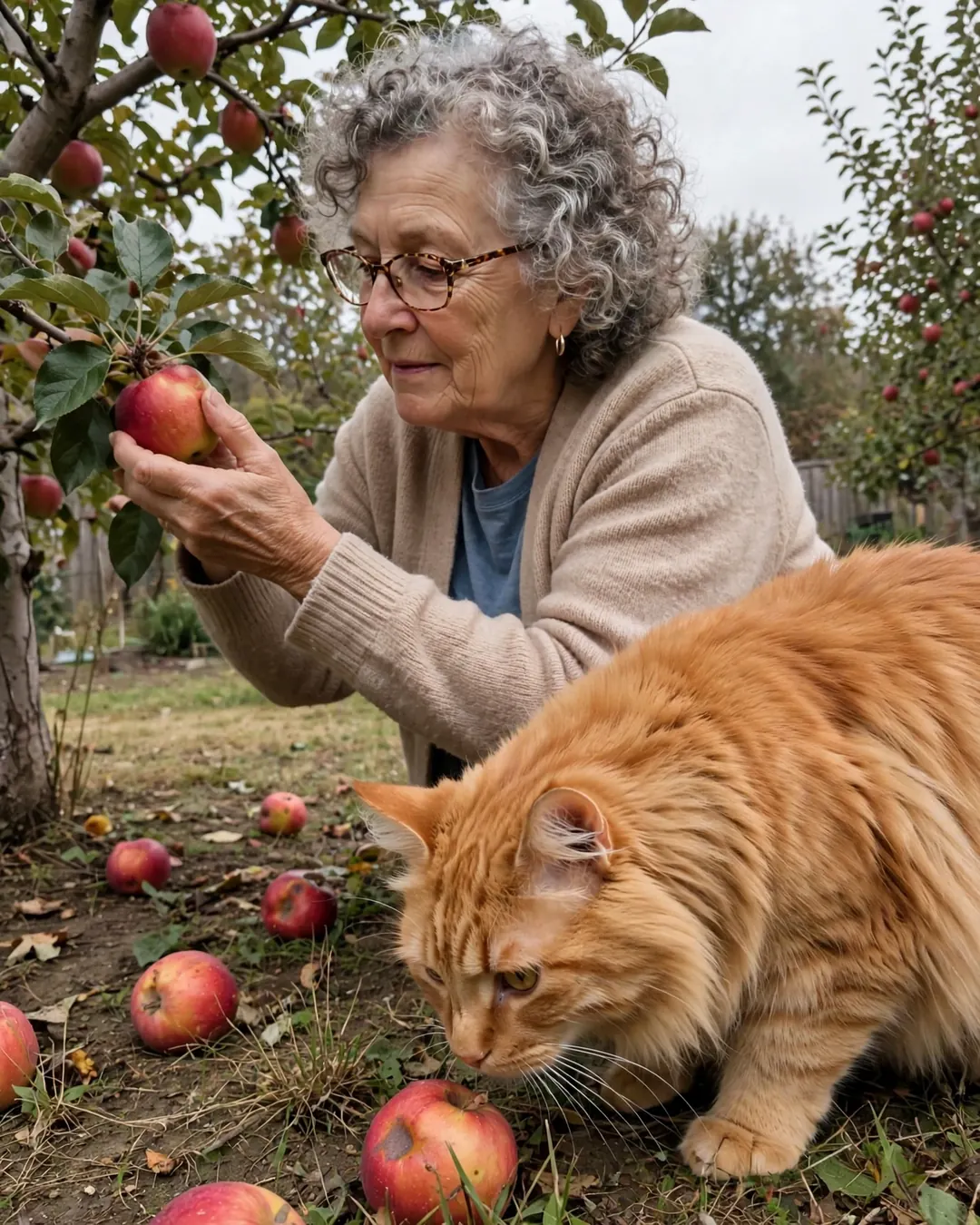
Under a soft grey autumn sky, the orchard branches hang heavy with red apples, and Opal is examining one closely before she picks it, turning it gently in her fingers. She's wearing an oatmeal cardigan over a blue tee, her grey curls tousled and her glasses on. Down on the ground, Butterscotch has found the windfalls. The big orange longhair crouches low among the fallen apples, his fluffy face pressed close to a shiny red one as he gives it a thorough, serious sniff. His long tail sweeps the grass behind him, and more apples lie scattered across the dirt beneath the trees.
A cat's nose is far more sensitive than ours, and new outdoor smells like ripe fruit, damp earth, and fallen leaves can be endlessly interesting. Most cats won't actually eat apples, since they can't taste sweetness the way people can. If a cat does nibble, the flesh isn't considered toxic in small amounts, but the seeds, stems, and leaves contain compounds that can be harmful. Rotting or fermenting fruit can also upset a cat's stomach. When cats explore an orchard, a harness and watchful eye help keep them safe, and a check for burrs or ticks in a long coat afterward is a good idea.
Opal will fill her basket with the best apples on the tree, and Butterscotch will inspect every one that's already fallen. Between them, it's a very thorough harvest.