Grandma Ruth Unrolled Her Yoga Mat. Cotton Showed Up Ready to Teach.
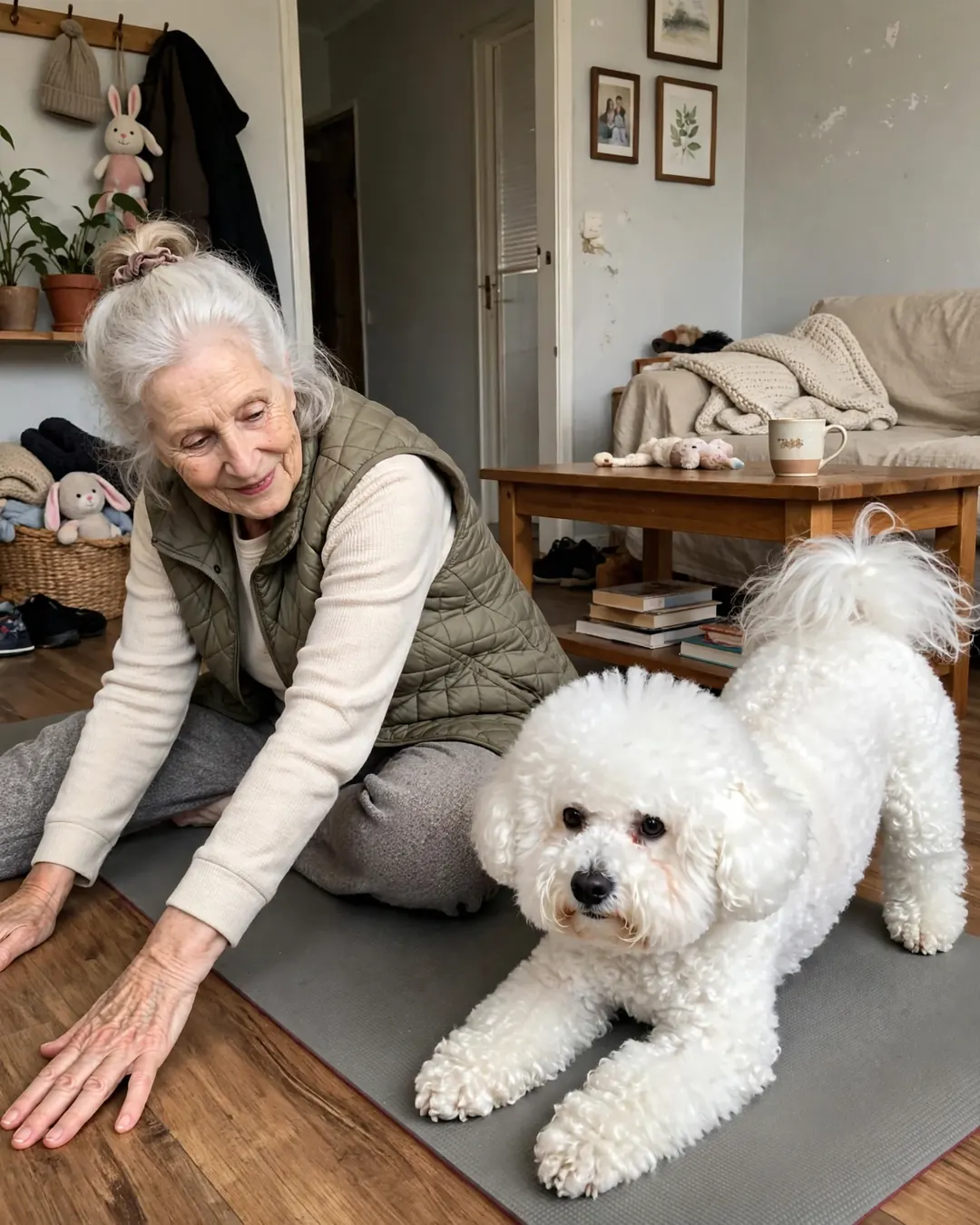
Stretch time in the living room has a new student. Ruth kneels on a gray yoga mat, arms reaching forward toward the wooden floor, smiling as she glances over at her classmate. Cotton has planted his front paws on the mat, chest low and fluffy tail curled high, in what looks remarkably like a textbook downward dog. A coffee table with books and a mug, a sofa draped in a knit throw, framed botanical prints, and a row of plush toys on a shelf make the room feel warm and well loved.
That pose Cotton is striking is known as a play bow, and it is one of the most recognizable signals in dog body language. Front end down, rear end up, tail often wagging, it usually means the dog is feeling friendly and inviting fun. Dogs also stretch this way after waking up, just as people do. For older adults, gentle stretching with a pet nearby can be a pleasant routine. Light movement helps with flexibility and balance, and a dog can make it feel more like play than exercise. Before starting any new exercise program, though, it is a good idea to check with your doctor, and to keep the floor clear of toys that could cause a trip.
Ruth may be the instructor, but Cotton seems determined to prove he is the most flexible one in class. If every workout came with a fluffy partner like this, a lot more people might stick to their stretching.