Grandpa Spread a Thousand Puzzle Pieces on the Table. Then Copper Pulled Up a Chair.
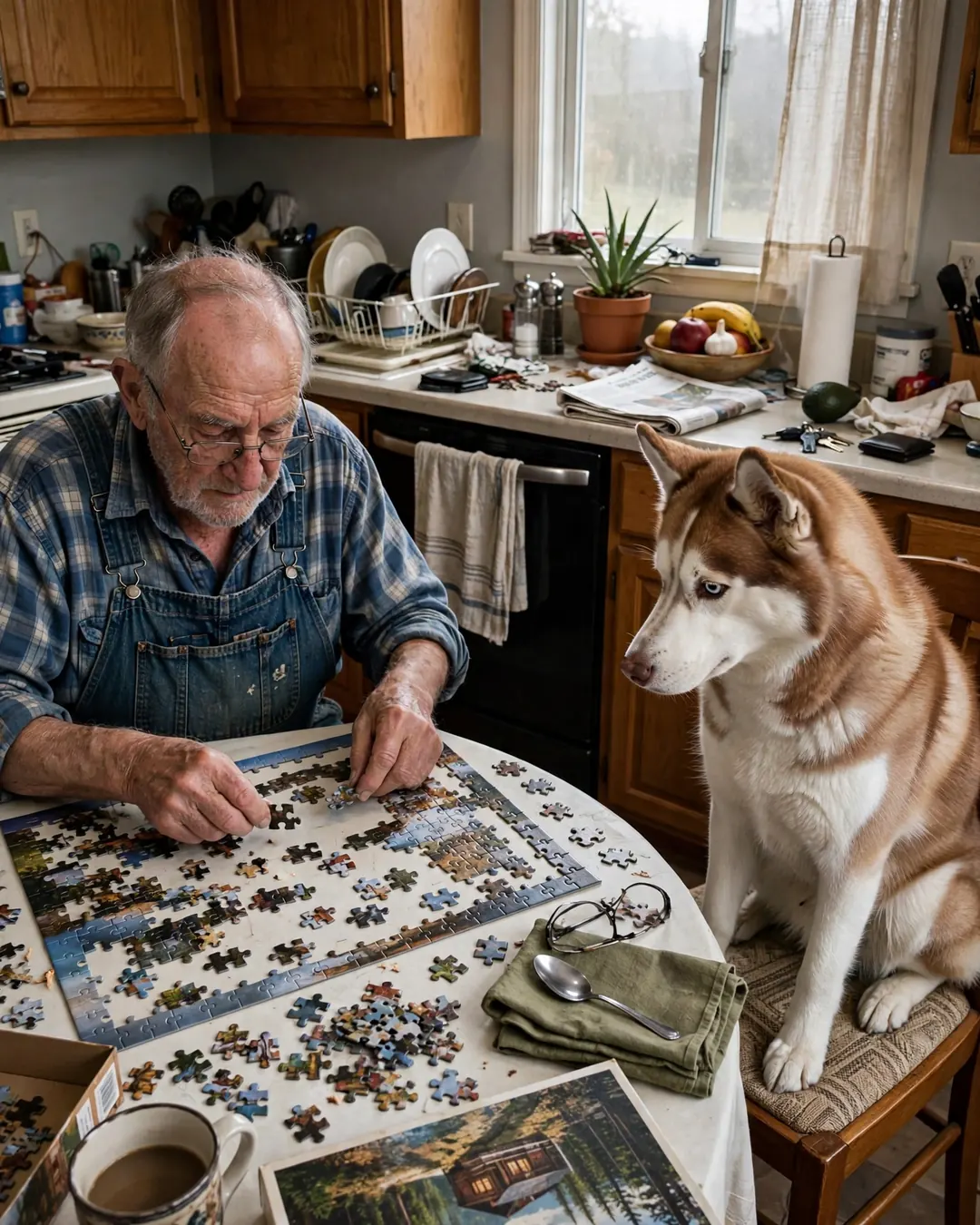
Hundreds of puzzle pieces are spread over the round kitchen table, and a picture of a cozy cabin in the woods is slowly coming together. Grandpa Hank leans over it in his blue plaid shirt and overalls, glasses low, pressing a piece into place with a look of total concentration. Across the corner, Copper sits up tall on a cushioned kitchen chair like a fellow puzzler, head tilted down, studying the pieces with great seriousness. A mug of coffee, a folded napkin, a spoon, and a spare pair of glasses sit nearby, and the box lid with the finished picture rests at the table's edge.
Puzzles are a favorite pastime for many older adults, and there is good reason they are so often recommended. They encourage focus, patience, and problem-solving, and they make for a relaxing, screen-free way to spend an afternoon. Dogs benefit from puzzles too. Food puzzle toys and snuffle mats give dogs a mental workout, and for an intelligent, energetic breed like the Husky, that kind of brain work can help prevent boredom and mischief. Just keep cardboard puzzle pieces out of reach, since some dogs see them as chew toys.
Copper is not likely to find the missing corner piece, but he does seem determined to keep an eye on the progress.
Every good puzzle needs a second opinion. Hank happens to get his from a very attentive, very fluffy one.