The Walk Ran a Little Long. Grandma Nell Made It Home With Pepper a Different Way.
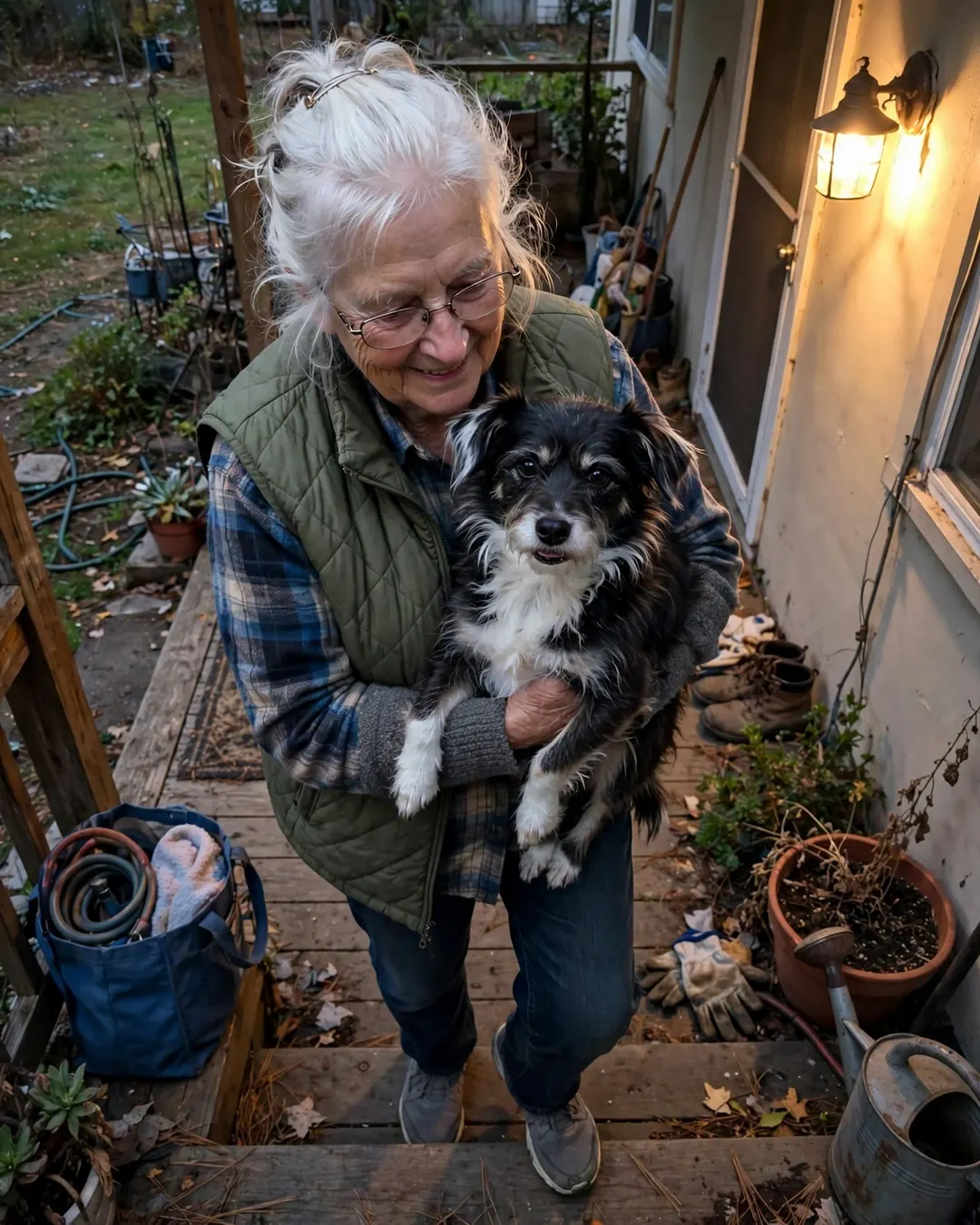
The porch lamp is glowing against the siding, and the long walk is officially over. Grandma Nell climbs the last few wooden steps with Pepper scooped up in her arms, his fluffy black coat and white chest tucked against her green quilted vest and plaid shirt. Pepper peers out over her arm with a slightly sheepish expression, his little white paws dangling, as if he fully knows he could have walked but appreciates the lift. Fallen leaves are scattered on the steps, a tote bag with a coiled hose sits on the landing, and muddy work boots wait by the door.
Small and medium dogs sometimes tire on long walks, especially older dogs, young puppies, or rescues still building up their stamina. Watching for signs like lagging behind, sitting down repeatedly, or limping can help you decide when to turn around. If you need to carry a dog, support both the chest and the hindquarters so the spine stays level, rather than lifting under the front legs alone. Building distance gradually over a few weeks is usually the kindest approach. If a dog suddenly seems much more tired than usual or reluctant to walk, it is a good reason to talk to your vet.
Nell does not seem to mind the extra weight one bit. She is smiling down at Pepper as if carrying him is the best part of the outing.
A warm house, a soft bed, and supper are waiting just inside. Pepper certainly earned all three.