Grandma Was Planting Tomatoes. Sterling Decided He Knew a Better Way to Dig.
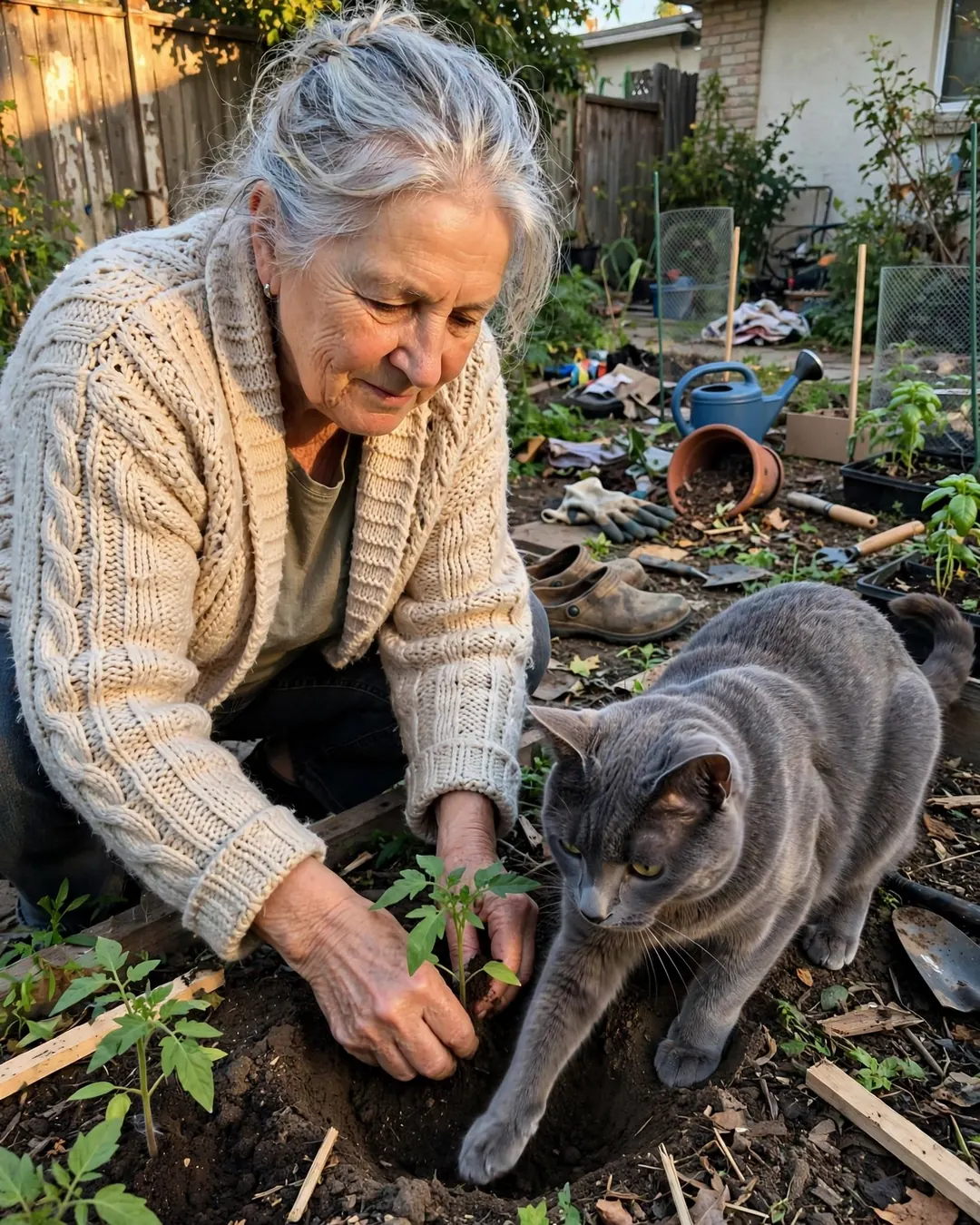
Spring planting is underway, and the garden bed is dark and freshly turned. Grandma Dottie kneels in the soil, gently pressing a young tomato seedling into its new hole with both hands. She isn't working alone. Sterling has planted himself right next to her, one gray paw scooping at the dirt with great determination, as though he's sure he can dig the hole faster. Behind them sit a blue watering can, a tipped clay pot, a pair of muddy boots and rows of other seedlings waiting their turn.
Gardening with a cat around is fun, but tomato plants deserve a word of caution. The leaves and stems of tomato plants, like other members of the nightshade family, can upset a cat's stomach if chewed, so it's best to discourage nibbling. Most cats aren't very interested in eating them, but young or curious cats might investigate. Freshly dug soil is also very tempting as a litter box, so some gardeners lay chicken wire or stones over the bed until plants grow in. Avoid using snail bait or chemical fertilizers where pets roam, and if you suspect your cat has eaten something from the garden, call your vet.
The tomatoes will grow, the cat will keep digging, and there may be a few extra holes in the bed by evening. That's part of the charm of having a gardening buddy who works for free.