Frank and Dot Tried Teaching Their Cat to Shake. Misha Surprised Them Both.
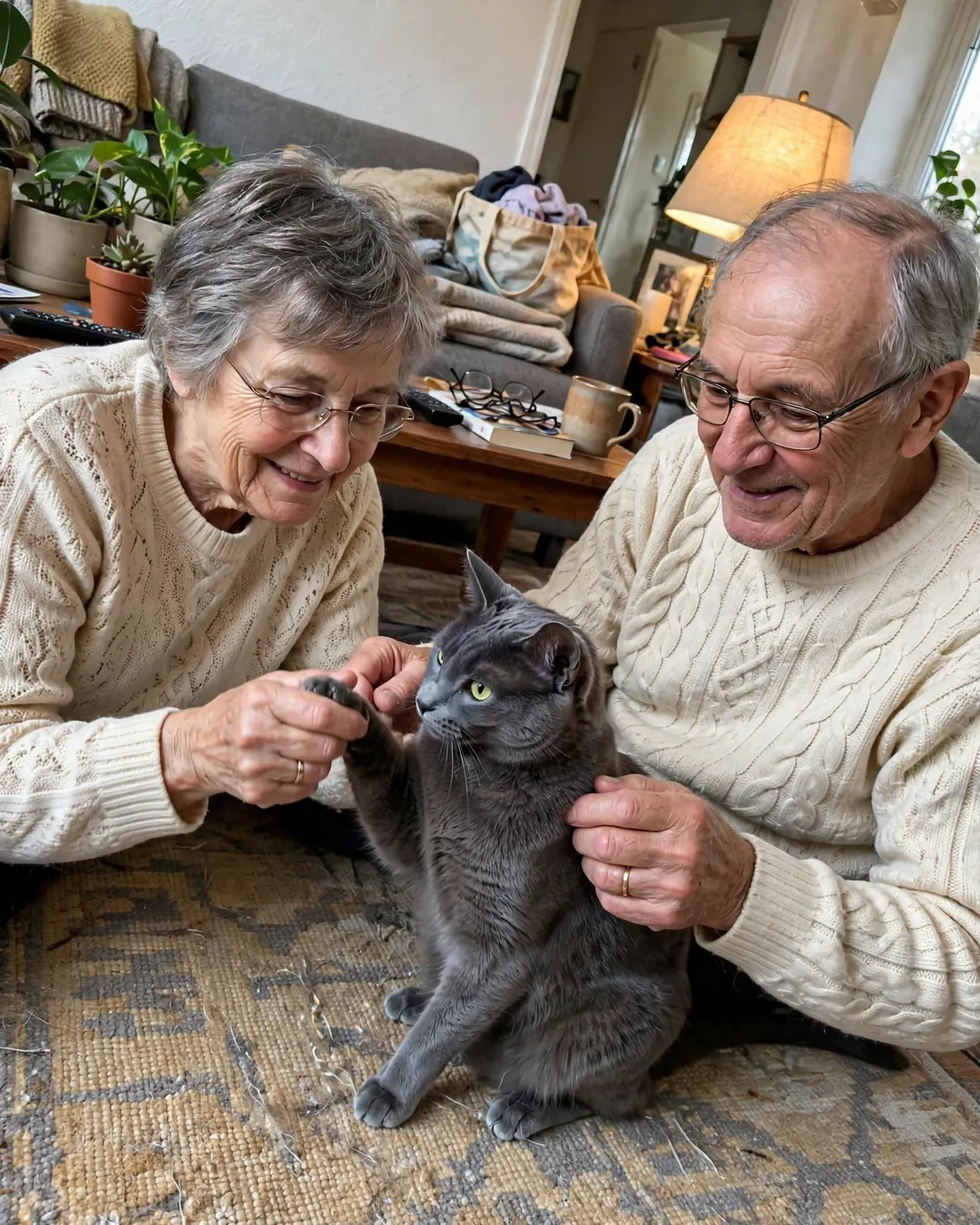
One paw up, and the lesson is going surprisingly well. Frank and Dot kneel on a faded patterned rug in their living room, both in cream cable-knit sweaters and reading glasses, with Misha sitting upright between them. Dot gently holds one small grey paw while Frank steadies the cat's shoulder with a light hand, and both of them are beaming like proud teachers. Misha looks up at Dot with wide green eyes, patient and a little curious. Behind them, a coffee table holds mugs and spare glasses, houseplants line the windowsill, and a lamp glows beside a stack of folded blankets.
Cats can absolutely learn tricks, and many enjoy the mental workout. The key is short sessions and rewards the cat actually values, such as a tiny piece of a favorite treat. To teach a shake, wait for the cat to lift a paw naturally, perhaps to reach for a treat in your closed hand, then mark the moment with a cheerful word or a click and reward right away. Repeat a few times, then stop while she's still interested. Russian Blues are often described as intelligent and fond of routine, which can make them good students when training stays calm and predictable. Never force a paw up or scold a cat for losing interest, since that can make handling stressful. Keep treats small so they don't add up, and if you're unsure how many are too many, talk to your vet.
Whether this counts as a real handshake or simply a polite tolerance of Dot's enthusiasm, Misha is clearly a willing pupil today.