Frank and Dot Filled the Basket With Apples. Misha Had Her Own Inspection to Do.
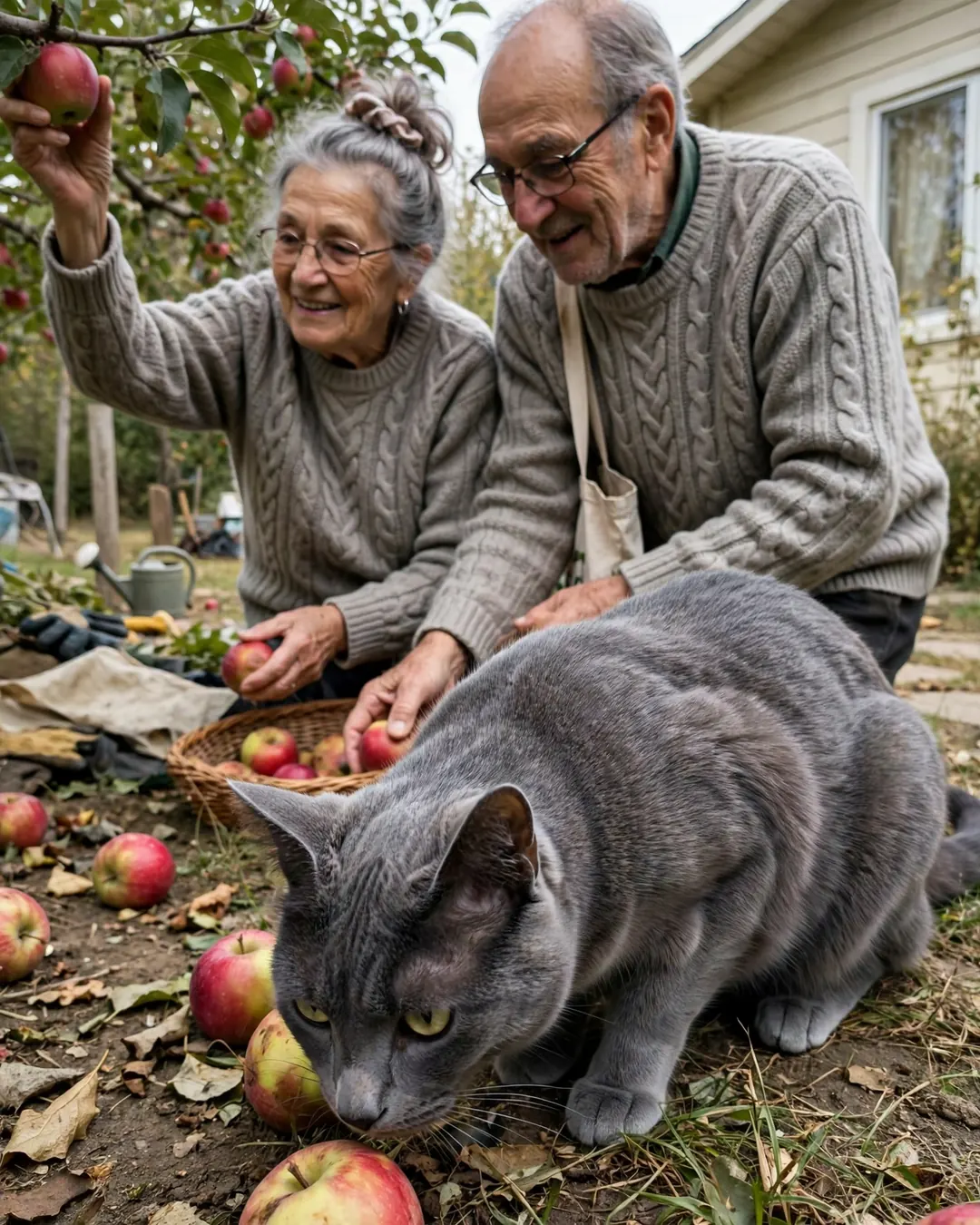
Ripe red apples hang heavy on the branches, and plenty more have already dropped into the grass. Dot reaches up to pluck one from a low bough while Frank crouches beside a wicker basket, both in grey cable-knit sweaters, grinning as they add to the harvest. A canvas bag hangs from Frank's shoulder, and a watering can and a few garden tools sit near the house in the background. Low in the foreground, Misha has her nose pressed right to the ground, sniffing a fallen apple with total concentration, her big blue-grey body hunched among the leaves like a detective on a case.
Orchards are full of interesting smells for a cat, but a few things are worth watching. The flesh of an apple isn't toxic to cats, though they rarely want to eat it. The seeds, stems, and leaves, however, contain compounds that can release cyanide, so it's best not to let a cat chew on cores, twigs, or foliage. Fallen fruit that's been sitting a while can ferment or grow mold, and that can make pets sick, while rotting apples also attract wasps and bees that may sting a curious nose. If your cat roams the orchard with you, keep her on a harness or close by, check her fur for burrs and ticks afterward, and steer clear of any areas recently sprayed with pesticides. If she seems unwell after nibbling something, talk to your vet.
Frank and Dot will be baking pies by the weekend. Misha, meanwhile, is satisfied simply inspecting every apple that hits the ground.