Rose Scattered the Feed for Her Hens. Yeti Sat Right Down in the Middle.
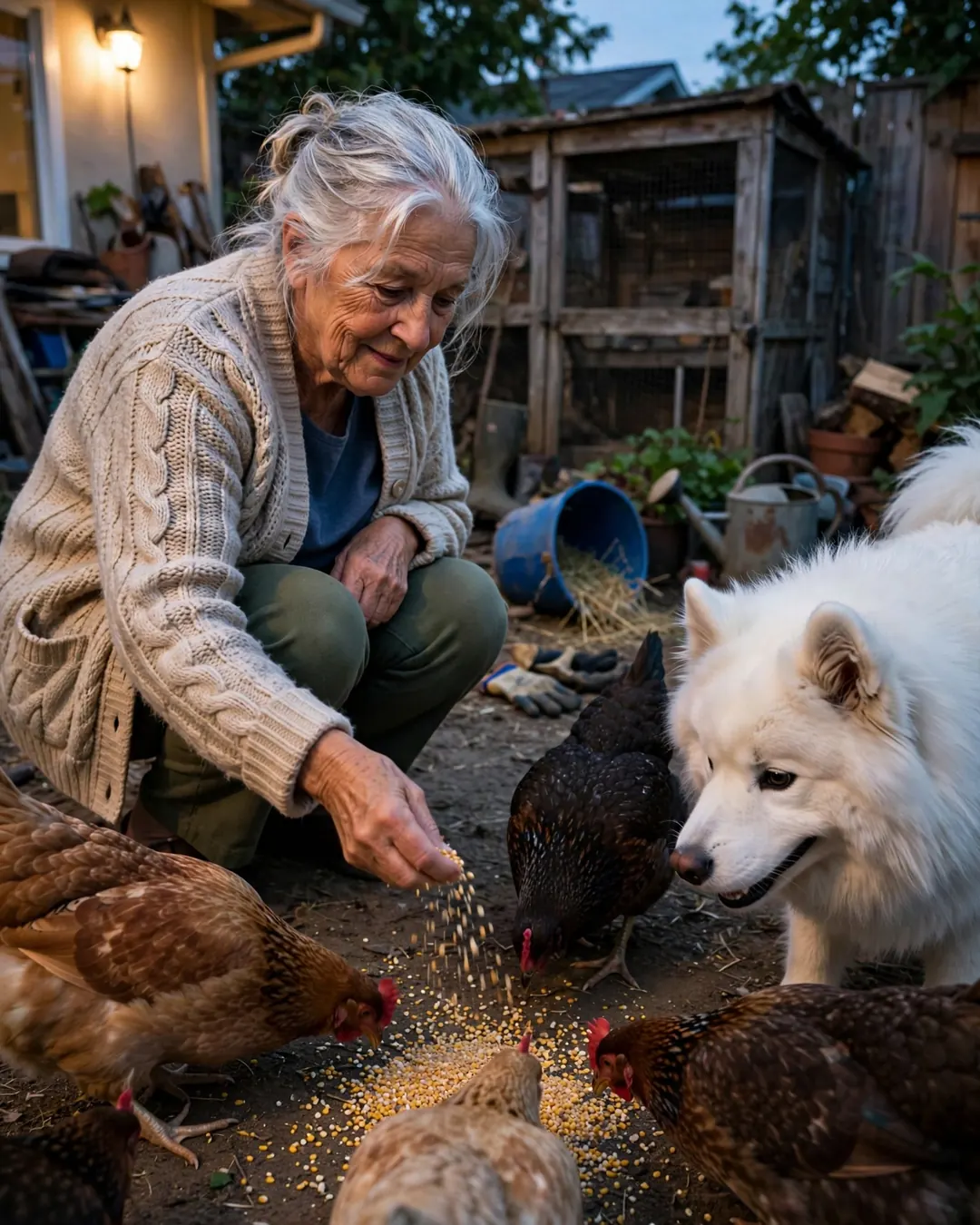
Golden grain trickles from Rose's fingers, and the hens rush in from every side. She crouches low in the dirt yard beside a wooden coop, her silver hair pulled back and a cable-knit cardigan over a blue shirt, smiling as the chickens peck around her boots. A warm porch light glows behind her, and a blue bucket, a watering can, and a scatter of straw sit near the coop. Right in the middle of the flock, Yeti sits calmly with his white ears perked, looking down at the busy birds with a patient, curious grin and making no move to chase anyone.
Samoyeds were originally bred to herd reindeer, so some have a natural instinct to watch over and gather moving animals. That can make introducing a dog to backyard chickens a process that takes time. Start with the dog on a leash on the other side of a fence, and reward calm, relaxed behavior. Gradually shorten the distance over many sessions, and only allow closer contact once the dog consistently ignores the birds. Never leave dogs and chickens unsupervised together until you're completely confident. Chicken feed and droppings aren't good for dogs to eat, and poultry can carry bacteria such as salmonella, so wash your hands after handling birds and keep your dog's bowls clean. A calm, well-trained dog can become a genuine asset around a homestead, helping to discourage predators and pests.
Rose handles the feed, the hens handle the eating, and Yeti handles the supervision. It's a tidy little evening routine everyone seems to enjoy.