Mae Sat Down at the Old Piano. Bandit Claimed the Other End of the Bench.
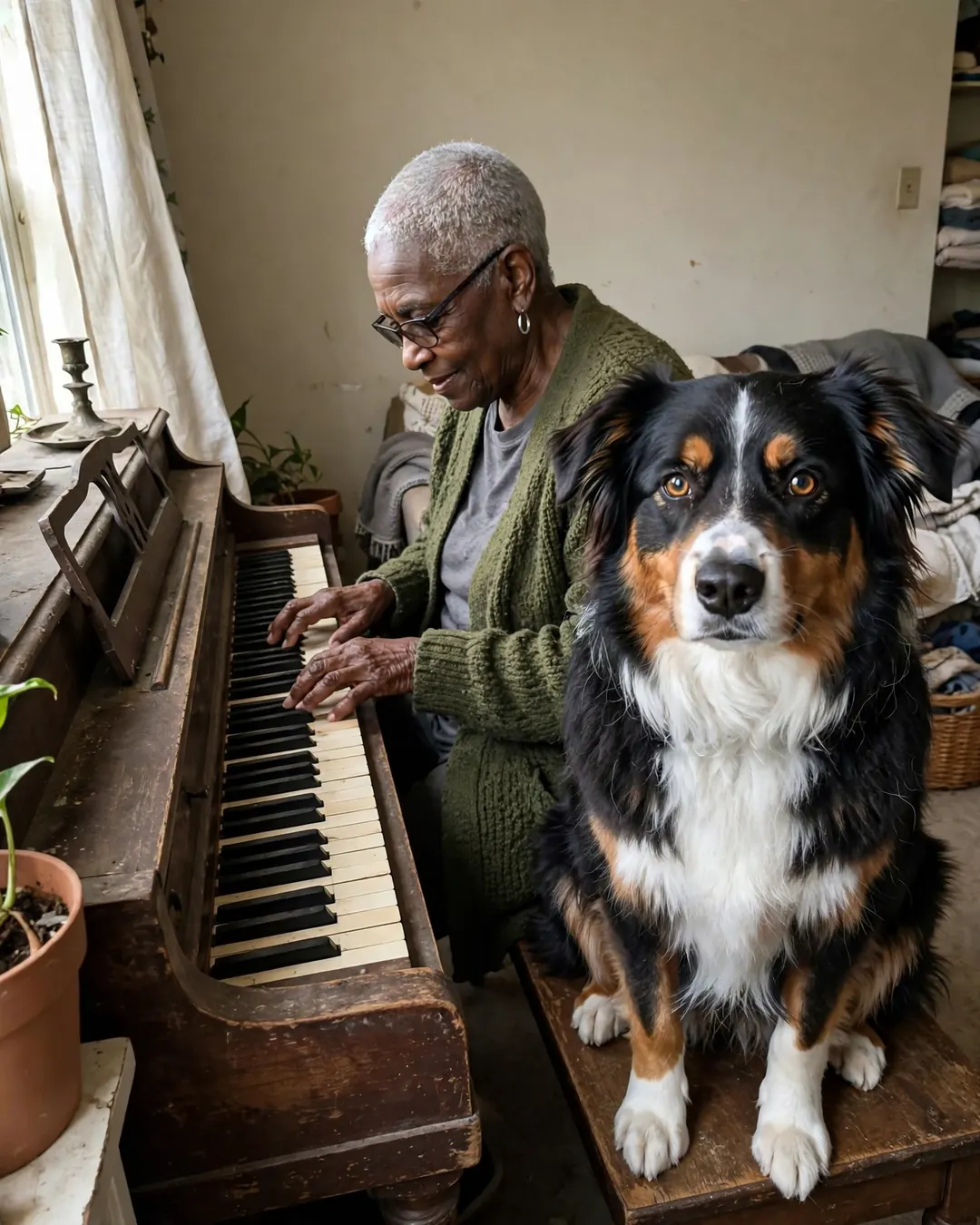
The old upright has seen better days, its wood worn and its keys yellowed, but it still sings when Mae plays. She sits at the keyboard in a green cardigan and glasses, eyes lowered as her fingers find the familiar chords, a soft smile on her face. Bandit has claimed the far end of the piano bench, sitting tall and proud with his white chest puffed out and his amber eyes looking straight ahead, as if he's the featured performer. A candlestick on the window ledge, a potted plant by the piano, and shelves of folded linens complete the quiet, sunlit room.
Many dogs seem to enjoy being near their owners while music plays, and some even settle more calmly to soft melodies. Individual reactions vary, though. Watch your dog's body language, and if he leaves the room, flattens his ears, or seems restless, the music may be too loud or unfamiliar for his comfort. Dogs have sensitive hearing, so moderate volume is kinder to their ears. For older adults, playing an instrument is a pleasant way to keep fingers nimble and the mind engaged, and having a calm companion nearby can make practice feel less solitary. Make sure your dog can get on and off a bench safely, since jumping down from height can be hard on joints. A sturdy step or a dog bed placed right beside the piano works just as well for keeping him close.
Mae carries the tune, and Bandit adds the stage presence. Together, they make the coziest little concert in the neighborhood.