Everyone Said Cats Can't Learn Tricks. Grandpa Hank Decided to Try Anyway.
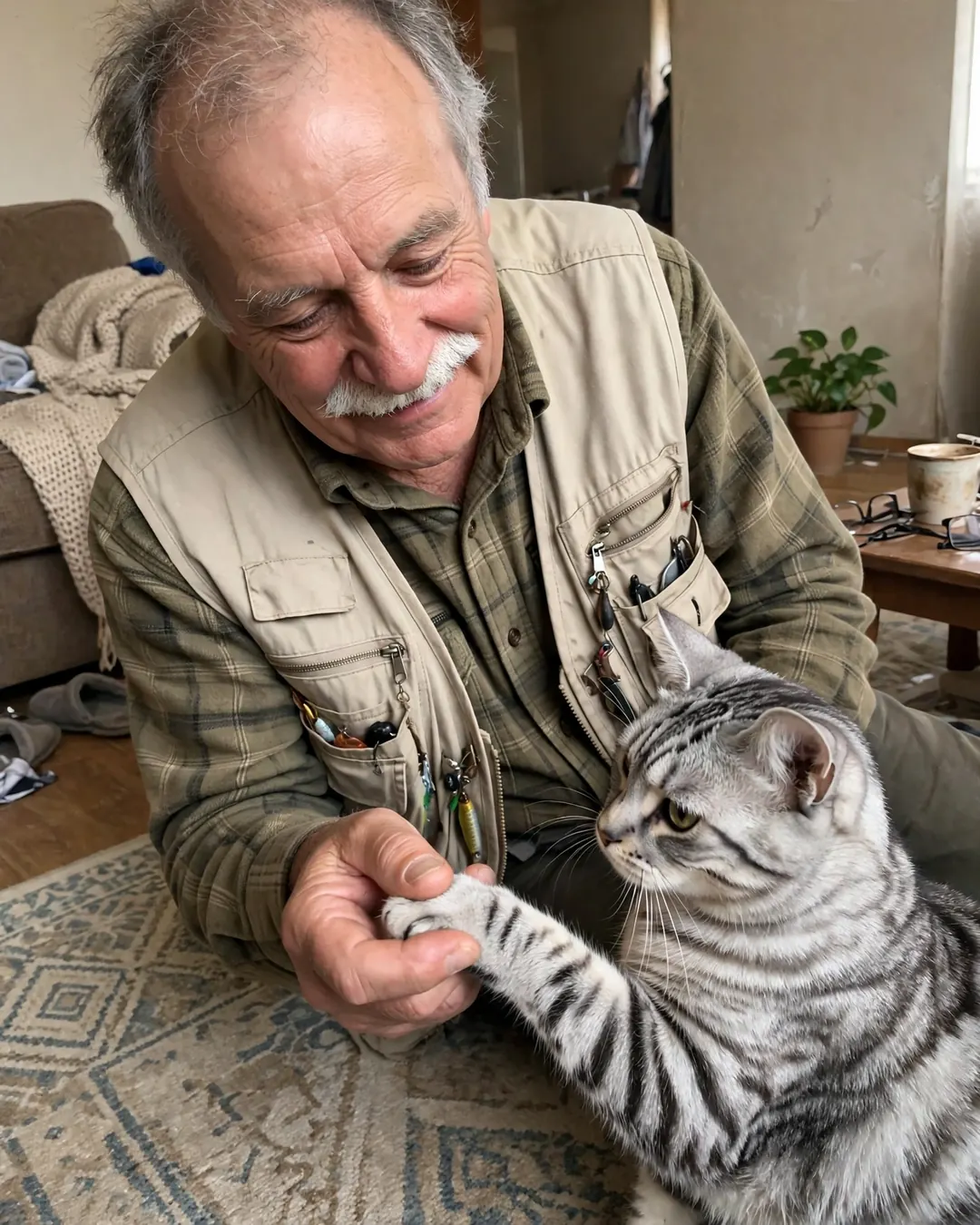
Lesson one of shake hands is underway on the living room rug. Grandpa Hank kneels on the floor in his plaid shirt and pocket-crowded fishing vest, a broad, proud smile tucked beneath his white mustache. He gently holds Pewter's front paw in his fingers, while the silver tabby looks up at him with calm, focused eyes and a surprisingly cooperative expression. The patterned rug, the couch with its rumpled blanket, a coffee mug on the side table, and a potted plant in the corner make the room feel warm and lived-in.
Yes, cats can learn tricks. They respond very well to positive reinforcement, especially when the reward is a favorite treat. Many owners use clicker training, where a click marks the exact moment the cat does the right thing, followed immediately by a treat. For a paw shake, you might start by gently touching your cat's paw, then rewarding any small lift, slowly building up to a full raise into your hand. Keep sessions short, just a few minutes at a time, and end on a success. Never force or scold, since cats lose interest quickly if training feels stressful. Training is more than a party trick; it provides mental stimulation, builds trust, and can make everyday handling, like nail trims or vet visits, easier for everyone.
Pewter seems to be a natural. With a little patience and a pocket full of treats, Hank may have the most well-mannered tabby in town.