Grandpa Sat Down at the Old Piano. A Tiny Fan Claimed the Front-Row Seat.
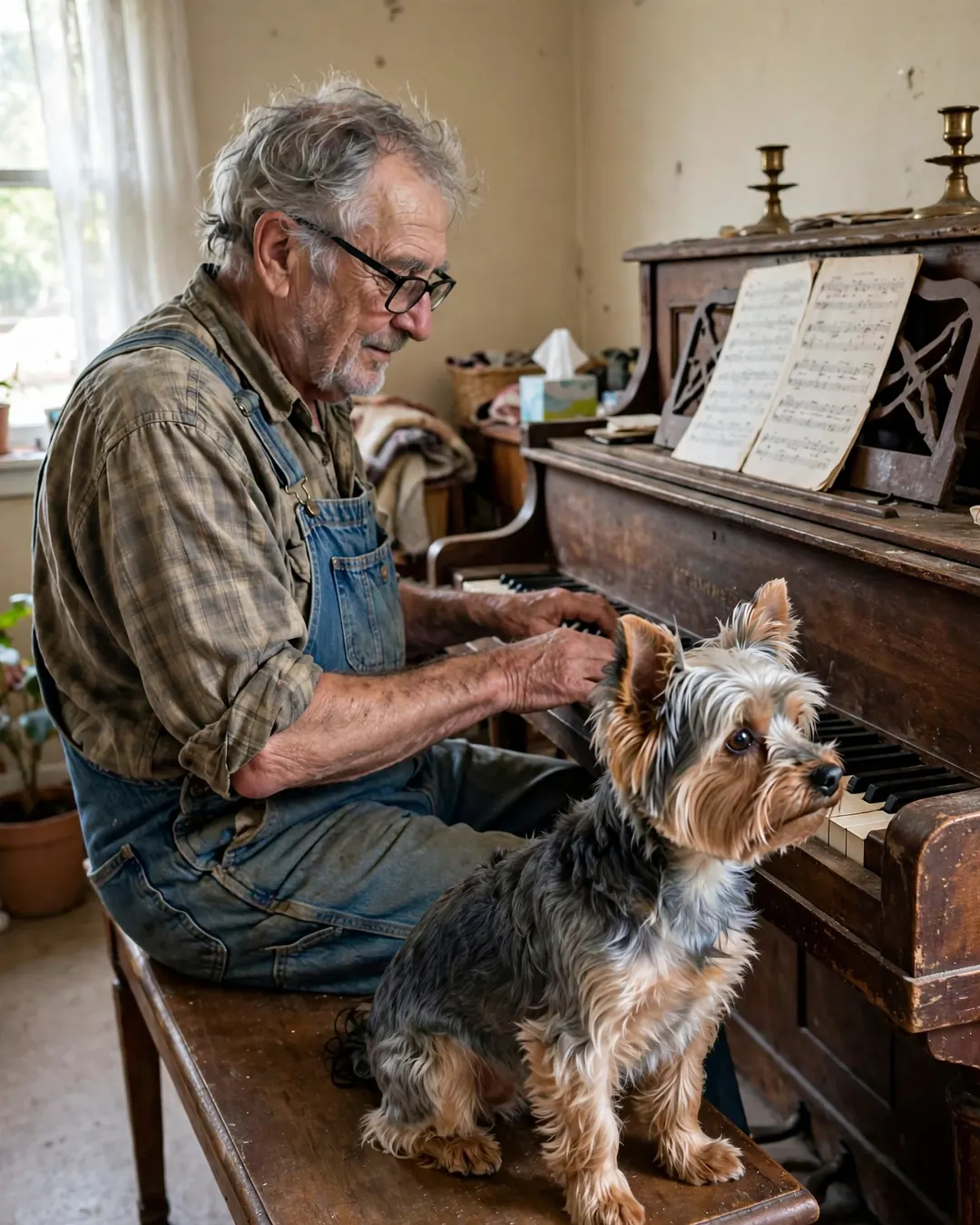
Sheet music rests open on the stand of the old upright piano, its dark wood carved and scratched with age, and a pair of brass candlesticks stand on top. Earl sits at the keyboard in his glasses and plaid shirt, fingers resting on the keys, his eyes on the music as he picks out a gentle tune. Sharing the long wooden bench is Peanut, who sits tall right beside his hands, her silky ears perked and her nose lifted toward the light from the window, as if she is listening for her favorite part of the song.
Dogs hear a wider range of sounds than people do, so music can affect them in interesting ways. Many dogs seem to settle down to soft, slow music, while loud or high-pitched sounds can make some uneasy. If a dog happily joins you at the piano, it is a good sign they find the experience comforting. Keeping the volume moderate and watching their body language helps; a dog that leaves the room or flattens its ears may prefer a quieter spot. For older adults, playing an instrument can be a pleasant way to keep the hands active and the mind engaged, and an appreciative audience never hurts.
Peanut may not be able to read the sheet music, but she has clearly claimed her seat at every performance. Earl seems happy to play for an audience of one. In this house, every concert is a private showing.