Grandma Edie Climbed Into Her Old Pickup. Someone Was Already Waiting on the Bench.
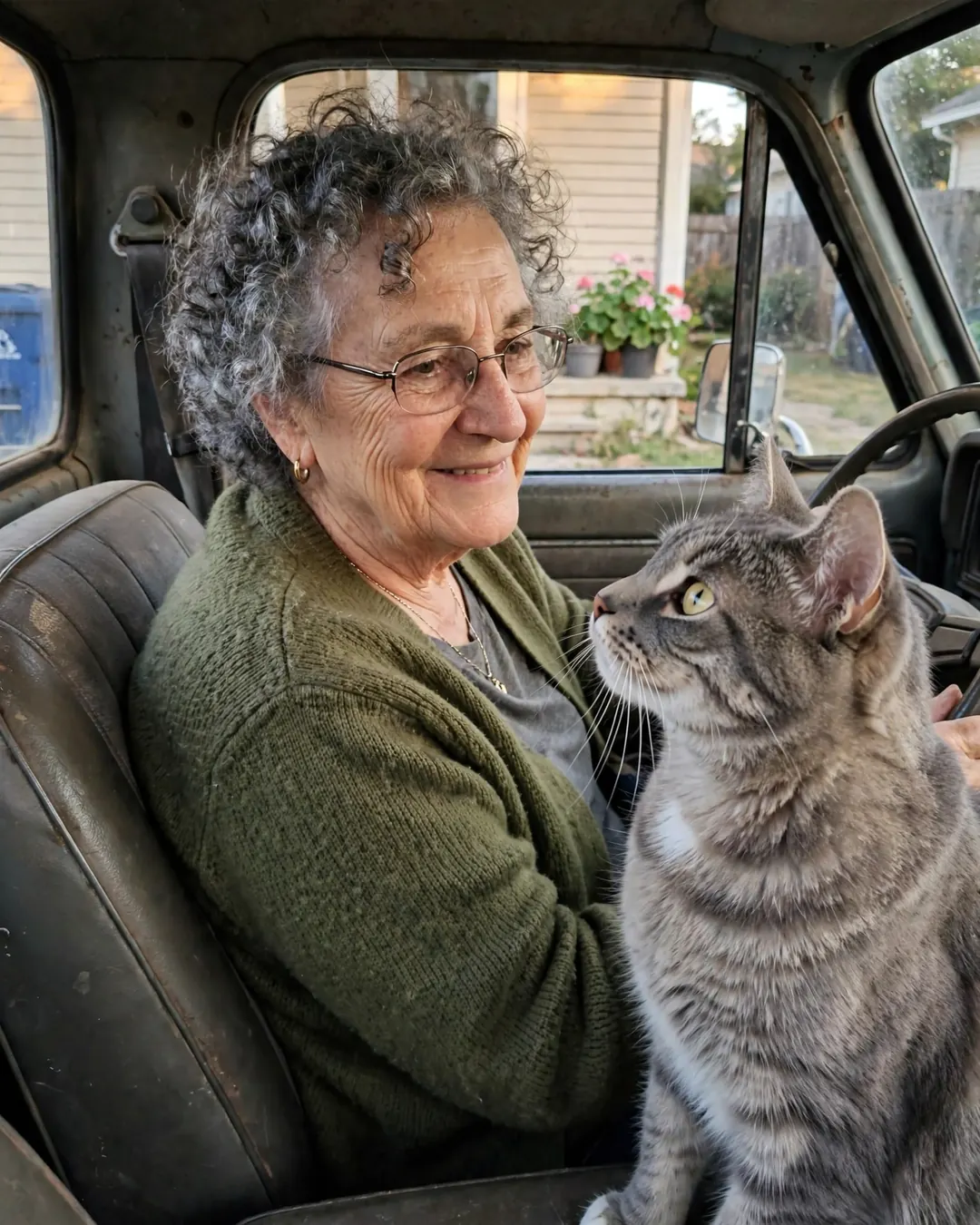
The pickup's cab is worn and familiar, with cracked leather seats, a dusty dashboard, and a big thin steering wheel that has been turned a thousand times. Grandma Edie sits behind it in her moss-green cardigan, glasses on, giving a sweet, crinkly smile to the passenger at her side. Pebble stands tall on the bench seat with his striped gray coat and white chin, gazing up at her with full attention, ears forward. Out the window, a porch with red flowers and a picket fence suggests they have not even left the driveway yet.
Plenty of cats get anxious in vehicles, and part of that comes from motion and unfamiliar sounds. If a cat must travel, a secure carrier belted onto the seat is the safest setup. A loose cat can distract the driver or get hurt during a sudden stop. Helping a cat feel calmer can start at home: let the carrier become a normal resting spot, then take short practice trips and reward calm behavior. Bringing a familiar blanket that smells like home can help too. Signs like drooling, panting, or constant crying mean the cat is stressed, and a vet can suggest ways to ease travel.
For today, the truck is parked and the engine is quiet, so this is more of a visit than a trip. Pebble seems pleased with his seat and his view of Grandma Edie. For a cat, sometimes that is all the adventure needed.