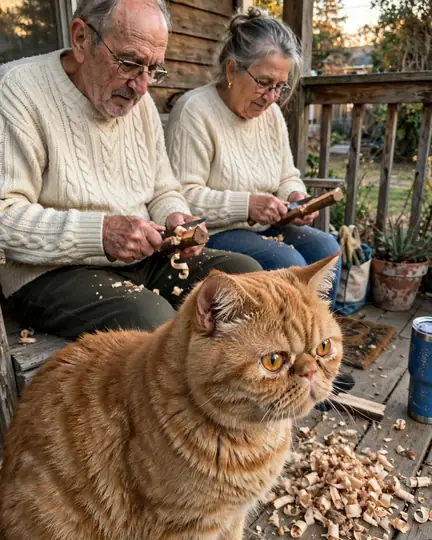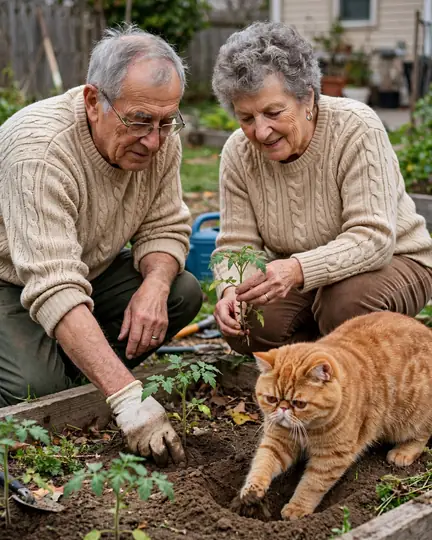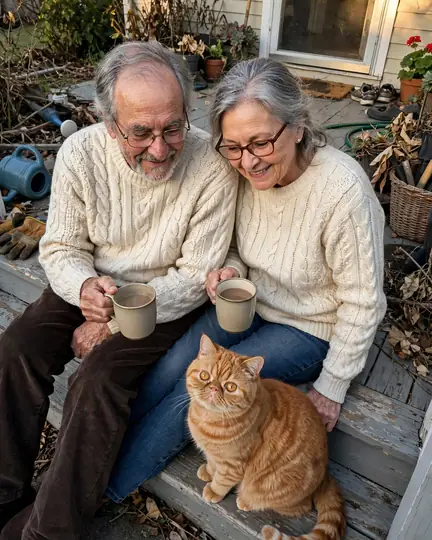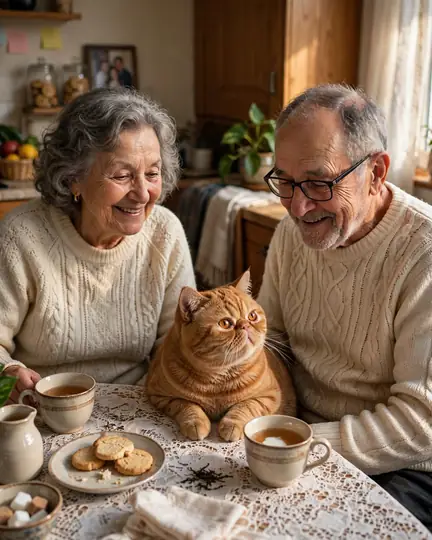
Harold and Bev Sat Down to Play Their Favorite Duet. The High Notes Were Taken.
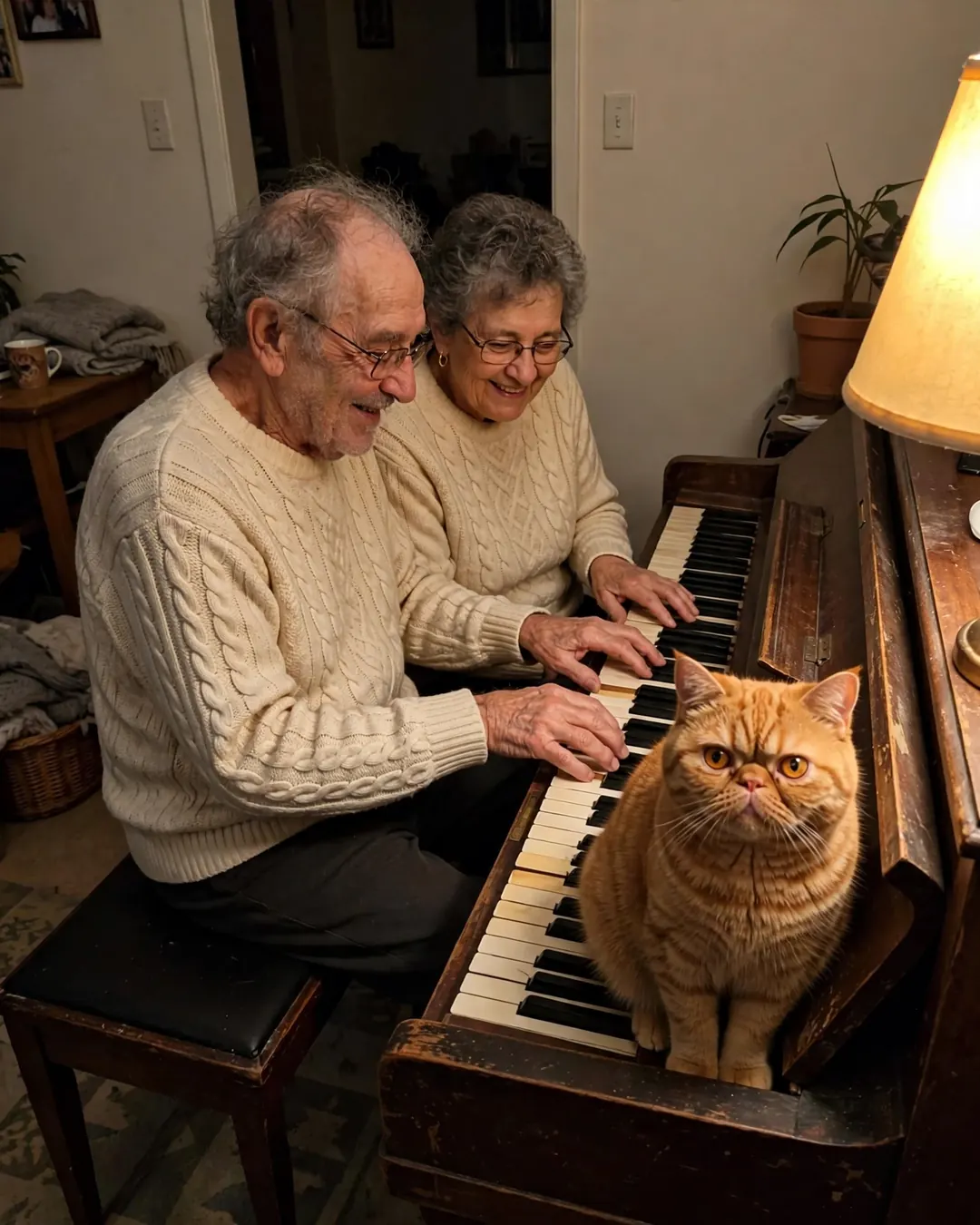
A lamp throws a warm circle of light over the old upright piano, and Harold and Bev are sharing the bench for a duet. He plays the low notes with a broad grin, she leans in on the higher keys, and their cream sweaters brush together as they find the melody. Family pictures hang in the hallway behind them and a plant sits by the far wall. At the right end of the keyboard, though, the music runs into a small orange problem. Toffee has planted himself directly on the high keys, paws tucked together, round eyes staring straight ahead with total composure, as if he plans to add his own notes whenever he likes.
Pianos are oddly appealing to cats. The bench is warm, the lid is a perfect perch and the keys make interesting sounds when stepped on, so many cats learn to treat them as a toy or a lookout. If you want to protect your instrument, closing the fallboard over the keys when you are not playing is an easy fix. Some people place a soft blanket on the lid to give the cat an approved spot instead. Loud music close to a cat's sensitive ears can be stressful, so it is kind to let a curious cat choose its own distance. A cat that sits nearby while you play is usually there for your company, not the concert.
Every duet needs a critic, and Toffee has clearly volunteered. The high notes may have to wait until he is done supervising.