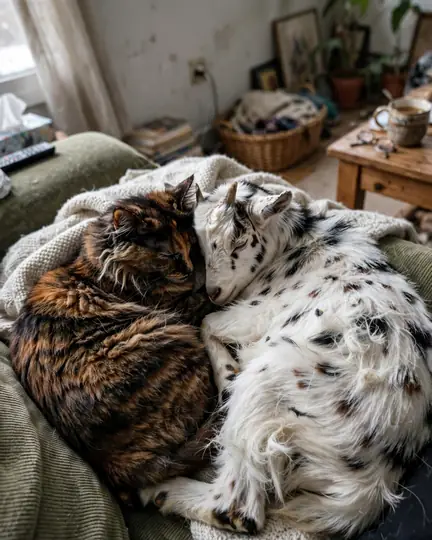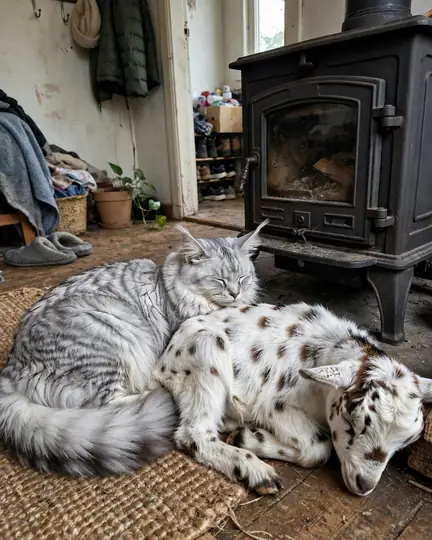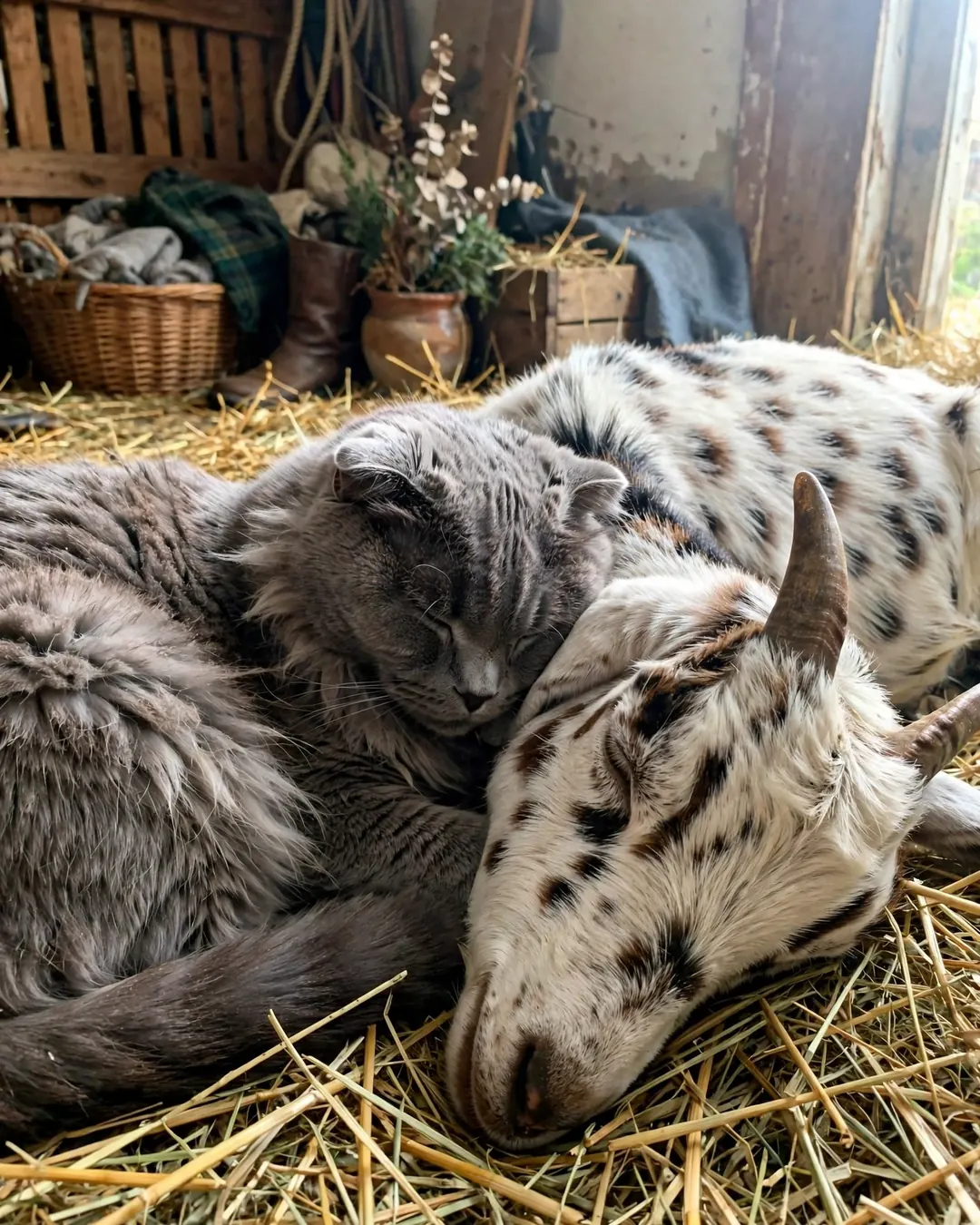
In the Hay, a Scottish Fold Draped One Paw Over His Best Friend's Neck
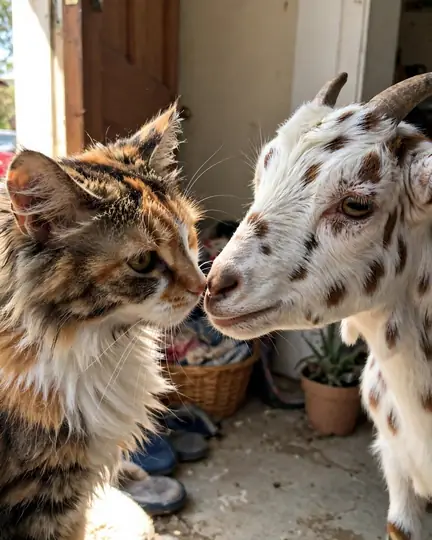
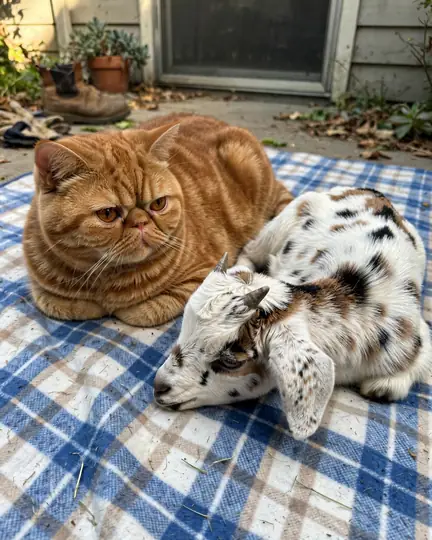
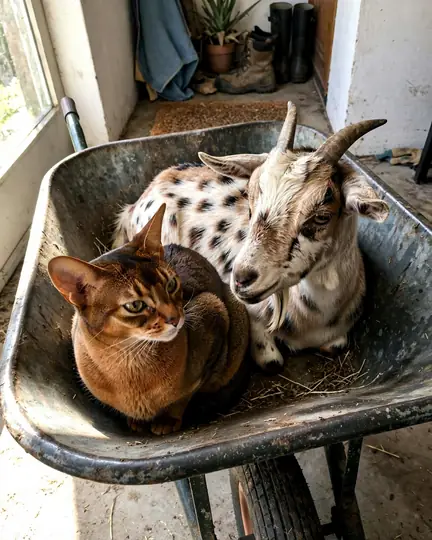
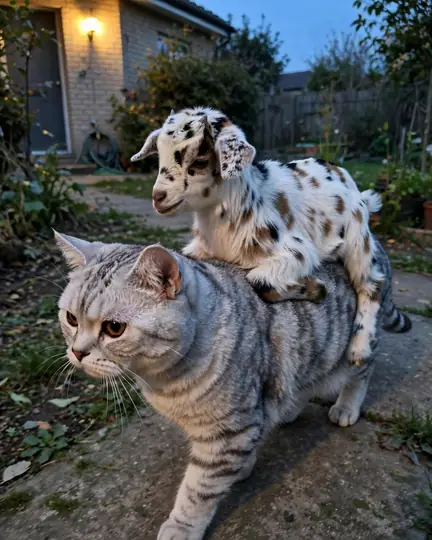
Golden hay covers the barn floor, and two very different heads rest side by side in the middle of it. A plush grey Scottish Fold lies curled up with his eyes shut, little folded ears tucked close, and one paw draped over the neck of his friend. That friend is a white goat speckled with dark spots, lying on her side with her horns resting on the hay and her eyes peacefully closed. Their faces press cheek to cheek. Around them, a wicker basket, a plaid blanket, rubber boots, and a jar of dried flowers make this corner of the barn feel like home.
Goats spend a lot of their resting time doing something important: chewing their cud. As ruminants, they swallow food fairly quickly, then later bring it back up in small portions to chew it more thoroughly, which helps break down tough plant fibers. A relaxed goat lying down and steadily chewing is usually a content, healthy goat. When a goat stops ruminating, loses interest in food, or stands hunched and uncomfortable, it can be an early sign of illness that deserves quick attention from a livestock vet. Goats also tend to sleep in short stretches and wake easily, staying alert to their surroundings.
Right now, though, nobody in this barn seems worried about anything. The hay is soft, the light is warm, and two friends have found the coziest nap of the afternoon.