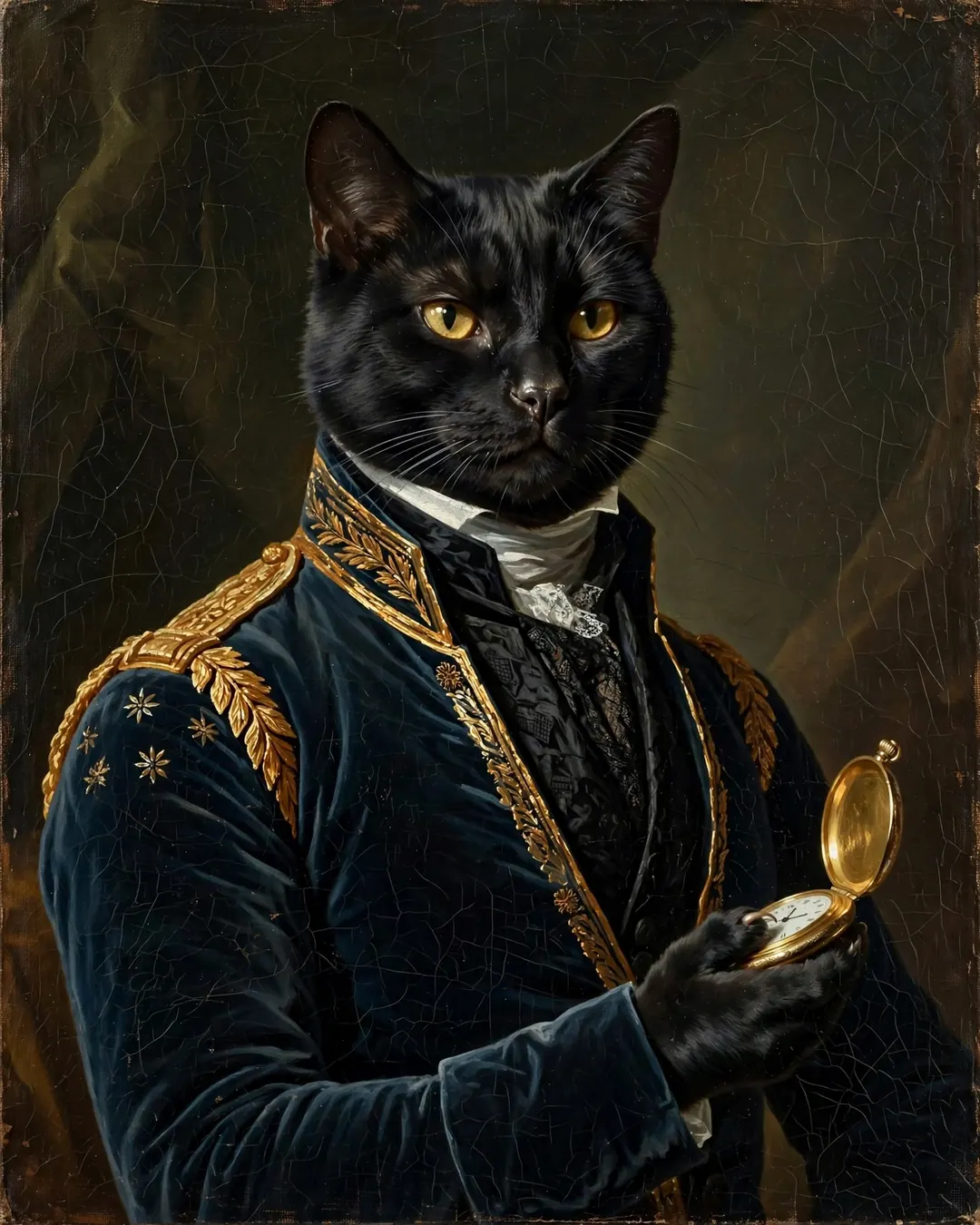
The Baron Has Checked His Gold Pocket Watch. You Are Four Minutes Late.
Golden eyes narrowed in mild disapproval, a sleek black cat regards the viewer as though you have arrived precisely four minutes late. He wears a deep navy velvet coat embroidered with gold oak leaves along the high collar and shoulders, with small gold stars stitched near the sleeve. A white lace cravat froths at his throat above a black brocade waistcoat. In one gloved paw he holds an open gold pocket watch, its face turned just enough to catch the light. The background is a dim swirl of olive and bronze drapery, and fine crackle lines run across the whole surface.
In formal portraits of the early nineteenth century, small objects often carried meaning. A pocket watch could suggest wealth, punctuality or a person of importance whose time was valuable, which makes it a fitting prop for a baron. Black cats, meanwhile, have a mixed reputation in folklore: considered unlucky in some traditions and lucky in others. Today, many cat lovers celebrate them, and black cats are known among owners for being just as affectionate and playful as any other color. Their glossy coats look especially striking in sunlight, sometimes revealing faint rusty or tabby undertones.
This distinguished gentleman has places to be and dinner to be served on schedule. Do not keep the baron waiting. Punctuality, after all, is the courtesy of kings and cats alike.