Sock Thieves and Paper Shredders: Why Pets Do It and When to Worry
The reasons dogs and cats steal socks, shred toilet roll and raid laundry baskets, the real risk of swallowed objects, and how to redirect the habit.
If you've ever come home to a hallway carpeted in shredded toilet paper, or watched your dog prance past with a sock it definitely wasn't given, you are in good company. Paper shredding and item stealing are among the most common household pet behaviours — and among the most popular in pet videos. They are usually harmless fun. Occasionally, though, they lead to an emergency, so it helps to understand the behaviour and manage it sensibly.
Why dogs shred paper
It feels like prey
Tearing and ripping mimics the way wild canids dismantle prey. Paper gives satisfying resistance and makes an interesting noise. For many dogs, it is simply a fun way to use their natural behaviours.
Boredom and pent-up energy
Dogs that don't get enough exercise or mental stimulation often invent their own entertainment. Shredding is easy, rewarding and readily available.
Stress relief
Chewing and tearing can be self-soothing. Some dogs shred more when left alone, which can be a sign of separation-related stress.
Teething
Puppies between roughly three and seven months chew everything as their adult teeth come through.
Why pets steal socks and laundry
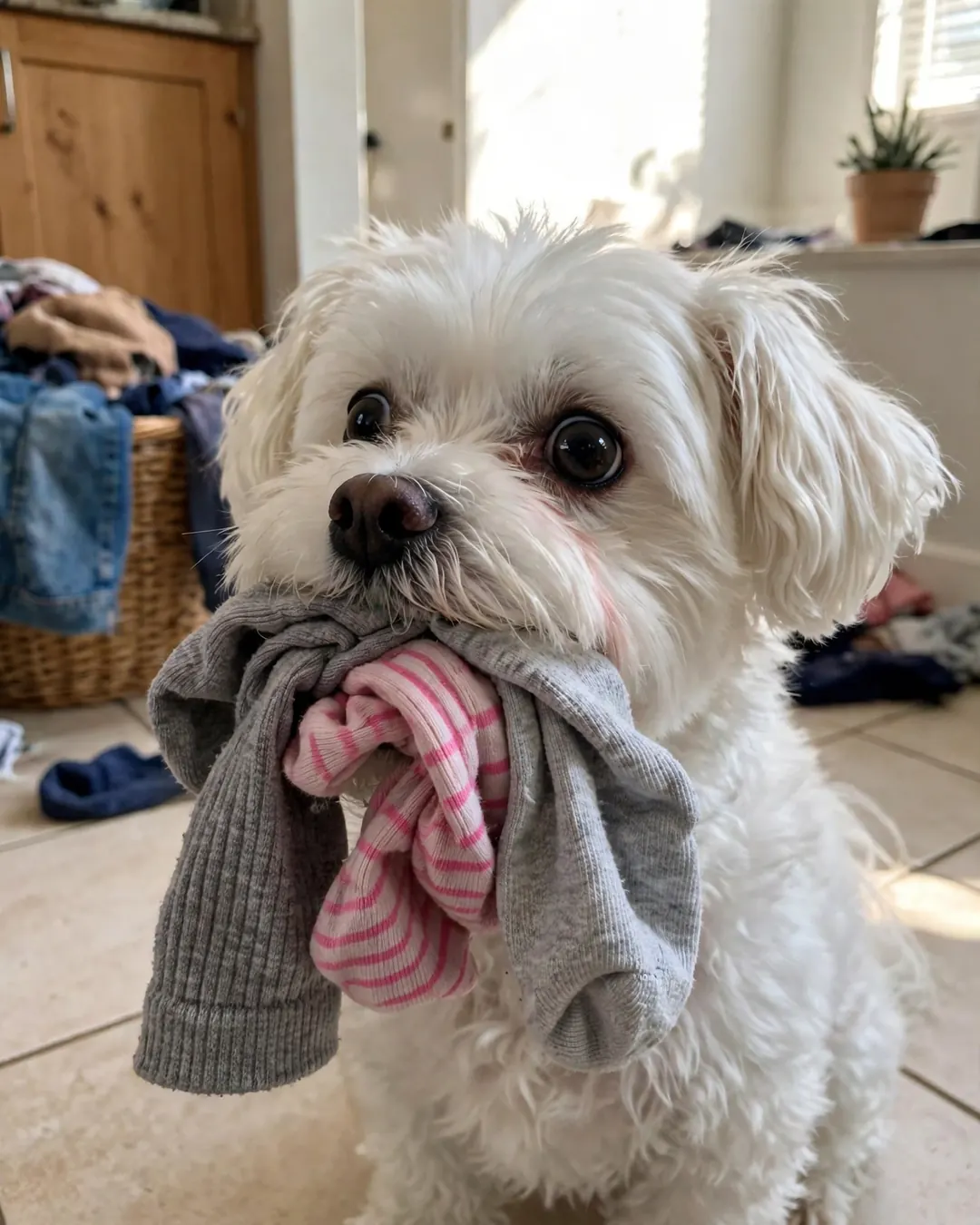
Socks, underwear and tea towels smell strongly of their owners. For a dog, that scent is comforting and fascinating. There is also the attention factor: the moment a dog grabs a sock, everyone jumps up and chases it. From the dog's point of view, this is the best game in the house.
Cats steal too. Some carry socks, hair ties or small toys around the house and drop them in a particular spot — behaviour that may relate to hunting and "bringing prey home".
When it becomes dangerous
The problem is not shredding or stealing; it is swallowing. Socks, underwear, hair ties, string and some types of paper can cause a gastrointestinal obstruction, a blockage that may require surgery. Cats are especially at risk from string-like objects — thread, ribbon, tinsel or elastic — which can cause severe intestinal damage.
Contact your vet urgently if your pet has swallowed fabric or string, or shows signs such as:
- Repeated vomiting, or trying to vomit without producing anything.
- Loss of appetite.
- Lethargy.
- A painful or swollen abdomen.
- Straining or producing little or no stool.
How to manage the habit
Make items harder to reach
The simplest fix is prevention:
- Use laundry baskets with lids.
- Keep bathroom doors closed or toilet rolls out of reach.
- Pick up socks, hair ties and small children's clothing promptly.
- Teach children to put their things away — a good habit anyway.
Stop the chase game
If your dog steals something harmless, avoid chasing. Instead, call the dog over cheerfully or toss a treat on the floor away from you, then calmly pick up the item when the dog drops it. Better still, teach a "drop" or "trade" cue: offer something more valuable in exchange.
Provide better outlets
Give your pet appropriate things to shred and carry:
- Cardboard boxes or egg cartons with treats inside, for supervised shredding.
- Durable chew toys and long-lasting chews.
- Snuffle mats and puzzle feeders.
- For cats, wand toys and kicker toys to satisfy the hunting urge.
Increase exercise and enrichment
More walks, sniffing time, training games and play often reduce problem behaviours dramatically. Many sock thieves are simply under-occupied.
When to seek help
If shredding happens mainly when your dog is alone, or comes with howling, pacing or toileting indoors, it may be a sign of separation-related distress. This is worth discussing with your vet and a qualified behaviour professional.
The short version
Paper shredding and sock stealing are natural, often playful behaviours. Manage access, avoid turning theft into a chase game, give your pet better things to do, and know the warning signs of a swallowed object. That way the shredded toilet paper stays a funny story rather than a vet bill.