The Walk Was Over, but Bruno Refused to Climb One More Step
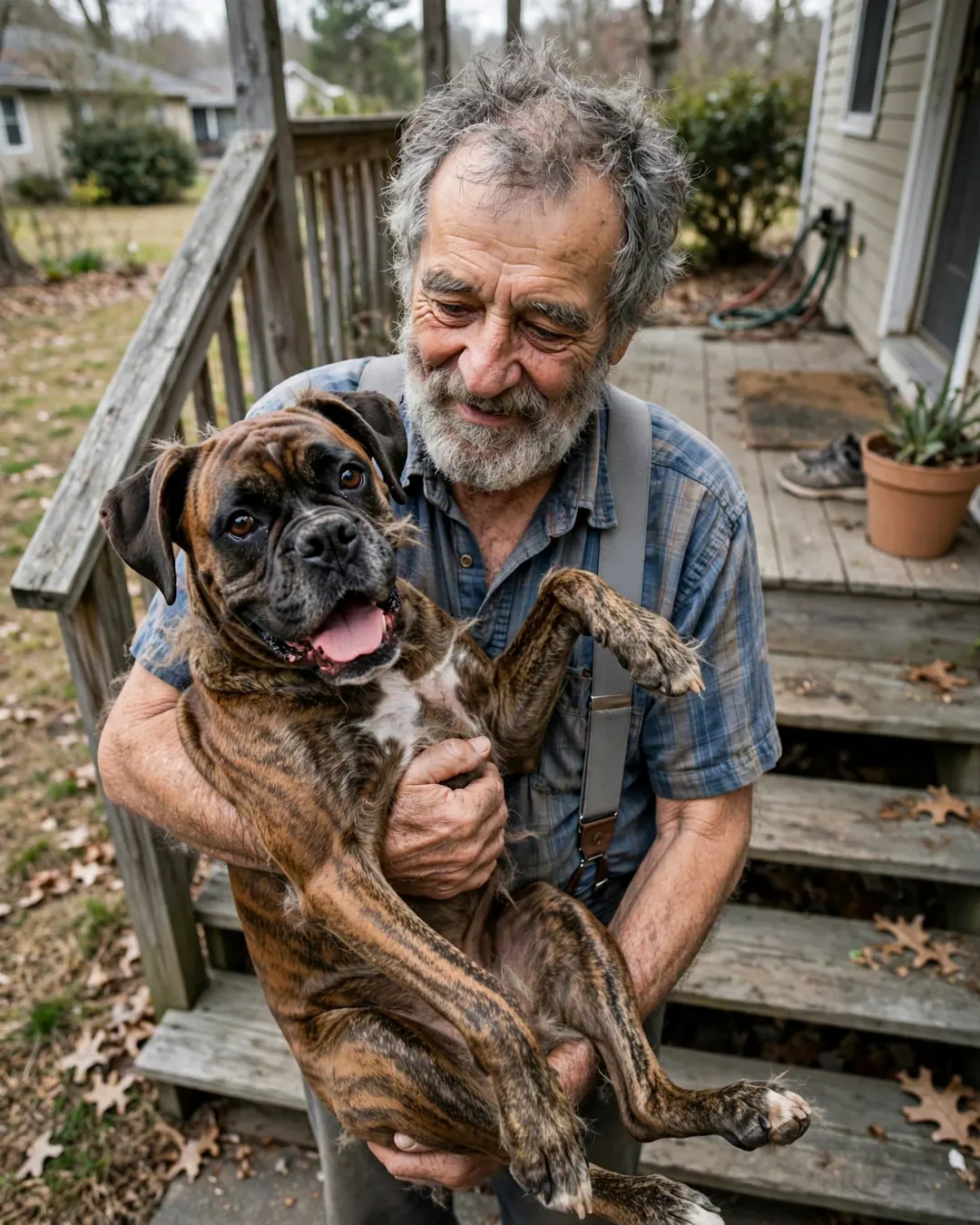
One long walk later, someone has decided he is done walking. Gus stands at the foot of the wooden porch steps with Bruno scooped up in both arms, the Boxer's back legs dangling and one front paw flopped over Gus's shoulder. Bruno does not look tired so much as thrilled, tongue out and mouth wide in a goofy grin, brindle ears flopping. Gus, his gray hair windblown and his plaid shirt and suspenders a bit rumpled, wears a long-suffering but affectionate smile. Fallen leaves are scattered across the steps, a potted plant sits by the door, and a pair of sneakers waits on the porch.
Carrying a medium or large dog takes care for both of you. A safe lift usually involves bending at the knees rather than the waist, supporting the dog under the chest with one arm and under the hindquarters with the other, and keeping the dog close to your body. Avoid lifting by the front legs alone, which can strain joints. For older owners or heavier dogs, a ramp or a supportive harness with a handle may be a better option for stairs. If your dog regularly seems worn out or reluctant on walks, especially as they age, it is a good idea to mention it to your vet.
Whether Bruno truly needed the lift or simply enjoyed the ride, he is not complaining. Gus may feel it in his back tomorrow, but that grin makes it worth it.