Grandpa Sat Down to Knit a Few Quiet Rows. His Hairless Cat Had Other Plans.
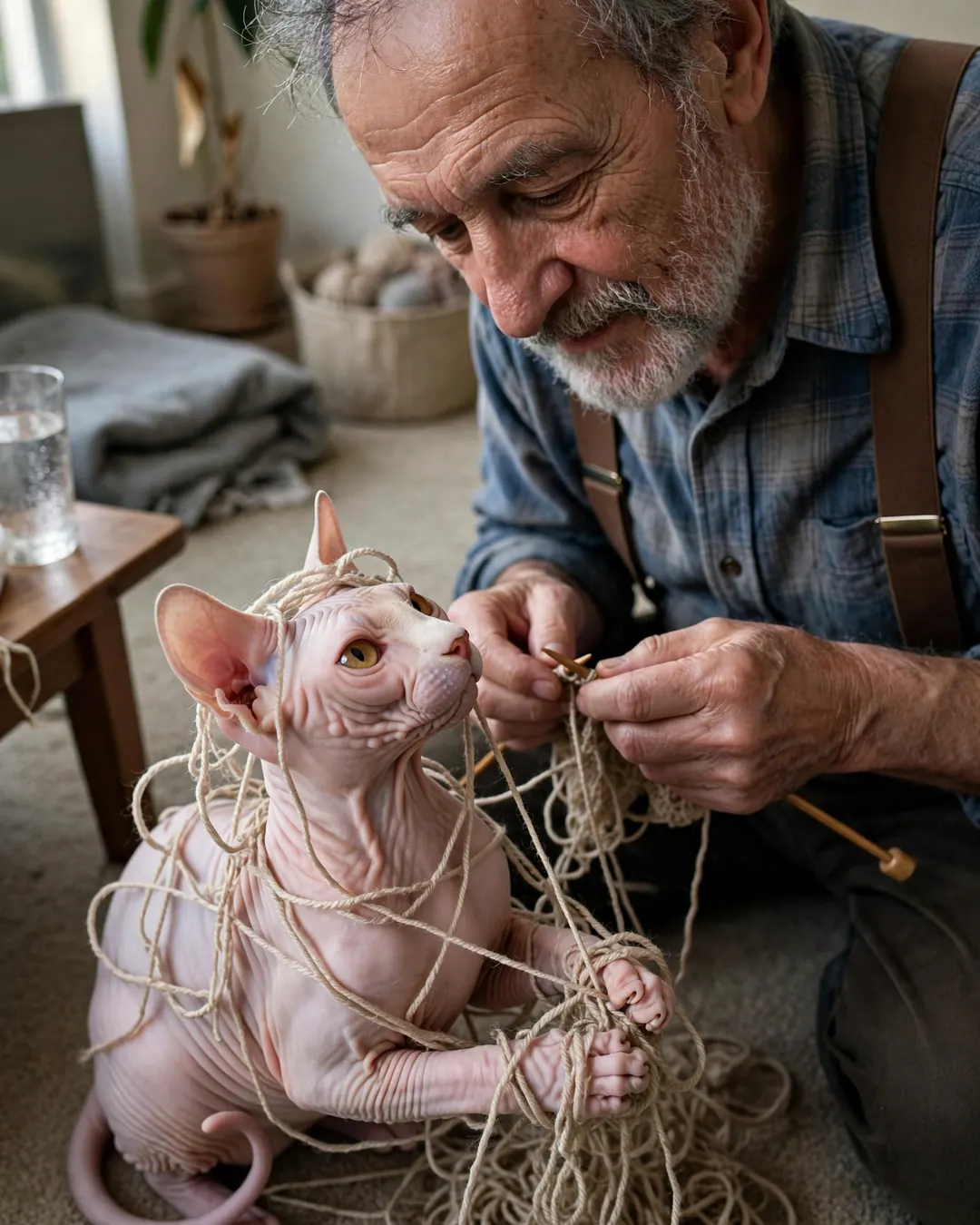
Grandpa Earl had a simple plan for the afternoon: settle down on the floor by the coffee table, pick up his wooden needles, and work a few rows. What he has now is a cat-shaped knot. Peaches sits upright beside him, completely draped in loops of pale twine, strands crossing over her pink shoulders, around her neck, and between her front paws. Her ears are perked and her green eyes are wide, wearing the innocent look of someone who has no idea how this happened. Earl, glasses-free and patient, is carefully working at the tangle with his fingers. A glass of water, a folded blanket, and a basket sit nearby in the soft room light.
As funny as this scene looks, it's a good reminder of one of the most important cat safety rules. Yarn, twine, string, and thread are dangerous if swallowed. A long strand can cause a serious blockage in a cat's intestines, which often needs emergency care. Strands wrapped around a neck or leg can also tighten if the cat panics. When knitting or crafting, keep materials in a closed bag or basket, put them away whenever you step out of the room, and offer your cat proper toys instead. If you ever see string hanging from a cat's mouth or rear end, do not pull it. Call your vet right away.
Earl will free Peaches strand by strand, and the knitting will have to wait. Lesson learned for both of them: the twine goes in the basket, and the cat goes on the couch.