They Left for a Long Walk Together. Only One of Them Walked Back.
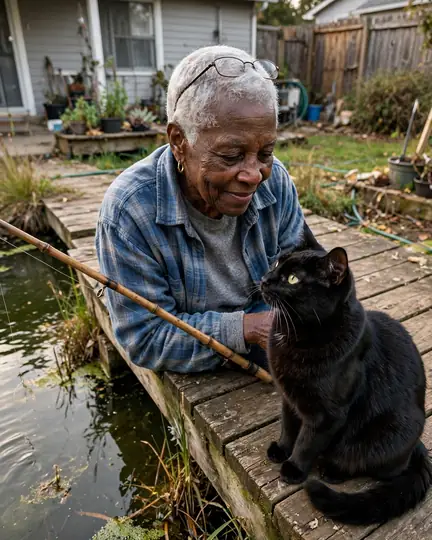
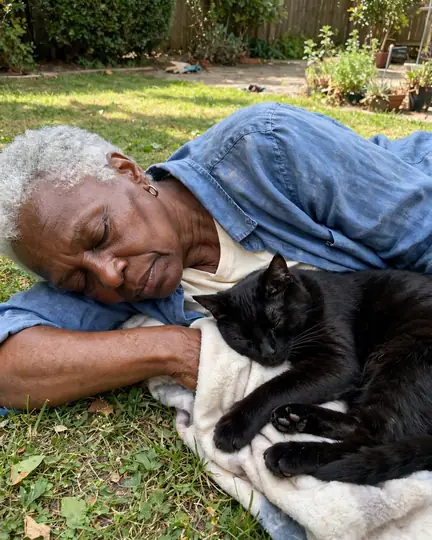
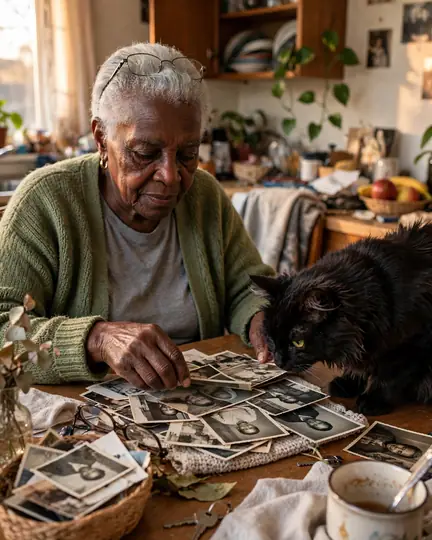
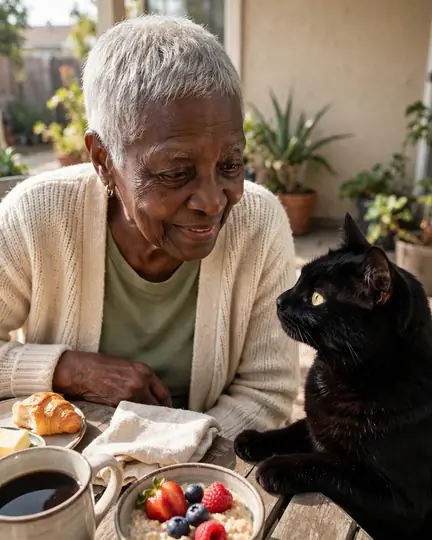
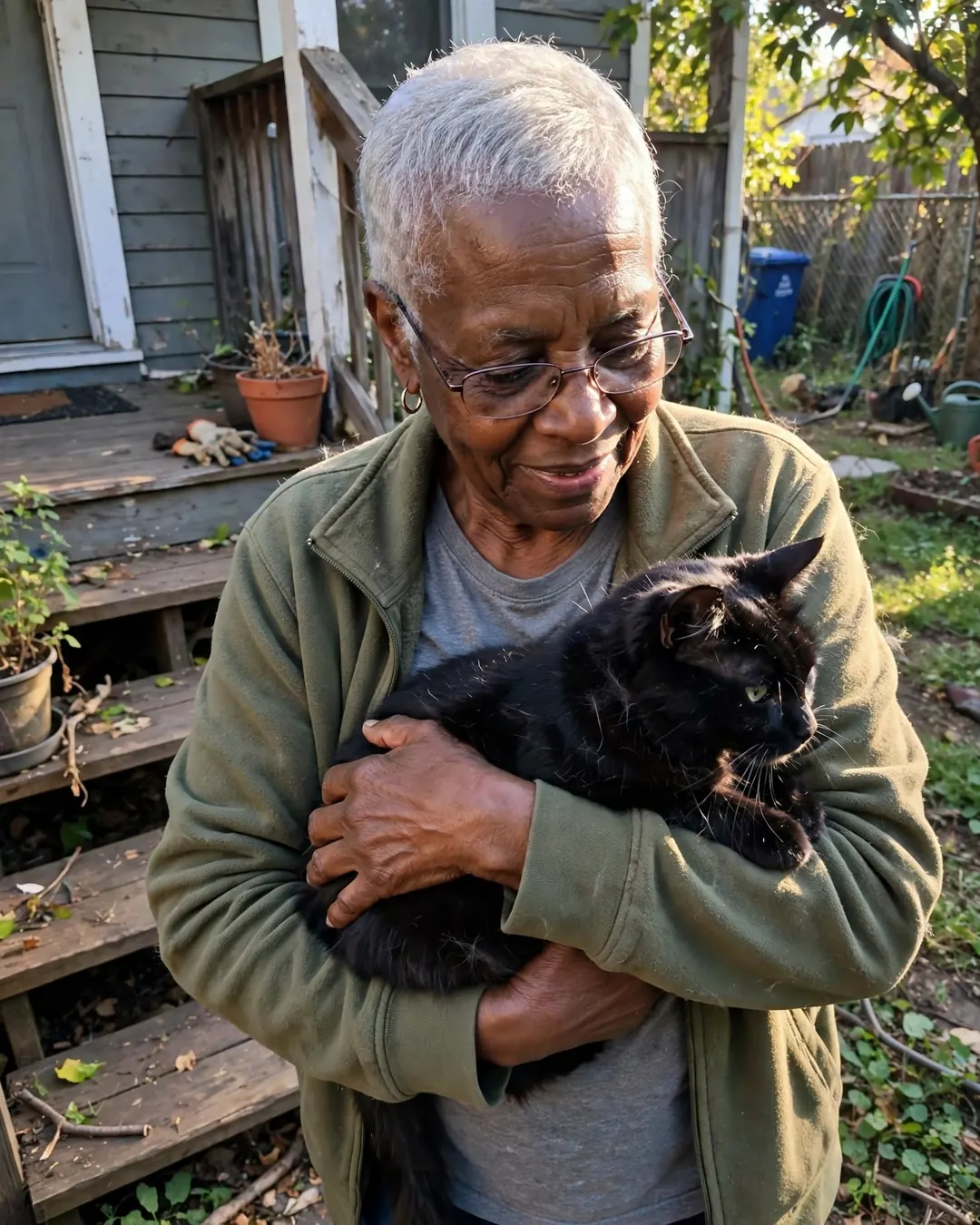
After a long wander around the neighborhood, somebody's little legs gave out, and it wasn't Grandma Odessa's. She stands at the foot of the wooden back steps in an olive jacket, glasses low on her nose, cradling Licorice against her chest with both hands. The black cat has gone completely limp in that contented way cats do when they've decided to be carried, his green-gold eyes heavy and his fur a bit tousled from the outing. Potted plants line the steps, a garden hose is coiled by the fence, and late sun slants across the yard.
Many cats can learn to enjoy walks, especially with a well-fitted harness and lots of patience. It helps to start indoors, letting your cat wear the harness for short stretches with treats, before trying quiet outdoor spots. Keep early walks brief, let your cat set the pace, and expect more sniffing and sitting than actual walking. Older cats and those new to the outdoors can tire quickly, so watch for signs like flopping down or refusing to move. Making sure vaccinations and parasite prevention are current before regular outings is a good idea, and your vet can help you decide what's right.
Licorice clearly decided he'd seen enough of the world for one afternoon. Odessa doesn't seem to mind the extra weight. Carrying a sleepy cat up the steps is, after all, one of life's nicer workouts.