A Feeder Packed With Sparrows, and Mango Sitting Two Feet Away. Here's What Happened.
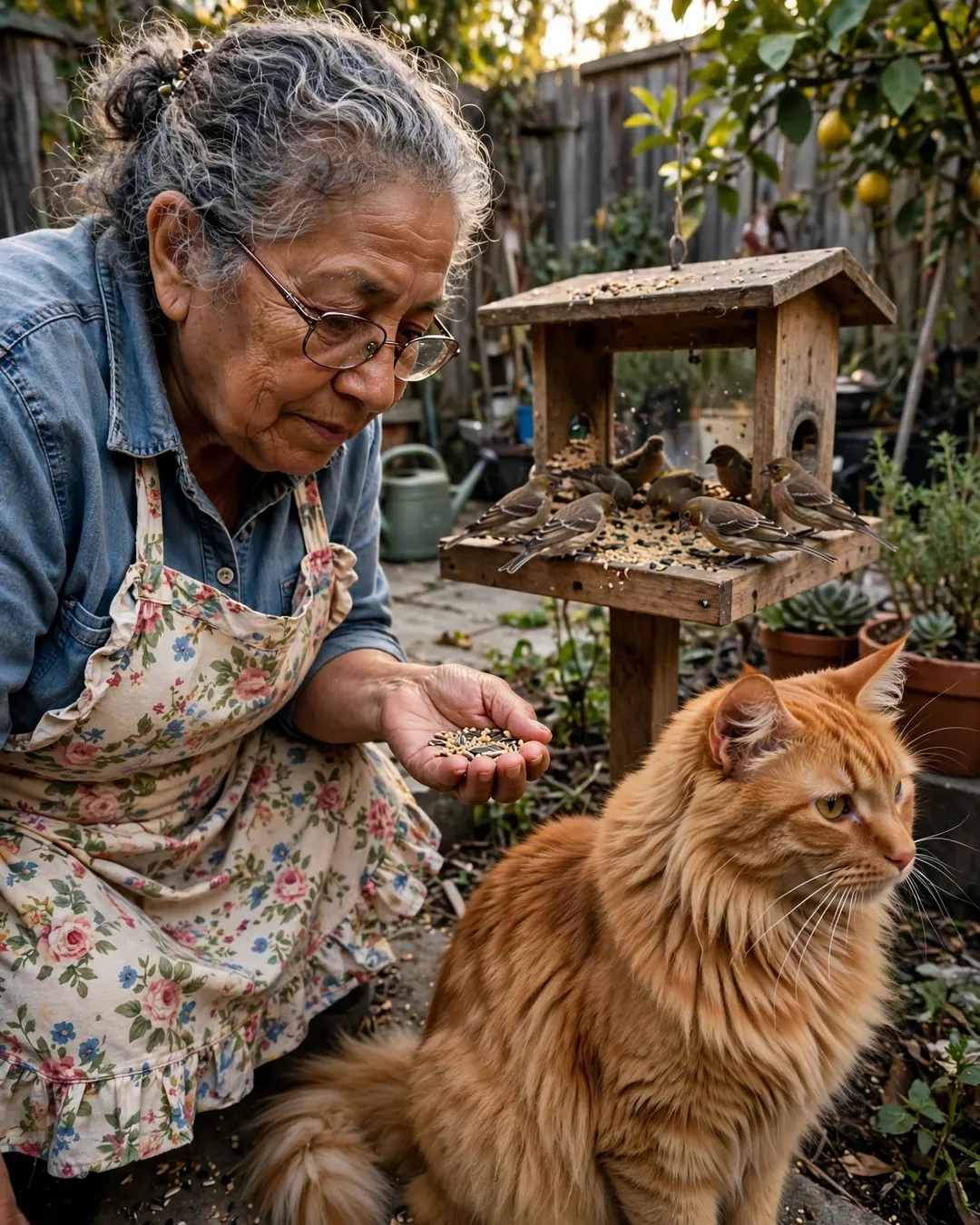
The little wooden feeder in Abuela Carmen's garden is crowded with sparrows, all jostling for a spot on the seed-covered platform. Carmen crouches beside it in a denim shirt and floral apron, glasses on, holding out an open palm full of birdseed and watching the birds with a gentle smile. In the foreground, Mango sits like a fluffy orange statue, ears forward and amber eyes locked on the feeder, every whisker alert. He isn't moving a muscle. Behind them, a lemon tree hangs heavy with fruit, a green watering can rests by the fence, and pots of herbs and succulents fill the yard.
If you've ever seen a cat watching birds, you might have heard them make a strange chattering or chirping sound, often with a quivering jaw. Nobody knows for sure why cats do it, but it's commonly linked to excitement or frustration when prey is in sight but out of reach. That intense focus is a reminder of how strong a cat's hunting instincts are, even in a well-fed pet. To protect wild birds, many owners keep cats indoors or supervised, place feeders where cats can't ambush, and let indoor cats enjoy bird-watching from a safe window perch.
Mango's self-control is impressive, at least for the moment. Carmen gets to enjoy her sparrows, and Mango gets the best show in the neighborhood. Everyone is on their best behavior in this little garden, feathers and fur alike.