Grandma Put On Her Favorite Old Record. Her Retriever Had a Reaction.
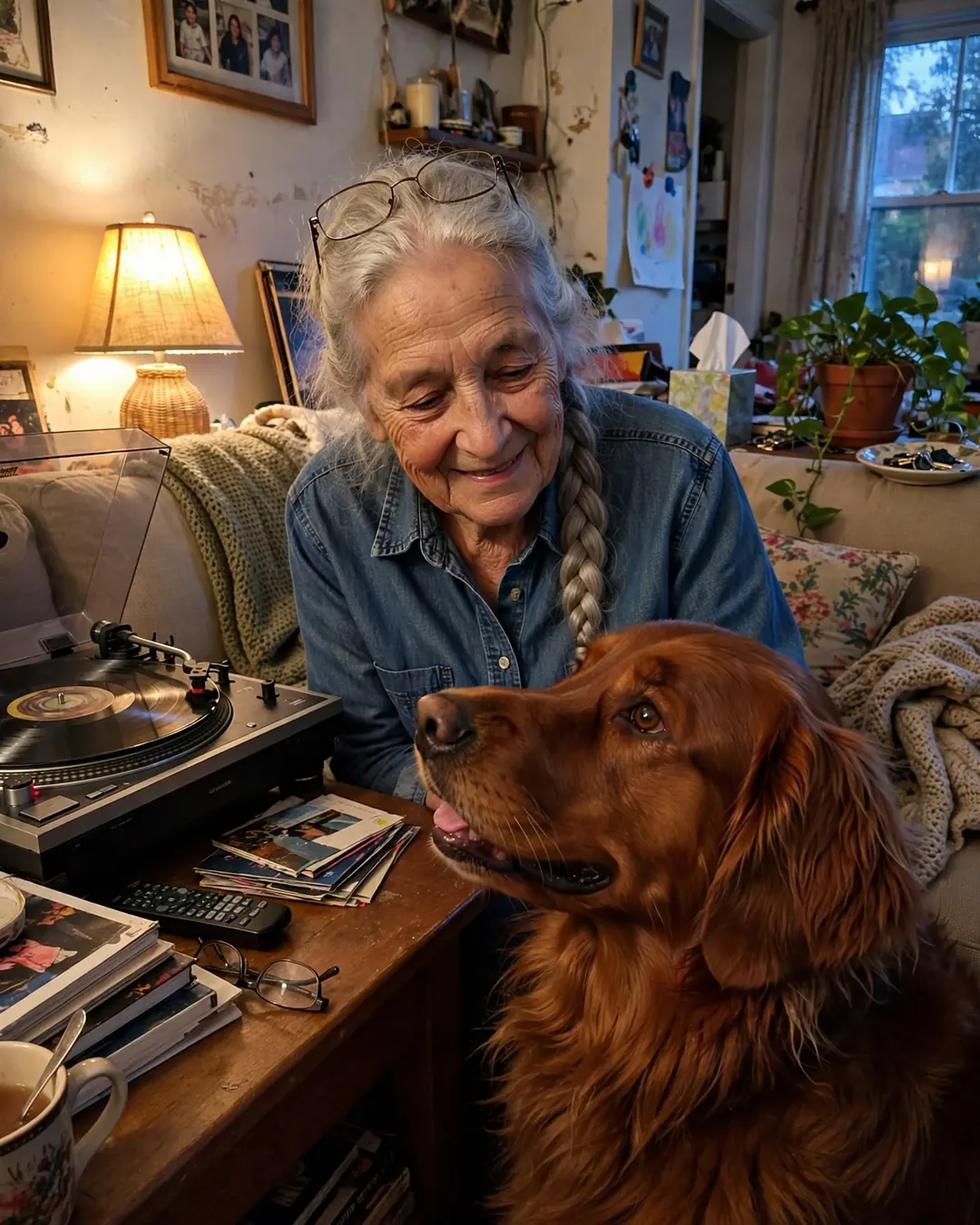
A record is turning on the old turntable, the needle settled into its groove, and the living room feels like a time capsule in the best way. A lamp throws amber light across framed family photos, a tissue box sits on the windowsill, and a teacup waits on a table cluttered with album sleeves and a remote. Ruth has her reading glasses pushed up into her silver hair and a soft, crinkly smile as she gazes down at Rusty. The retriever sits pressed against her knees, mouth slightly open, looking for all the world like he is humming along to the song.
Many dogs genuinely seem to respond to music, and some shelters and kennels play calm tunes in the background to help animals settle. Slower, softer music with a steady rhythm tends to suit a relaxed household, while loud, sudden sounds can make some dogs uneasy. Dogs hear higher frequencies than people do and are sensitive to volume, so it helps to keep the music at a comfortable level and give a dog the option to wander off to a quieter room if it wants. Watching body language is the best guide: a loose, relaxed posture, slow blinks, or a sleepy sigh usually means your dog is enjoying the session just fine.
Judging by Rusty's easy grin, he has no complaints about this afternoon's playlist. When the side ends and Ruth gets up to flip the record, he will probably follow her the three steps to the turntable and back again.