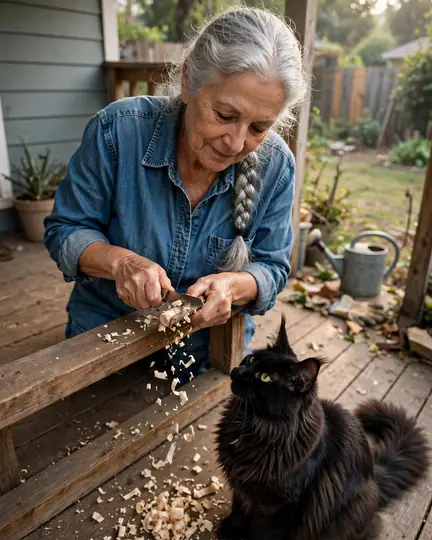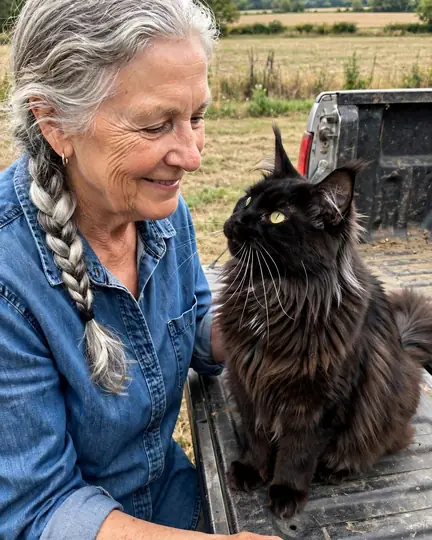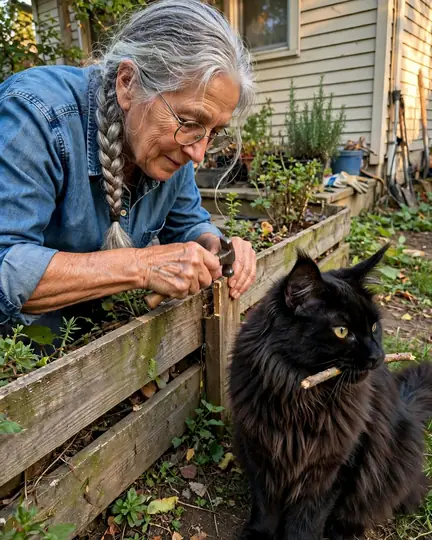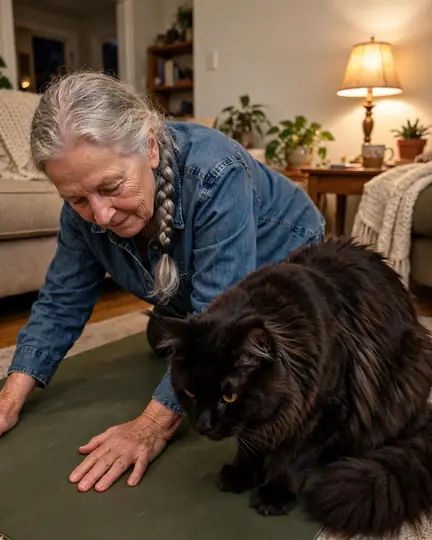
Onyx Pretends He Doesn't Love Brushing Day. His Face Says Otherwise.
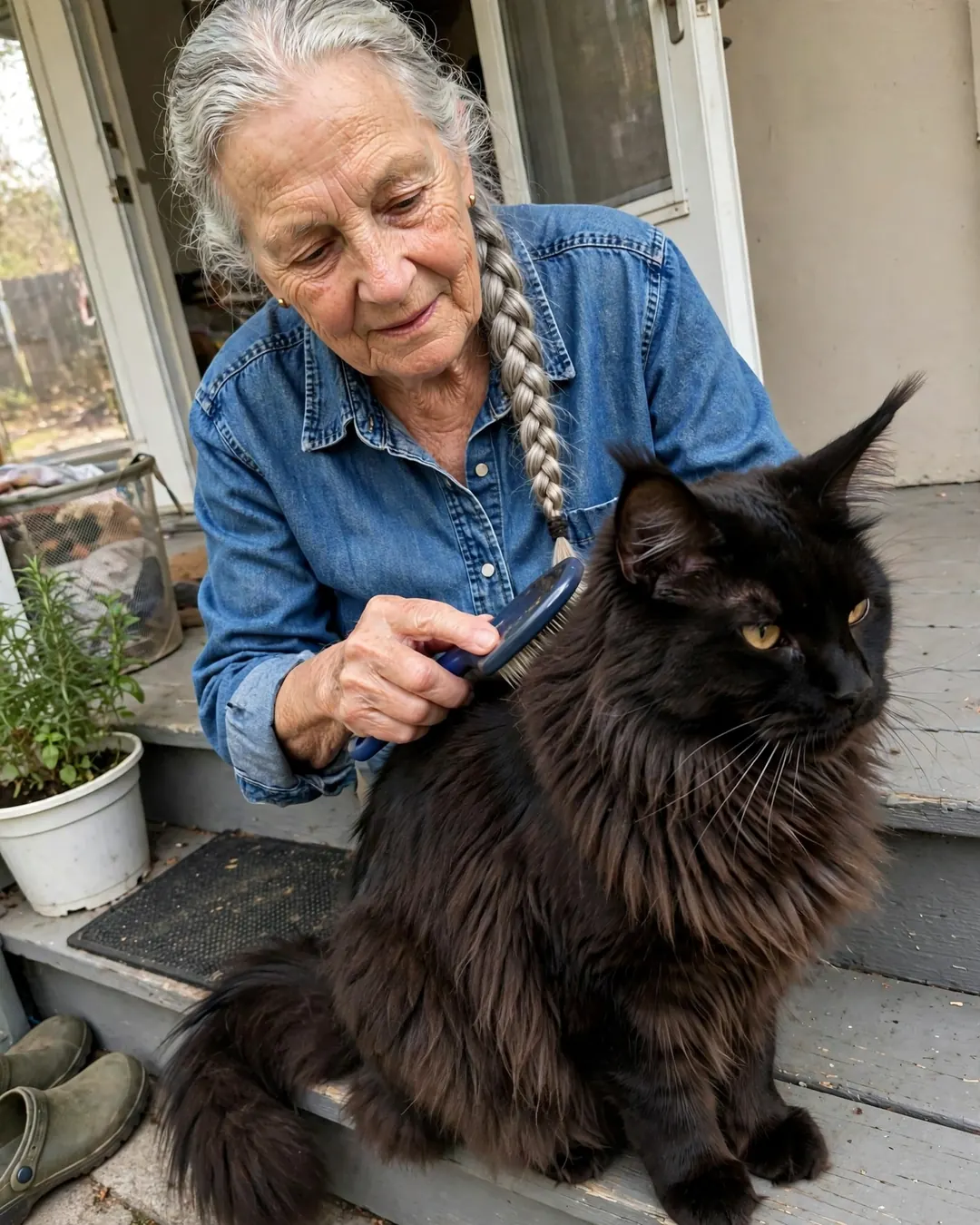
The back steps are painted a soft gray, a little scuffed from years of boots, and a pot of fresh herbs sits on the landing beside a pair of garden clogs. Nell has settled onto the top step in her denim shirt, braid tumbling down her back, holding a small blue brush. With slow, gentle strokes, she works through the thick fur along Onyx's shoulders and neck. Onyx sits patiently in front of her on the next step down, his massive black coat flowing all the way to the boards, his tail curled around his feet. His golden eyes are narrowed in a look of dignified tolerance that is slowly melting into enjoyment.
Maine Coons have a long, shaggy, water-resistant coat that is longer on the stomach, legs, and ruff and shorter on the shoulders. Although their fur is less prone to matting than some long-haired breeds, regular brushing, a few times a week, helps prevent tangles, reduces shedding and hairballs, and keeps the coat healthy. A wide-toothed comb works well for the longer areas, followed by a softer brush. Pay special attention to the belly, armpits, and behind the legs, where mats tend to form. Starting brushing sessions when a cat is young, keeping them short, and adding treats can make grooming a calm bonding ritual.
Onyx might not admit he loves this, but he has not moved an inch. By the end, he will look sleek and shiny, the steps will be covered in black fluff, and Nell will have earned her cup of tea.