Grandma Nell Started Whittling, and Onyx Saw Something Worth Hunting
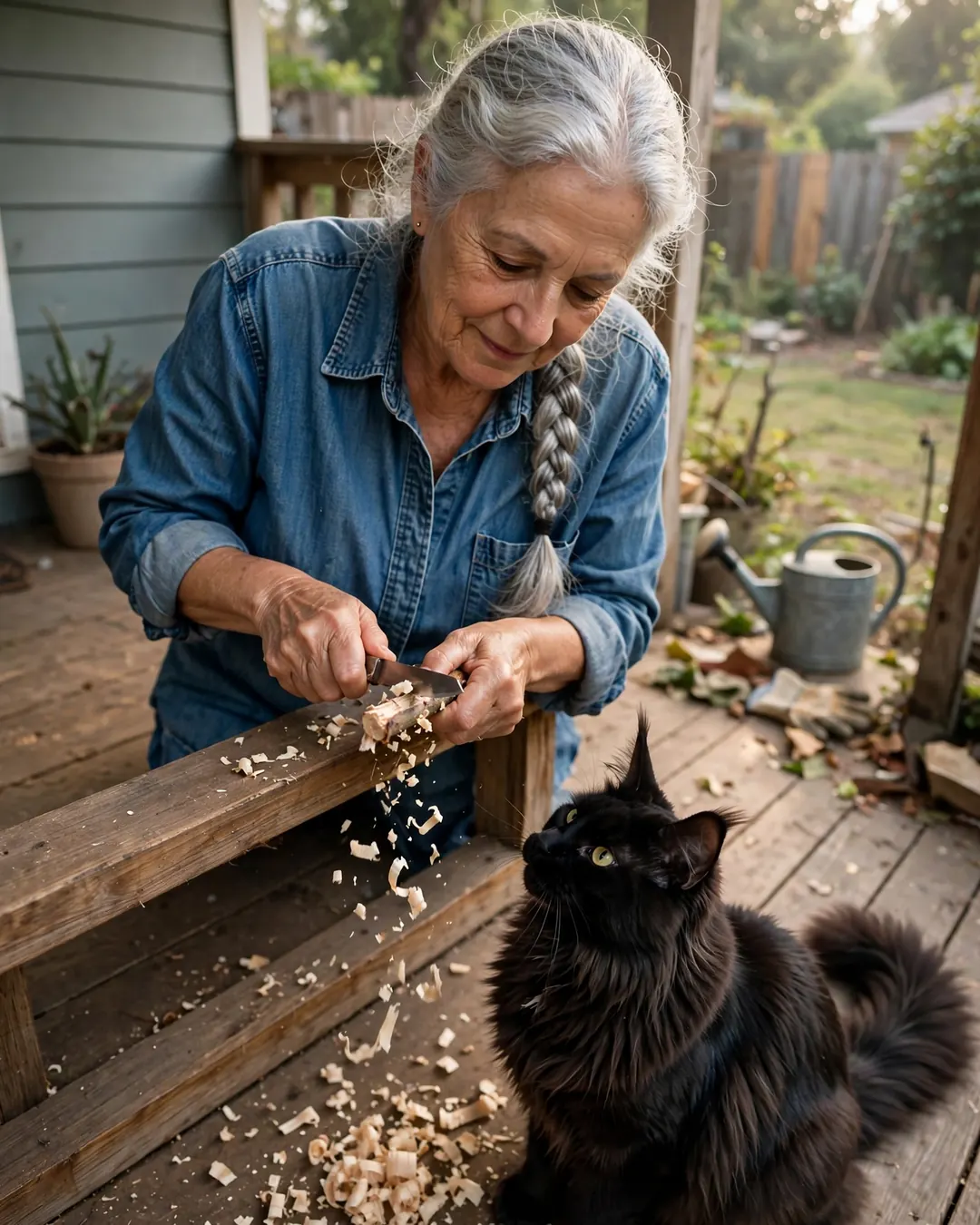
Out on the porch, the air smells of fresh-cut pine. Nell leans over the edge of a sturdy wooden bench in her denim shirt, sleeves rolled to her elbows, steadying a small block of wood while her knife peels away one curl after another. The shavings tumble off the edge and scatter across the bench and floorboards in a pale, growing drift. A galvanized watering can and a potted plant sit near the steps, and the yard beyond is soft with late light. Down below, Onyx sits with his head tipped all the way back, golden eyes locked on the falling curls, his fluffy tail swept around him. He looks ready to pounce the moment one lands close enough.
Cats are drawn to small, fluttering objects because the movement triggers their natural hunting instincts. Batting at falling leaves, feathers, or wood shavings is a harmless outlet for many cats, but it is smart to keep a few things in mind around woodworking. Sharp tools should be put away when not in use, and small splinters or wood chips can be a choking risk if chewed. Avoid letting cats play with shavings from treated or painted wood, and keep varnishes and stains well out of reach. A wand toy or crinkle ball is a safer stand-in when a cat wants to chase something.
Onyx seems content to watch for now, studying each shaving like a scientist. When Nell finishes her carving, perhaps a little bird or a spoon, he will surely inspect it closely to make sure it meets his standards.