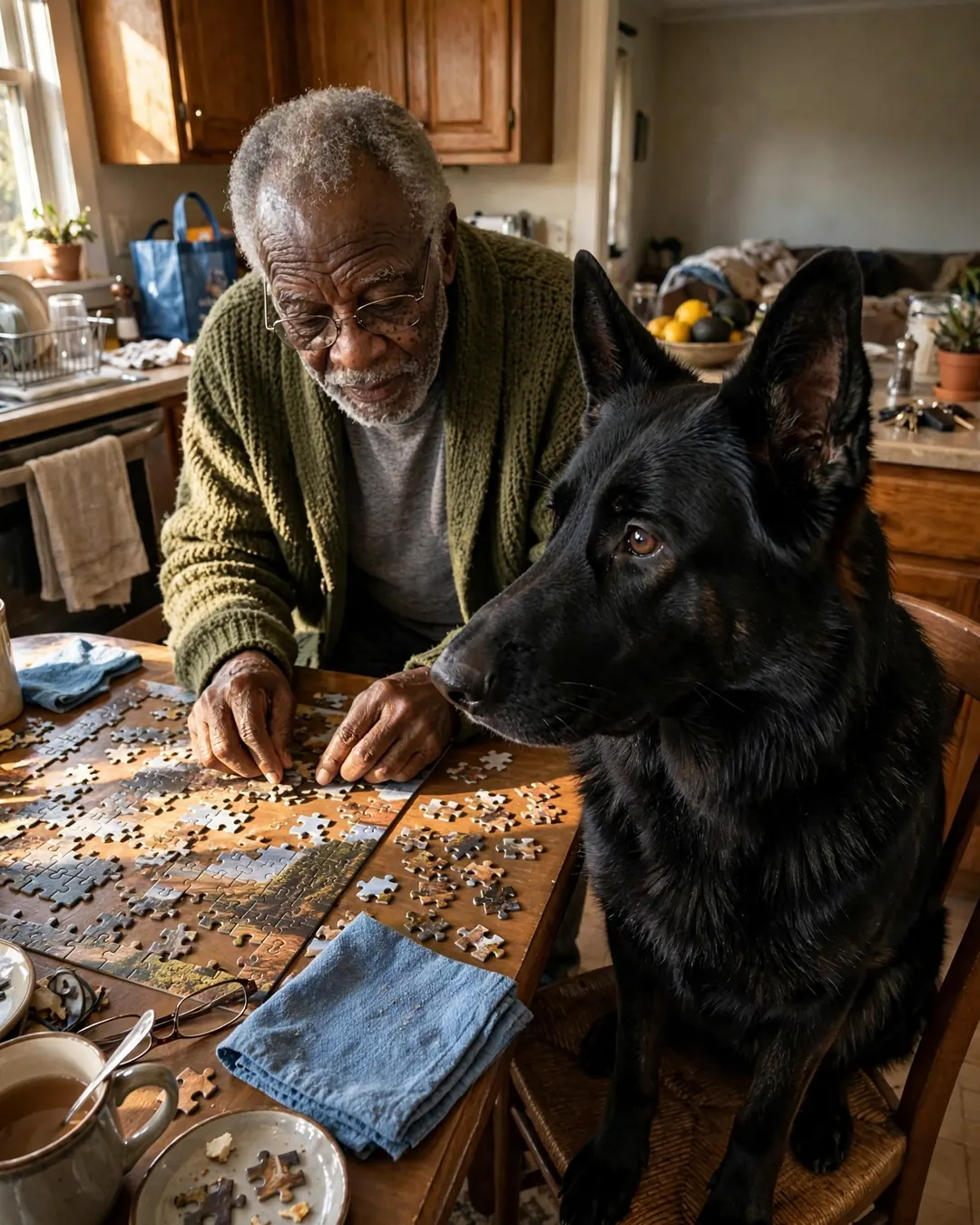
Grandpa Otis Spread a Big Puzzle on the Table. Bear Pulled Up a Chair.
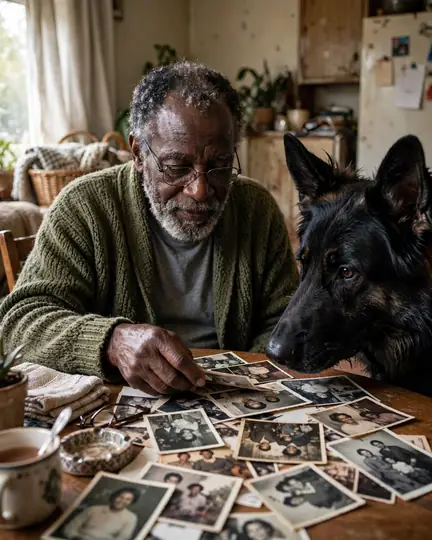
Hundreds of puzzle pieces are scattered across the kitchen table, and the picture is only beginning to take shape. Grandpa Otis leans over it in a green cardigan and gray tee, glasses on, pressing two pieces together with careful fingertips. Seated on the wooden chair beside him, as upright and attentive as any puzzle partner, is Bear. The black German Shepherd watches the table with ears perked and eyes bright, chin level with the edge as if he's scanning for a missing corner. A blue napkin, a cup of tea with a spoon, and a small plate of stray pieces sit nearby, and the warm kitchen glows behind them.
Jigsaw puzzles are a popular hobby for good reason. They are relaxing, encourage focus and patience, and are often enjoyed as a way to keep the mind engaged. Dogs benefit from similar brain games. Puzzle feeders, snuffle mats, and hide-and-seek games with treats give intelligent breeds like German Shepherds a healthy mental workout, which can help reduce boredom and restless behavior. One practical tip for puzzle lovers with pets: keep pieces off the floor, since a dog that swallows cardboard pieces may end up with an upset stomach, and a missing piece is never fun to discover at the end.
Bear may not be able to tell an edge piece from a middle one, but he's a loyal spectator. With a partner like this, Otis could keep puzzling all afternoon.