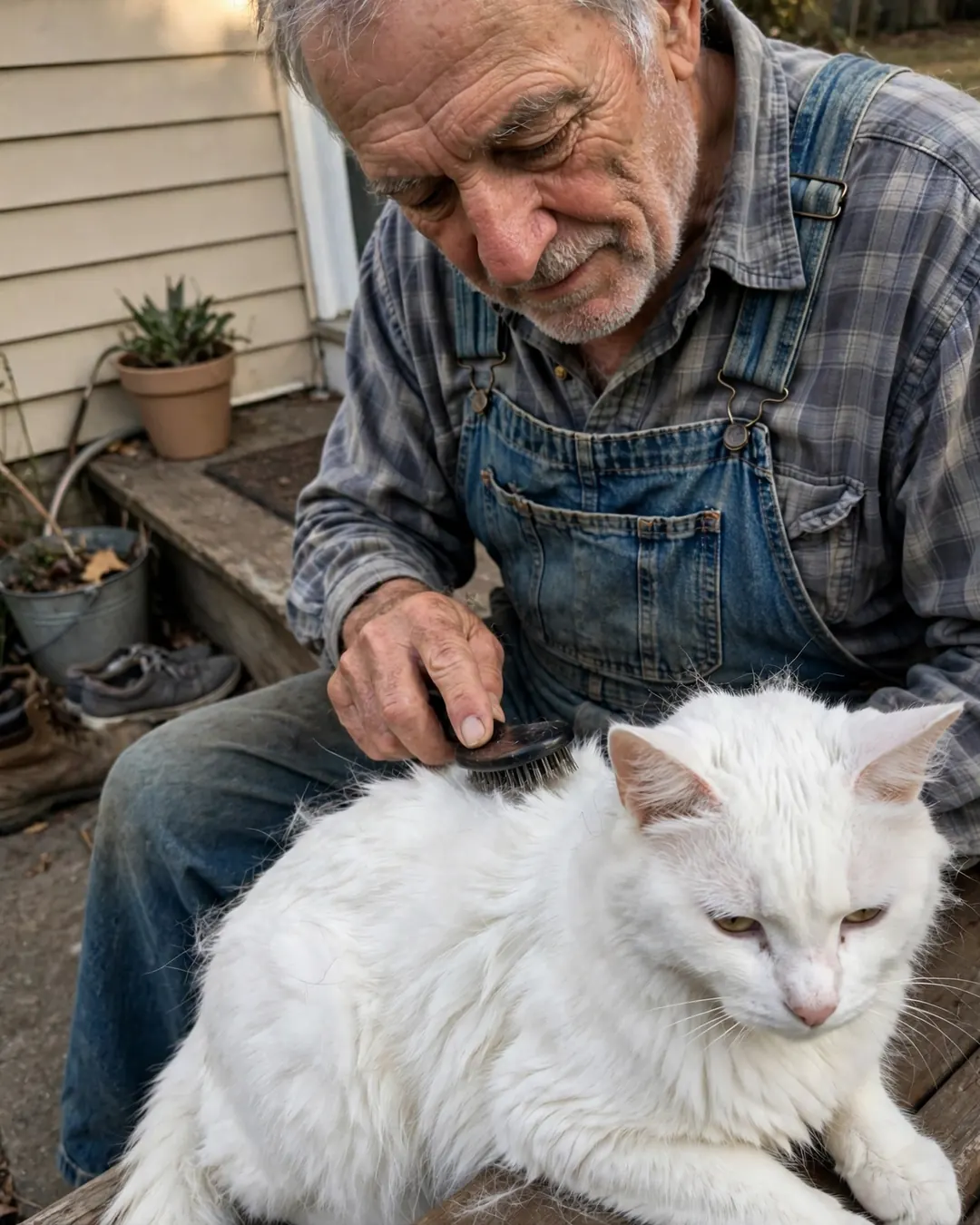
Grandpa Pulled Out the Little Brush, and His Cat Knew What Came Next
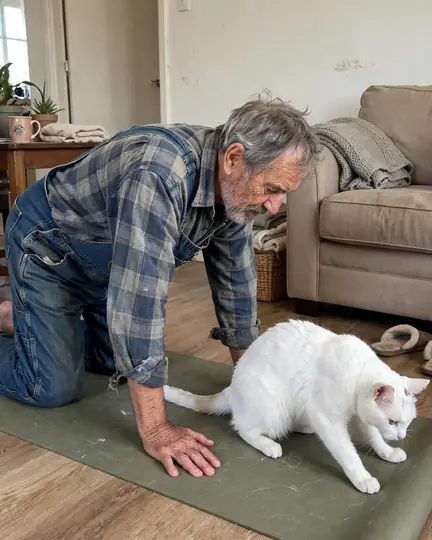
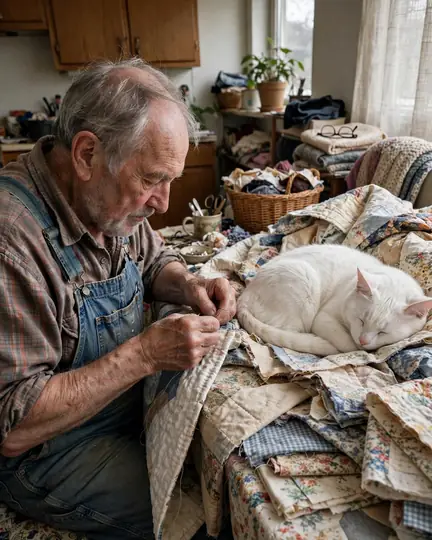
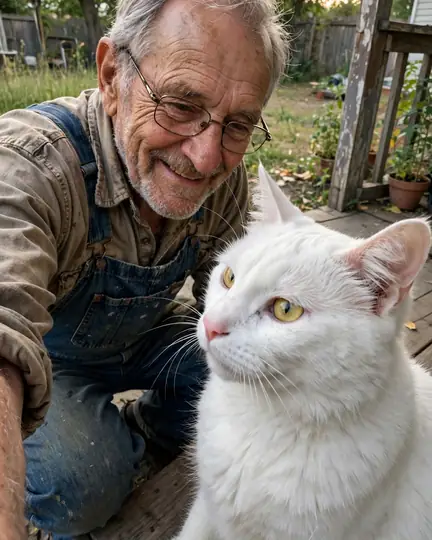
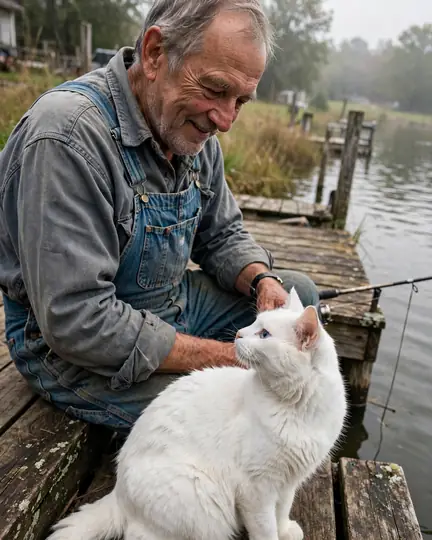
Out on the back steps, beside a potted aloe and a pair of old sneakers, Hank has settled in for a grooming session. He leans forward in his flannel shirt and overalls, eyes lowered in concentration, drawing a small brush slowly through Cotton's thick white coat. She lies stretched out on the wooden step with her paws tucked forward and her eyes narrowed to sleepy slits, clearly enjoying every stroke. A few loose tufts of fur cling to the brush, proof that this is a job worth doing regularly.
Long and medium-haired cats benefit a lot from regular brushing. It removes loose fur before the cat swallows it while grooming, which can help reduce hairballs, and it prevents the painful mats that tend to form behind the ears, under the legs and along the belly. Brushing also spreads natural oils through the coat and gives you a chance to spot fleas, lumps or skin changes early. Older cats may groom themselves less thoroughly as they age, so a little help from their person becomes even more valuable. Short, gentle sessions with a brush suited to the coat type work best, and ending with a treat helps the cat look forward to the next one. If you find mats close to the skin, a groomer or your vet can remove them safely.
Hank takes his time with every stroke, and Cotton seems to think this is the best part of her whole week.