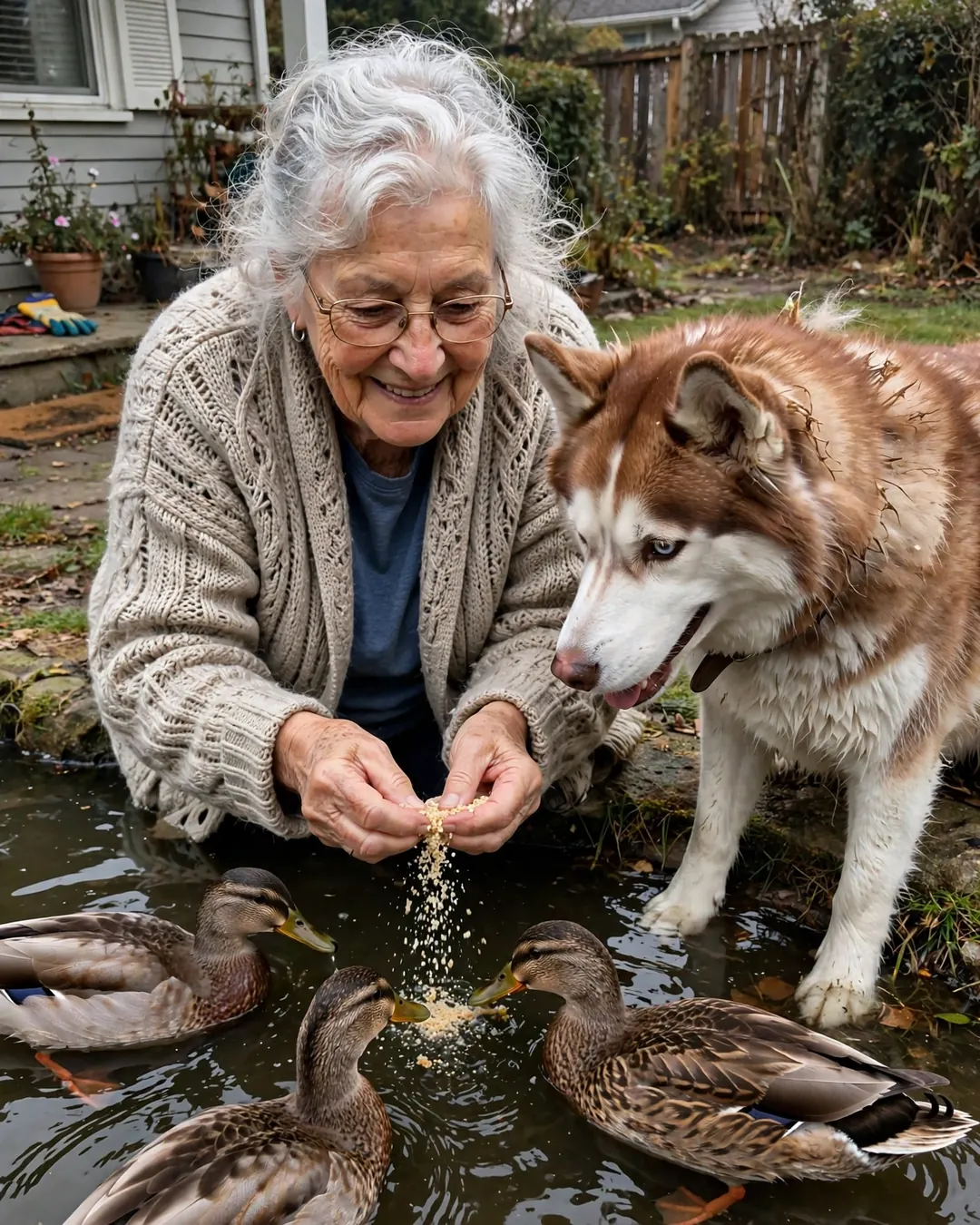
Grandma Knelt by the Pond to Feed the Ducks. Her Husky Was Right Behind Her.
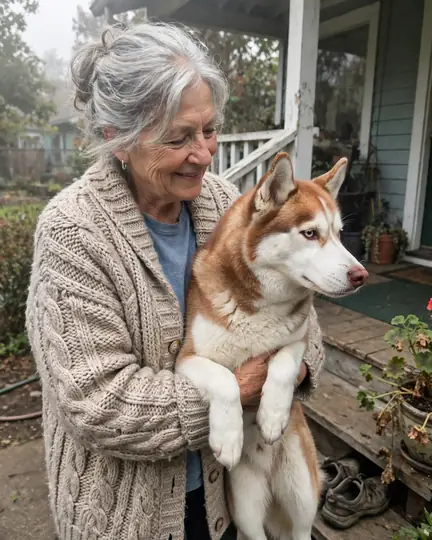
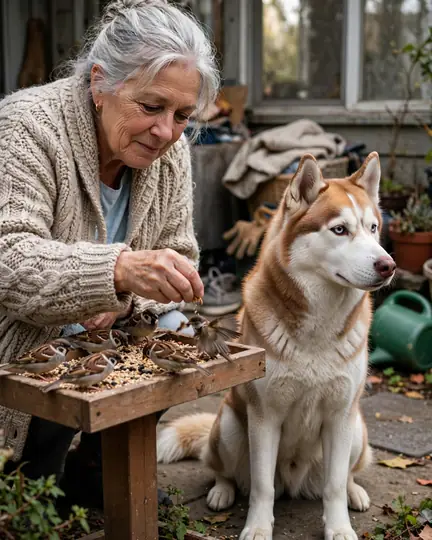
At the muddy edge of a backyard pond, Ruth crouches low with her hands cupped together, letting a thin stream of grain trickle down into the water. Her silver curls are a little windswept, her glasses are on, and her chunky oatmeal cardigan is pushed up at the wrists. Four brown ducks have gathered right below her hands, bills open and eager. Just behind her shoulder stands Copper, mouth parted and blue eye fixed on the ducks, leaning in as close as he dares while holding himself back. A tidy porch, potted flowers and a wooden fence stretch out behind them.
Huskies were developed as working sled dogs, and they are known for having a strong prey drive, which means birds, squirrels, rabbits and even cats can trigger an urge to chase. That is why a scene like this takes real training and supervision. Teaching a reliable leave it cue, practicing calm sits around distractions and rewarding the dog generously for staying put all help build impulse control. Even a well-trained Husky should usually stay on a leash or behind secure fencing near wildlife, since instinct can win in a split second. Keeping sessions short and ending on a calm note sets the dog up for success, and it keeps the ducks safe and relaxed.
The ducks get their snack, Ruth gets a peaceful moment by the water, and Copper earns some well-deserved praise for his very best manners.