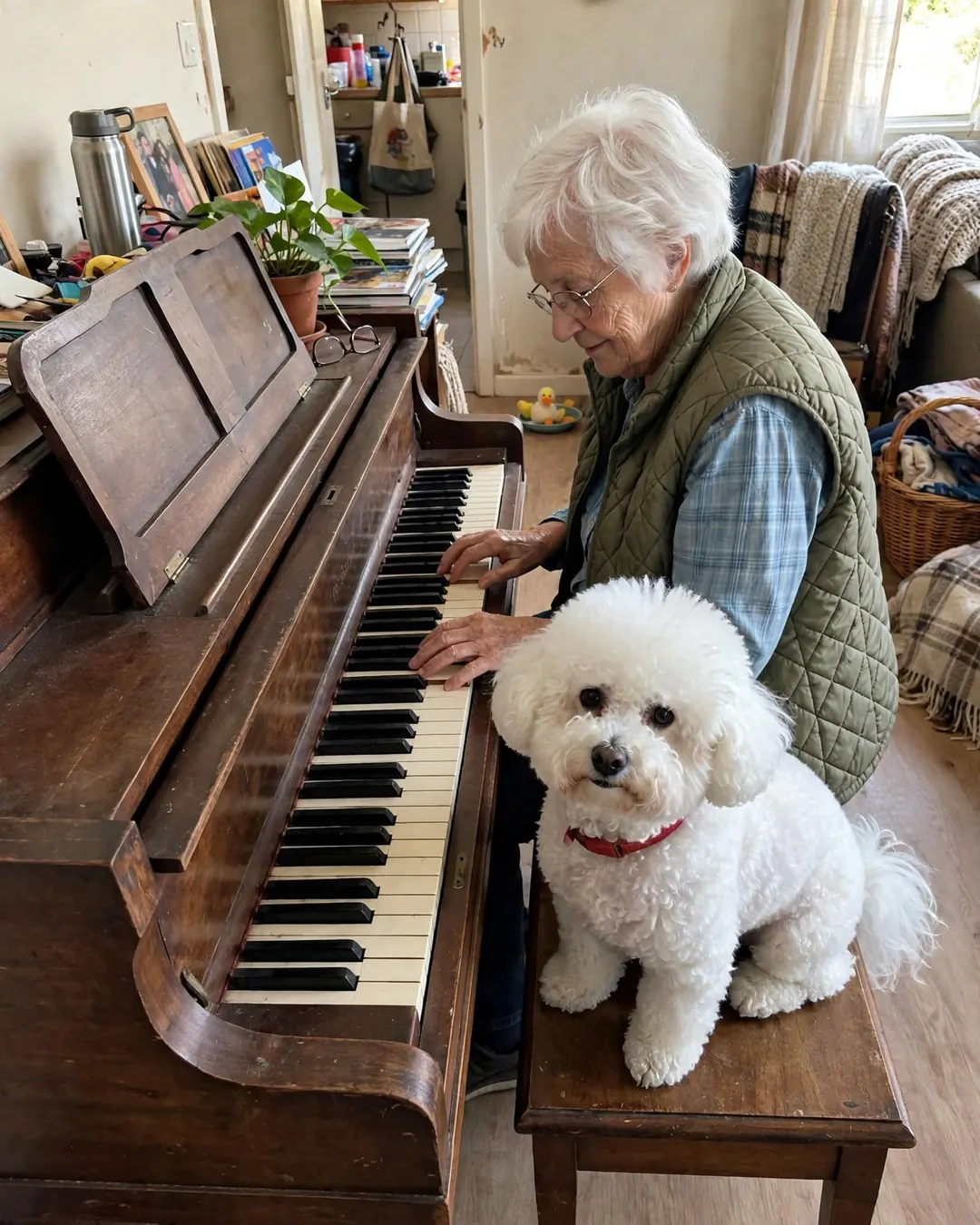
Grandma Ruth Went to Play the Old Piano. Someone Had Already Taken the Bench.
An old upright piano with a warm, worn finish takes up one wall of the sunny room, its keys a little yellowed from years of songs. Ruth stands beside it in her quilted vest and blue shirt, resting her fingers on the keys as she picks out a tune. Cotton has claimed the piano bench all for himself, sitting tall and proud in a red collar, looking straight ahead like a performer waiting for applause. Family photos, a thermos, a plant, and a stack of sheet music crowd the top of the piano, and colorful afghans are draped over the furniture behind them.
Many dogs react to music in interesting ways. Some seem relaxed by soft melodies, some ignore it entirely, and a few like to howl along, especially to high notes. Because dogs have sensitive ears, it is worth watching their body language when you play. A relaxed dog will stay nearby, lie down, or even doze off, while a dog who flattens its ears, paces, or leaves the room may find the sound too loud. For older adults, playing an instrument is a lovely hobby that keeps the hands and mind busy, and having a furry audience can make practice feel a little more special.
Cotton may not read sheet music, but he clearly has opinions about the best seat in the house. With a duet partner this devoted, Ruth's afternoon concerts are always sold out.