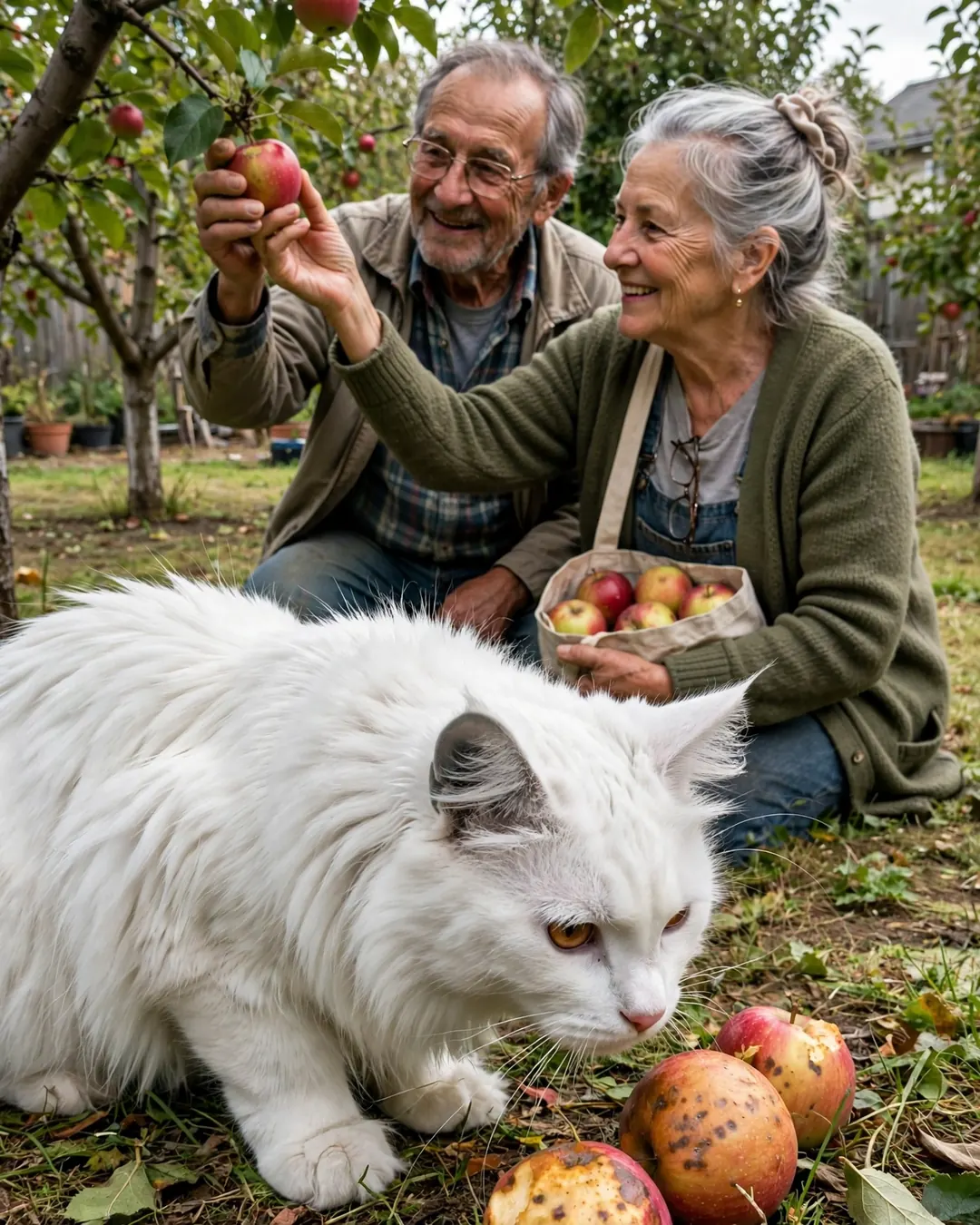
Grandpa Was Reaching for the Best Apple on the Tree. Snowdrop Found One Lower Down.
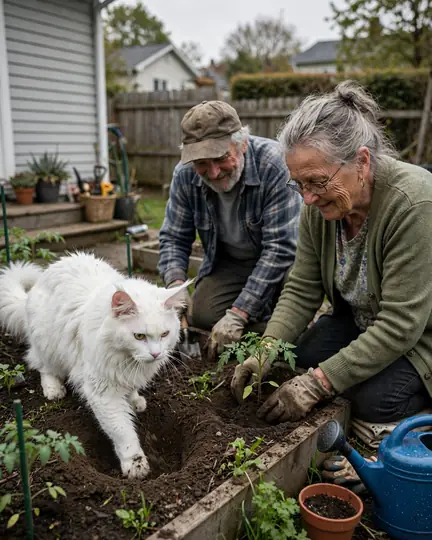
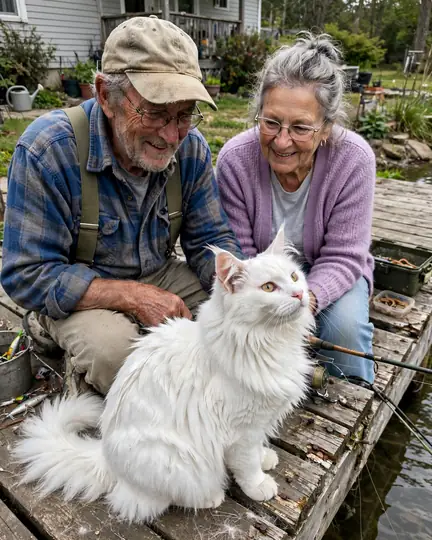
The apple trees are loaded this year, and Frank is reaching up to pluck one more shiny red apple from a low branch while Ruth kneels in the grass with a canvas bag already full of fruit. They're both laughing at something, sharing the easy rhythm of a couple who has done this together for a long time. In the foreground, Snowdrop is on a mission of her own. The huge white Norwegian Forest Cat crouches low in the grass, nose almost touching a bruised windfall apple, her amber eyes narrowed in deep concentration. Fallen fruit and leaves are scattered all around her.
Cats explore the world nose first, and fallen fruit offers a whole new set of scents to investigate. A curious sniff is harmless, but it's good to know that apple seeds, stems and leaves contain compounds that can be harmful to pets if eaten in quantity. Most cats have little interest in eating fruit, since they are obligate carnivores and lack the taste receptors for sweetness. Still, rotting windfalls can ferment and attract wasps and bees, so picking up fallen apples regularly keeps an orchard safer for pets. Brushing a long-haired cat after time outdoors also helps remove any burrs, leaves or bits of grass caught in the fur.
The basket will be full by afternoon, and there may be pie on the menu soon. Snowdrop, meanwhile, seems determined to give every single apple on the ground a thorough inspection first.