Dot Tipped the Watering Can Over the Petunias. One Bloom Had Whiskers.
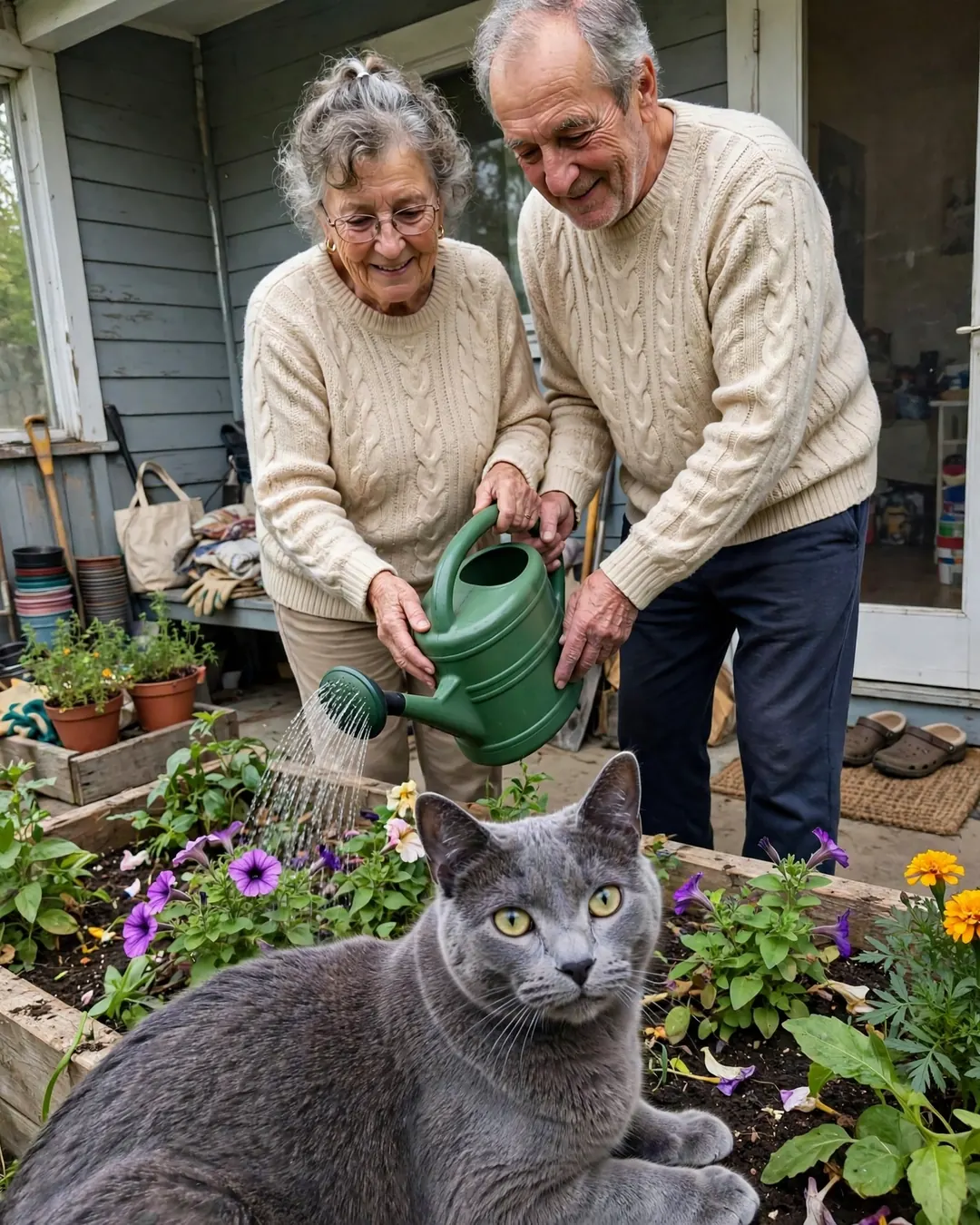
A soft shower of water arcs from the green spout onto a bed of purple petunias. Dot tilts the watering can with care while Frank reaches in to help steady it, both of them in cream cable-knit sweaters, laughing together on the front walk of their blue-grey house. Garden tools lean against the siding, a stack of terracotta pots waits on the porch, and orange blooms brighten the planter box. The one complication sits squarely in the middle of the flowers: Misha, perfectly at ease among the stems, front paws tucked neatly and yellow-green eyes gazing out as if she's been planted there on purpose.
Gardens are wonderful places for cats to explore, but it's worth knowing which plants are safe. Many popular bedding flowers are considered low-risk, while others are seriously dangerous. True lilies and daylilies are the most notorious, since even a little pollen or water from a vase can cause kidney failure in cats. Other common garden plants, including foxglove, oleander, azalea, and sago palm, are also toxic. Before planting, check a trusted pet-safe plant list, and keep fertilizers, slug pellets, and weed killers stored securely and away from areas where your cat walks or lounges. Watering cans and outdoor buckets can collect stagnant or treated water, so empty them when you're done and offer fresh water instead. If you suspect your cat has chewed something toxic, call your vet or a pet poison hotline right away, even before symptoms appear.
The petunias will survive a little company, and Misha seems determined to be the prettiest thing in the flower bed. Hard to argue with her.