Rose Hadn't Taken a Single Bite of Her Sandwich Before Yeti Made His Move
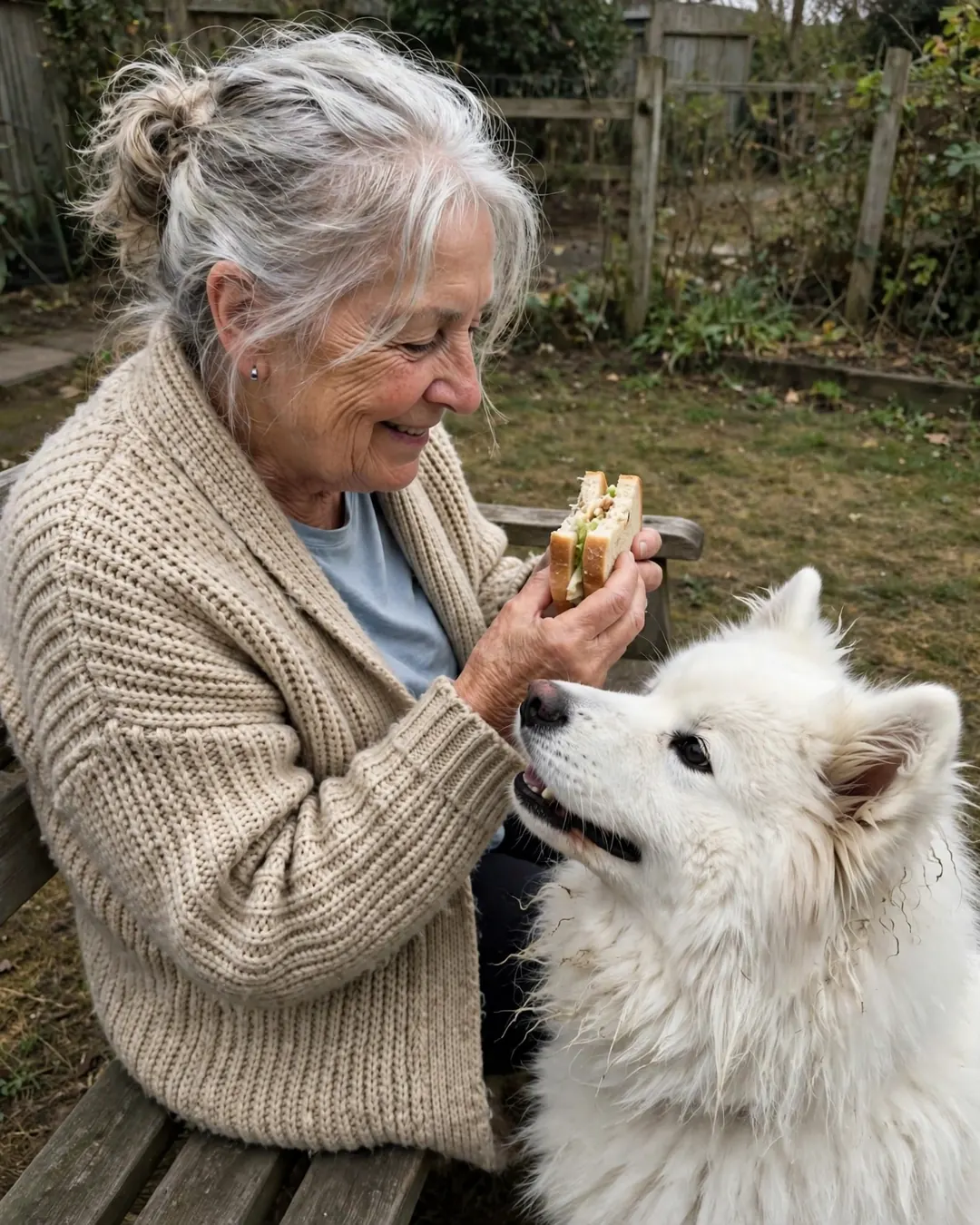
The sandwich hasn't even reached Rose's mouth yet, and the negotiations have begun. She sits on a weathered wooden bench in a grassy yard, wearing a long knit cardigan over a pale blue shirt, a thick sandwich held up in one hand. Her eyes crinkle with amusement as she looks down at Yeti, who has pressed in close with his fluffy chin raised, mouth slightly open, and dark eyes fixed on lunch with an expression of total devotion. Behind them, a rustic wooden fence and a tangle of autumn garden fade into the soft, overcast afternoon.
That hopeful stare is hard to resist, but sandwiches often contain ingredients that don't agree with dogs. Onions and garlic, raw or powdered, can damage a dog's red blood cells. Grapes and raisins are toxic, and so is chocolate. Some breads and spreads contain xylitol, an artificial sweetener that can be life-threatening to dogs, and many deli meats and cheeses are very salty and fatty. If you'd like to share, a small piece of plain cooked chicken or turkey with nothing added is usually a safer option, as long as treats stay a small part of the overall diet. Better still, bring along a few of your dog's own treats so you can reward good manners like sitting politely instead of begging. Consistency makes a big difference, since even occasional handouts can encourage more begging later. Your vet can help with questions about healthy snacks.
Yeti's sad-eyed pitch is undeniably persuasive. Rose may hold firm on the sandwich, but there's surely a dog biscuit in that cardigan pocket.