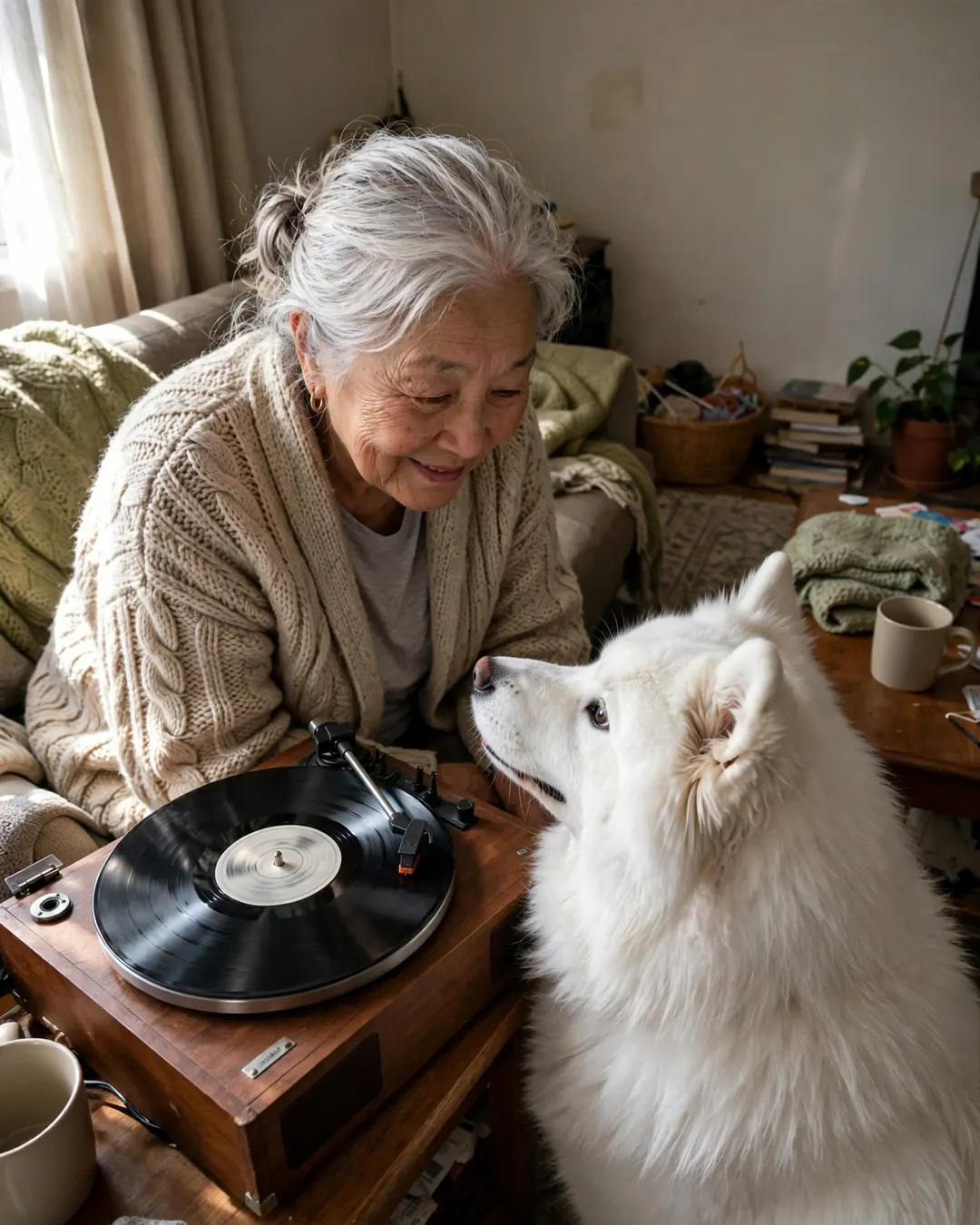
Rose Put On One of Her Old Records. Yeti Couldn't Take His Eyes Off It.
The needle drops, a familiar crackle fills the room, and Rose is smiling before the first note even plays. She sits on a cushioned sofa in a cream cable-knit cardigan, her silver hair pulled back, leaning over a wooden record player as a black vinyl album turns slowly on the platter. Yeti sits right beside the turntable, his white head tilted forward and his nose pointed at the spinning record with fascinated attention. A rug, a stack of books, a basket, a houseplant, and a coffee mug fill the warm, lived-in living room around them.
Many dogs do respond to music, and observations from shelters and owners suggest that soft, slower music tends to have a calming effect on many dogs, while loud, intense music may make some restless. Every dog is different, so watching your dog's body language is the best guide. A relaxed dog may lie down, sigh, or settle near the speaker, while flattened ears, pacing, or leaving the room may suggest the volume is too high. Dogs hear a wider range of sounds than people do, so keeping the volume moderate is kind to sensitive ears. With vintage equipment, it's worth keeping cords tidy and out of chewing range, and placing the turntable on a stable surface where a curious nose or wagging tail won't knock the needle across the record.
Rose has the memories that go with every song, and Yeti has a front-row seat to the spinning disc. It's a listening party for two.