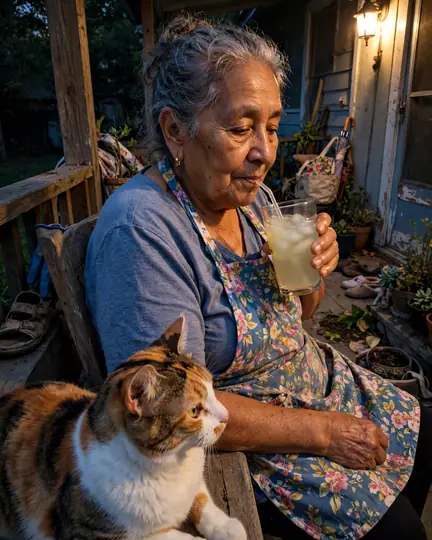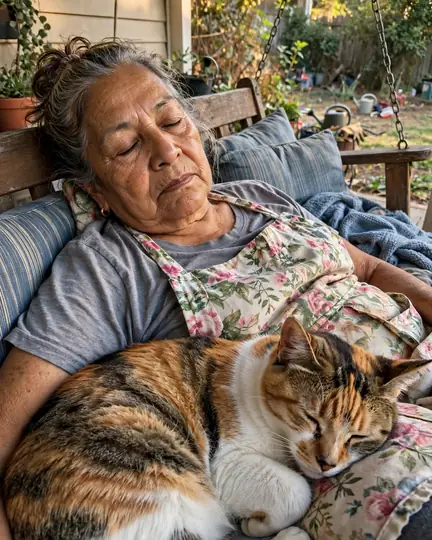
Abuela Rosa Unfolded an Old Letter, and Her Calico Knew to Come Close
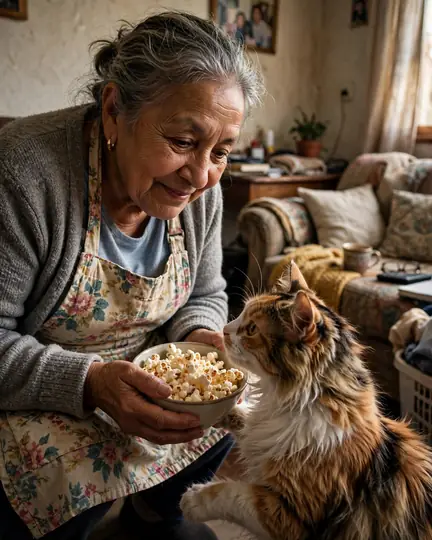
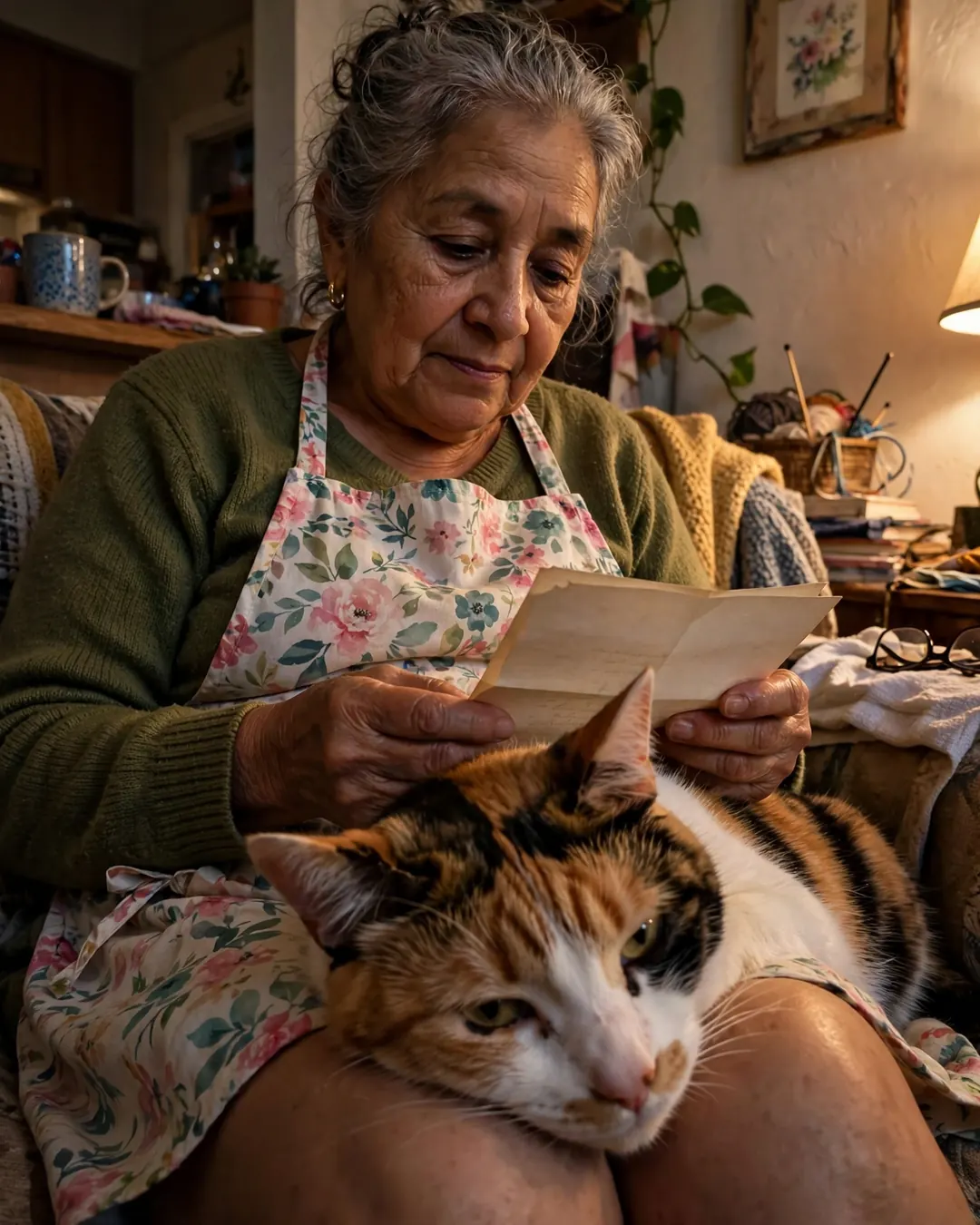
The lamp is low, and the letter in Abuela Rosa's hands is soft with age, its folds worn thin from being opened many times before. She reads it slowly, her face thoughtful, her green cardigan wrapped over her floral apron. Down on her lap, Canela has laid her chin right on Rosa's knee, eyes half closed, as if she knows this is a moment for staying close and being still. Around them, the room holds a lifetime of small things: a basket of knitting, a stack of books, a pair of glasses set aside, a framed flower print, and a trailing houseplant on the shelf.
People often say their pets seem to sense when they are feeling sentimental or low, and there is some sense to it. Cats are skilled at reading routine and body language. They notice when we sit quietly, breathe more slowly, or stay in one place for a long time, and many cats respond by settling in close. Whether or not a cat understands emotions the way people do, that warm, steady presence can be genuinely comforting. For older adults, especially those who live alone or have lost a spouse, the companionship of a pet can bring structure, touch, and a reason to get up each morning. Those quiet benefits are a big part of why so many people treasure their animals in later life.
Whatever the letter says, Rosa is not reading it alone. Sometimes the best company is the kind that simply rests its head on your knee and stays.