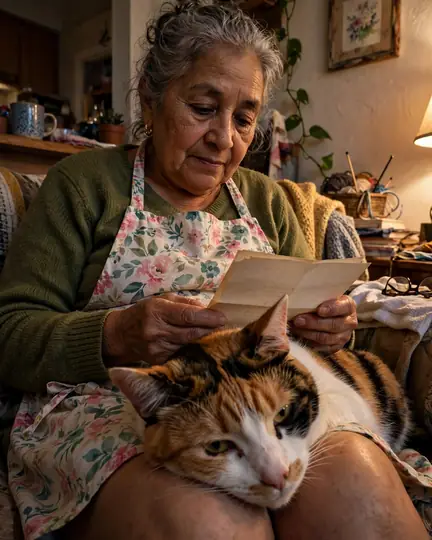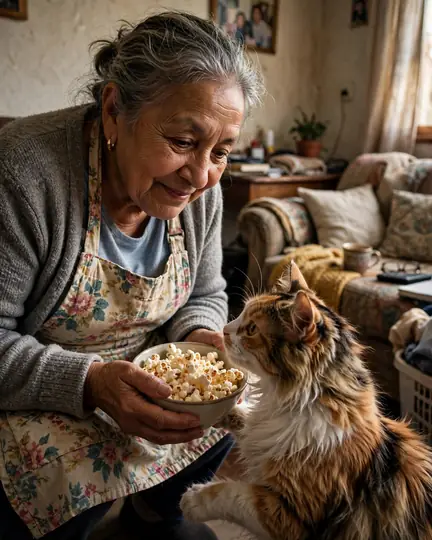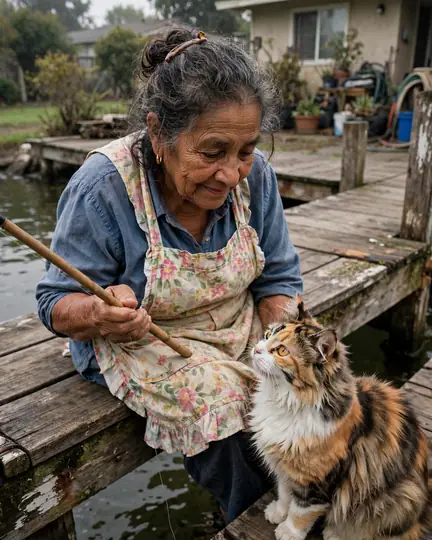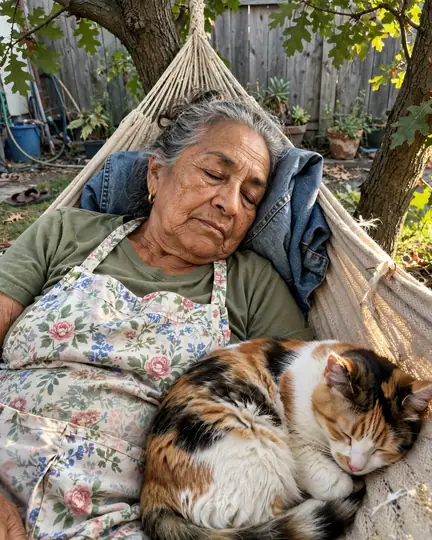
Canela Sprawled Across the Back Step and Waited. Abuela Rosa Knew Exactly Why.
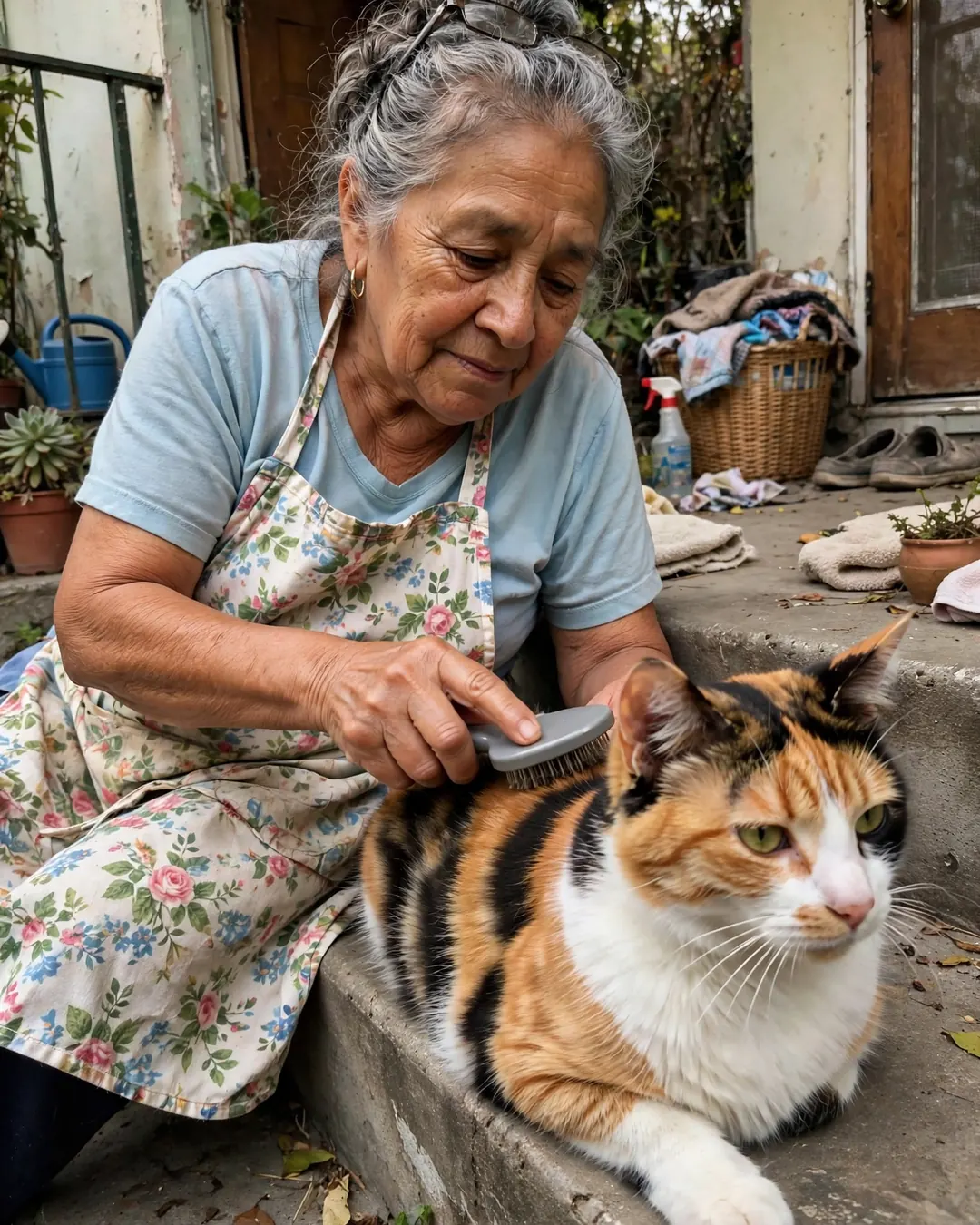
Canela has stretched herself across the concrete step like a queen awaiting her attendants, and Abuela Rosa is happy to oblige. Seated beside her in a light blue tee and her flowered apron, sunglasses tucked into her gray hair, Rosa runs a small bristle brush along the calico's striped orange-and-black back. Canela keeps her green eyes open just enough to supervise, her white chest glowing in the soft light. Behind them, a laundry basket overflows by the door, a spray bottle waits on the step, and a pair of shoes rests on the mat.
Regular brushing is good for almost every cat, not only long-haired ones. It removes loose fur before it ends up on the couch or in the cat's stomach, which can help reduce hairballs. It also spreads natural skin oils, keeps the coat glossy, and gives you a chance to check for lumps, scabs, fleas, or tender spots. Senior cats often benefit the most, since they may groom themselves less as they age or as their joints stiffen. Short, calm sessions are best, especially at first; a few minutes at a time with treats afterward helps a cat see brushing as a pleasure rather than a chore. Choose a brush suited to the coat type, and brush in the direction the fur grows. If you notice mats that will not come out easily, ask a groomer or your vet for help rather than cutting near the skin.
From the look on her face, Canela considers this the best part of her week. Rosa might agree.