Grandpa Thought He Was Playing Checkers Alone. Moose Was Studying Every Move.
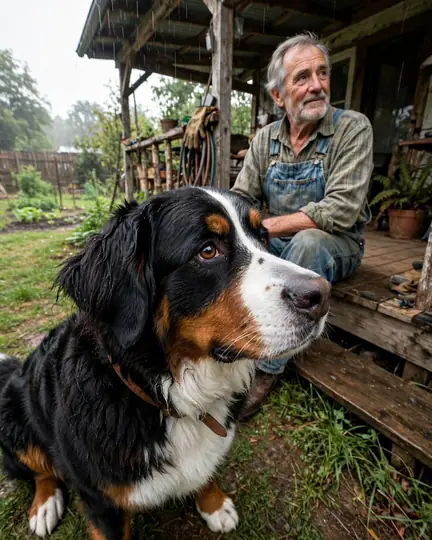
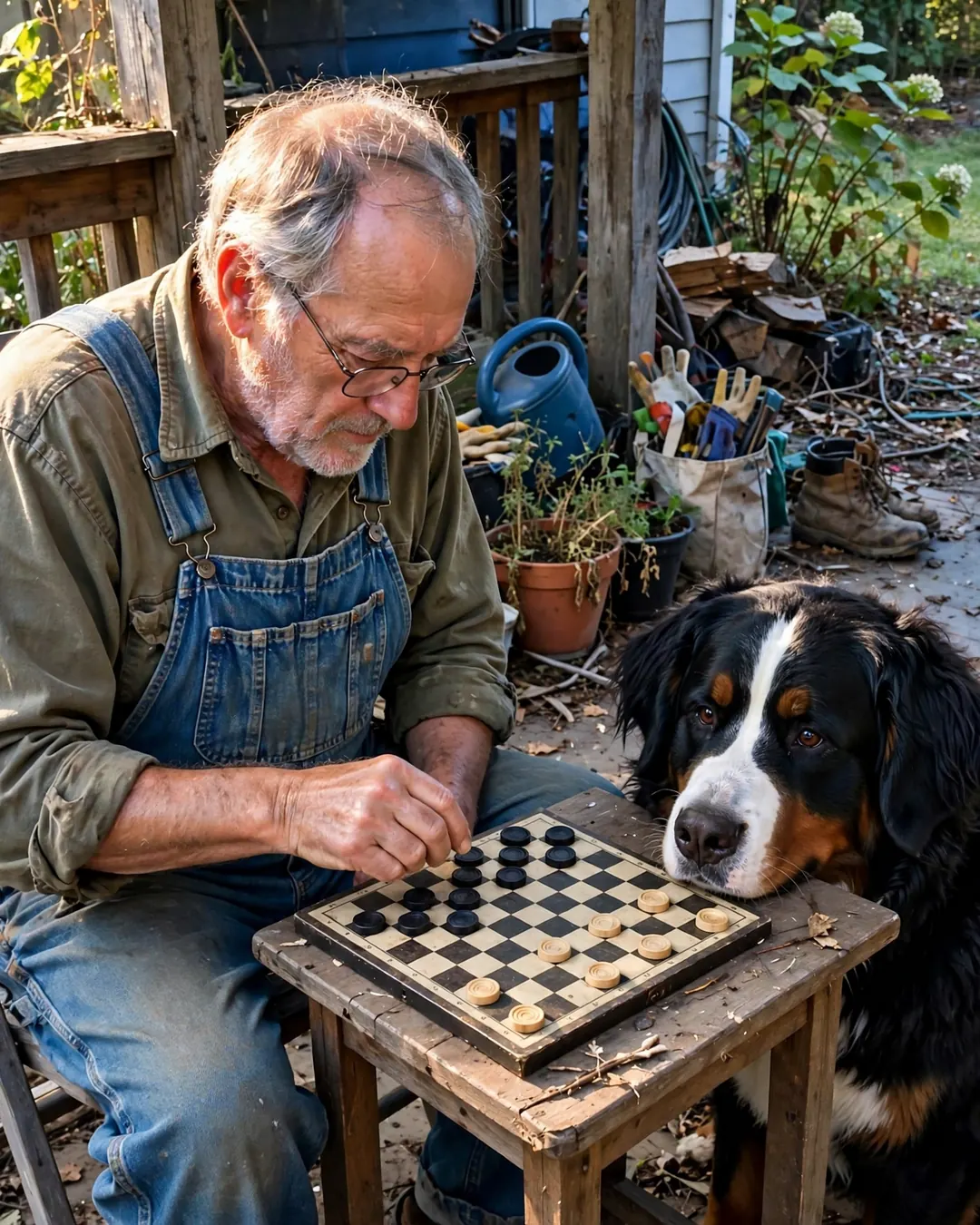
Walt has a tough decision to make. He leans over a little wooden table in the backyard, glasses low, two fingers resting on a checker as he weighs his next move. Across the board, Moose has planted himself with his chin almost on the table edge, watching the pieces with an expression that suggests he has strong opinions about strategy. The board is a well-worn classic with black and cream squares. Around them sit a blue watering can, pots of herbs, a bin of garden tools, muddy boots, and a stack of scrap wood near the porch.
Dogs are remarkably good at reading human attention. Many watch where their owners look and what their hands do, which is part of why they seem so interested in games, puzzles, and cooking. You can put that curiosity to good use with canine puzzle toys or simple games like hiding a treat under one of three cups. These activities give dogs mental exercise, which helps prevent boredom and the mischief that can come with it. For seniors, quiet tabletop games with a dog nearby can turn an ordinary afternoon into a relaxing ritual. Just keep small game pieces out of reach, since they can be a choking hazard if a dog decides to grab one.
Whether Moose is rooting for red or black is anyone's guess. Walt might even let him win a round. Either way, this backyard has turned into the friendliest tournament in the neighborhood.