Everyone Said Cats Can't Learn Tricks. Grandma Ruth Brought Treats.
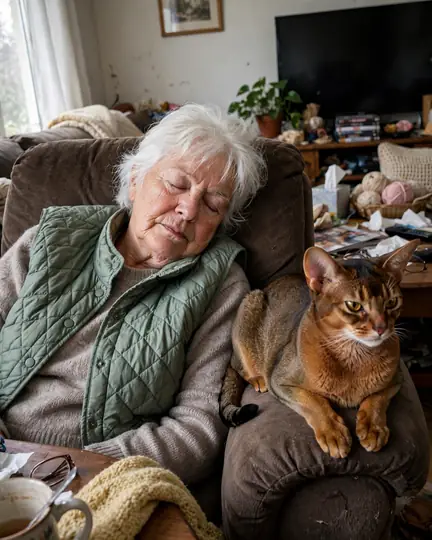
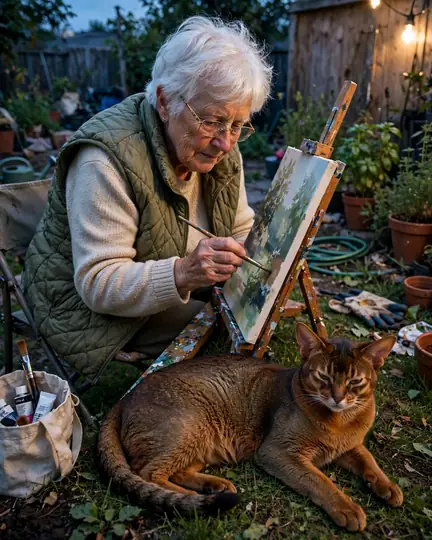
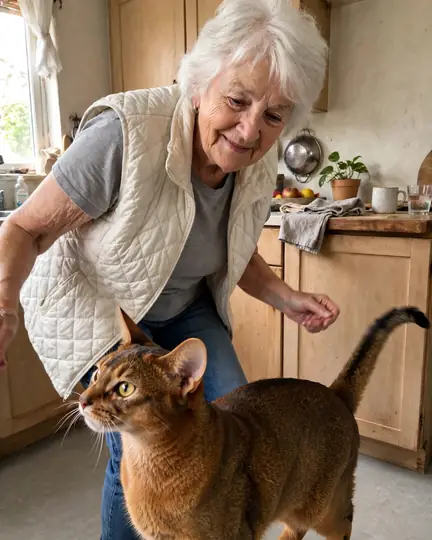
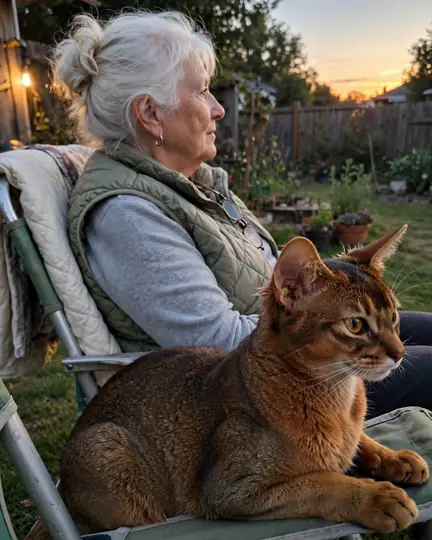
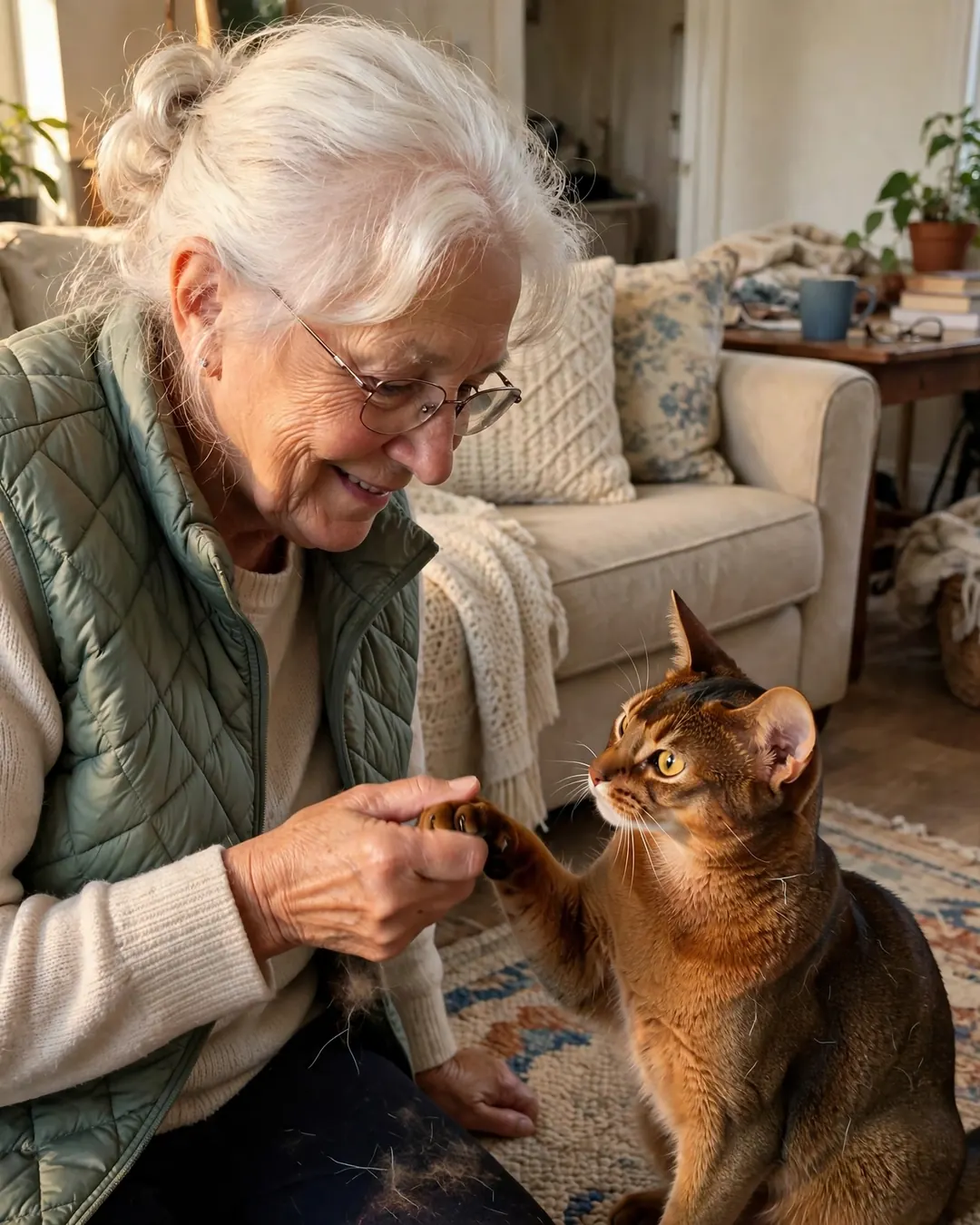
One paw, held up just so, resting in Grandma Ruth's fingertips. That is the whole lesson, and Saffron seems to have nailed it. The ruddy Abyssinian sits upright on the patterned living room rug, golden eyes fixed on Ruth's face, while she leans in from the couch with her glasses perched on her nose and a proud grin spreading under them. Her white hair is pinned up loosely, her green quilted vest sits over a cream sweater, and a crocheted throw spills off the beige sofa behind her. A few books and a mug wait on the side table, forgotten for now.
Cats can absolutely learn tricks, and short, upbeat sessions work best. Many owners use a tiny treat and a gentle touch: tap the paw, wait for the cat to lift it, then reward the instant it rises. Some people add a clicker or a consistent word so the cat links the sound with the moment it got things right. Keep sessions to a few minutes, stop while the cat is still interested, and never force a paw up. Clever, people-focused breeds like the Abyssinian often take to this kind of training because it turns into a game and a chance for attention, which many of them crave. Training time also doubles as gentle mental exercise for an indoor cat.
Whether Saffron does it again tomorrow is anyone's guess. Cats do things on their own schedule. But right now, paw in hand, the two of them look like they have just agreed on something important.