Nell Dropped the Needle on an Old Record. Bluebell Tilted Her Head.
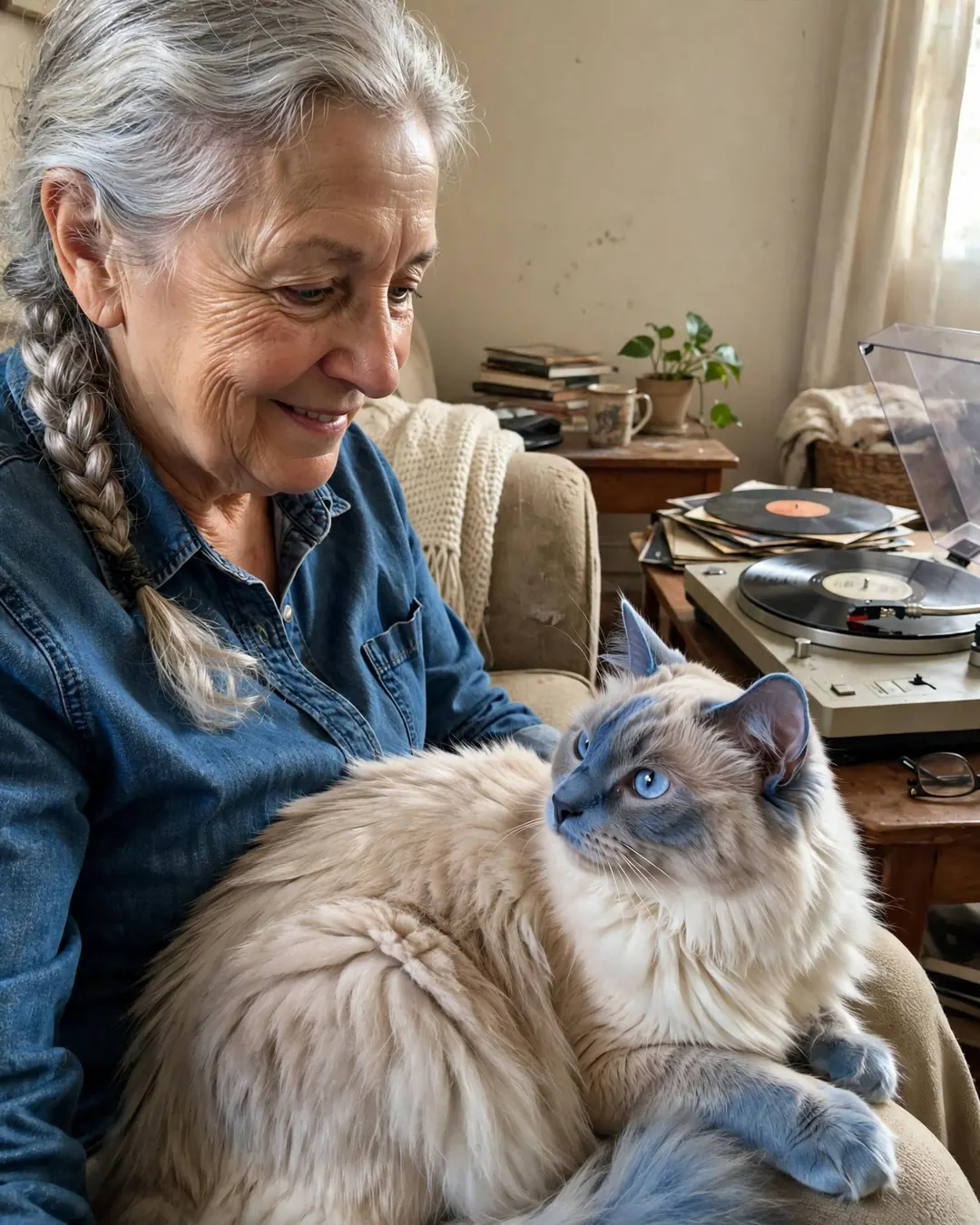
A record spins on a turntable at the edge of the frame, and Grandma Nell watches it with a faint, nostalgic smile. In her lap sits Bluebell, big and fluffy, head turned toward the music as though she is working out the tune. A stack of records and a few small plants share the side table, and soft light comes through pale curtains. It is the sort of living room where the music has been playing for decades. Dust floats in a shaft of light, and the cat's tail curls lazily over Nell's knee, keeping gentle time with a tune only she can hear.
Cats hear higher pitches than people do and can be sensitive to loud or sudden sounds. Soft, steady music is usually fine, and some cats seem to enjoy it as part of a routine. Keep the volume moderate and watch her body language: relaxed ears and slow blinks are good signs, while a flicking tail or leaving the room means she needs quiet. Keep the needle and cords out of reach of curious paws. Familiar sounds can help a cat feel at home, and your vet can help if she seems unusually noise-sensitive.
Some songs are old friends. Nell hums along and Bluebell listens in her own way. The record finishes, and neither of them seems in a hurry to flip it.