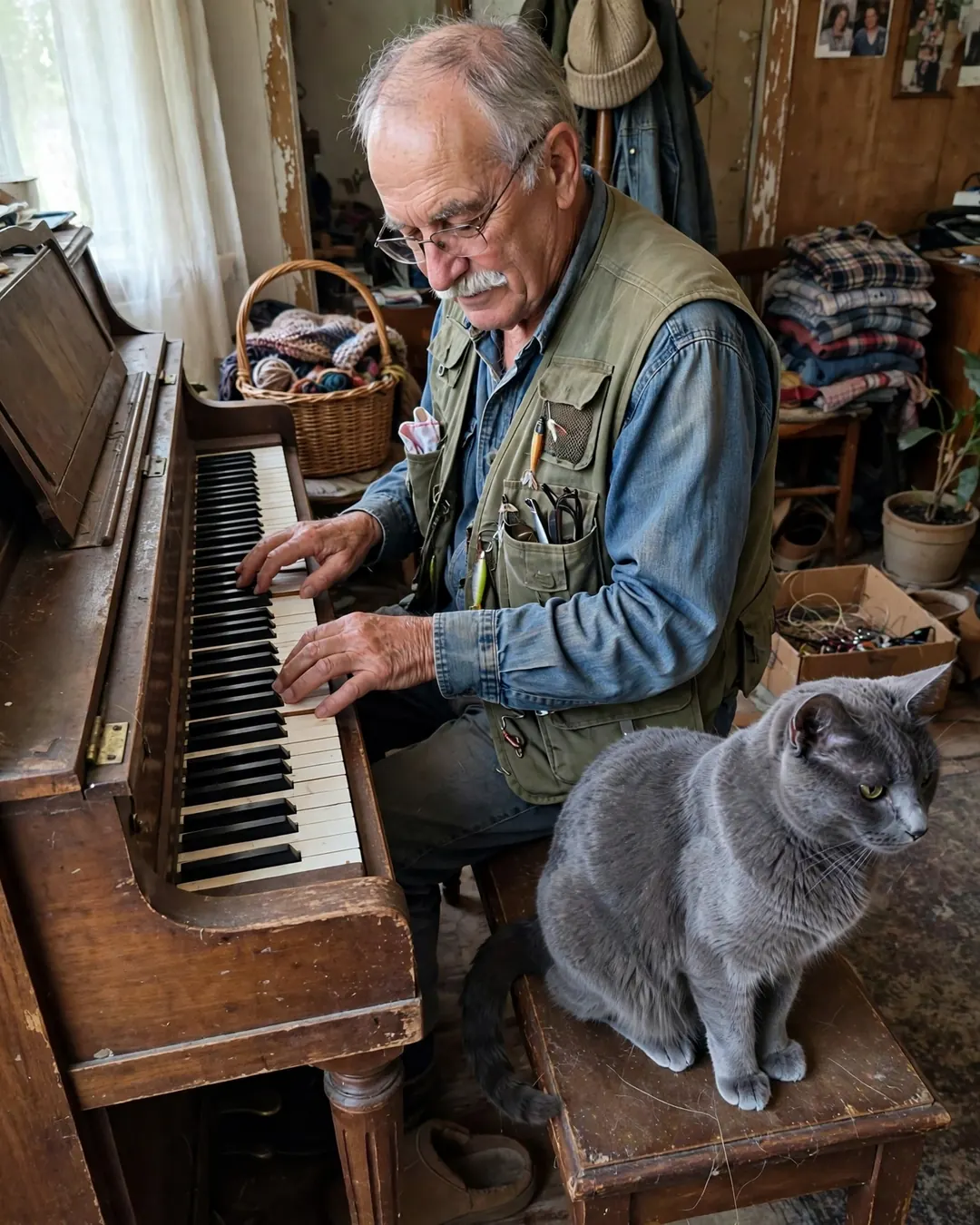
Earl Sat Down at the Old Piano and Started to Play. Pewter Pulled Up a Stool.
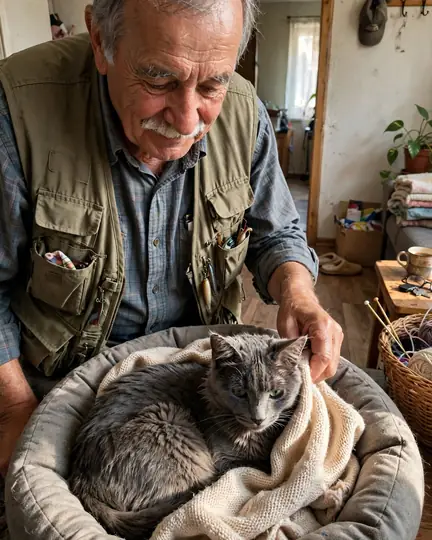
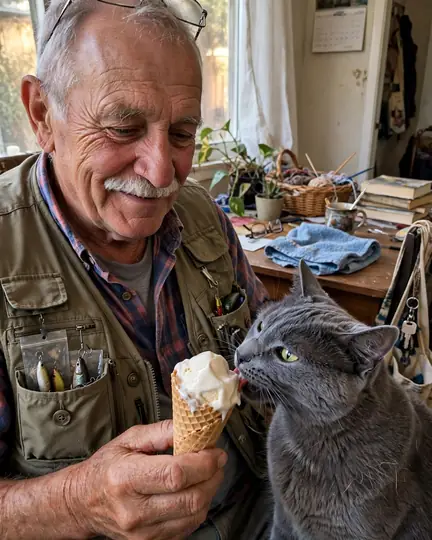
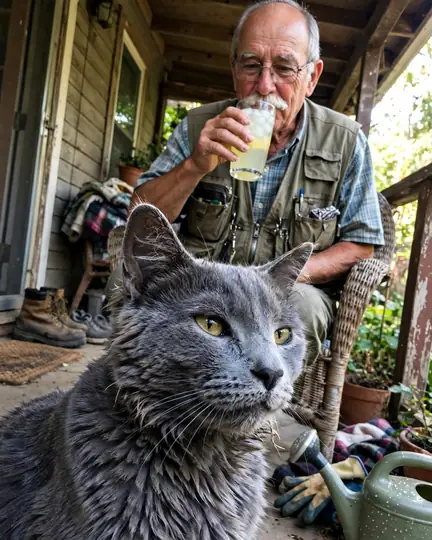
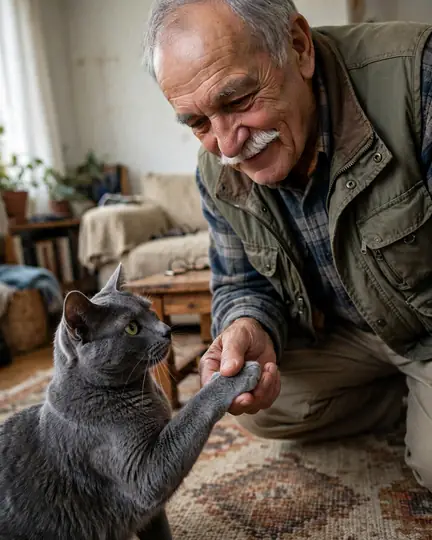
An old upright piano with chipped varnish stands against the wall, and Earl sits at its keys with his sleeves rolled and glasses low on his nose, fingers resting on the ivory. A basket of yarn sits on top of the piano, white curtains glow in the window, and a box of odds and ends and neatly folded flannel shirts fill the corners. Pewter has taken a seat on a small stool beside the piano bench, sitting up straight, gaze angled toward the keys, as though she is waiting for the next note.
Music can be a wonderful companion for people of any age, and playing an instrument is often a satisfying, calming hobby. Cats often react to music with interest, though they tend to prefer certain sounds. Soft, steady pieces are usually welcome, while sudden loud notes can startle a sensitive cat. If your cat enjoys listening, keep the volume moderate and let her decide whether to come closer or leave. Take care with piano lids and keys, which can pinch a curious paw, and keep the lid closed when no one is playing. Research suggests nothing too specific about cats and particular songs, so it is best to simply watch what your own cat does. Russian Blues are known for being sensitive and attentive, and they often settle close to a person in a calm moment. A quiet tune and a warm spot are all most cats need.
Earl does not play for anyone but himself. Pewter, however, has become his one loyal audience.