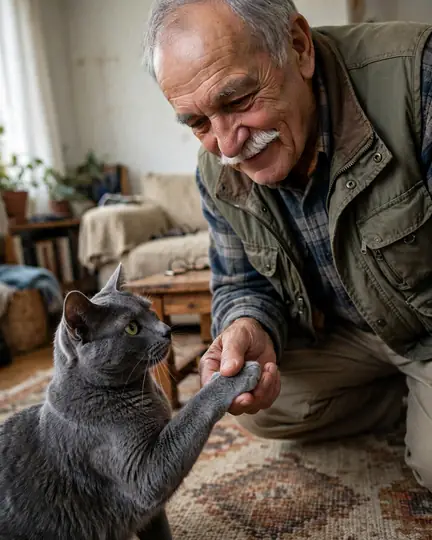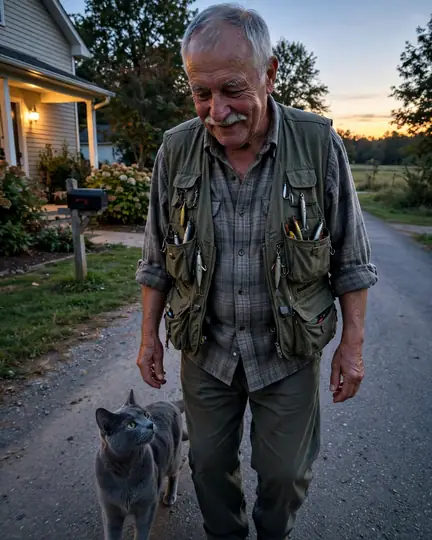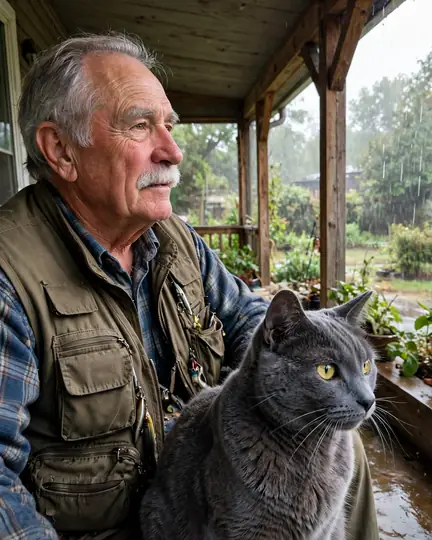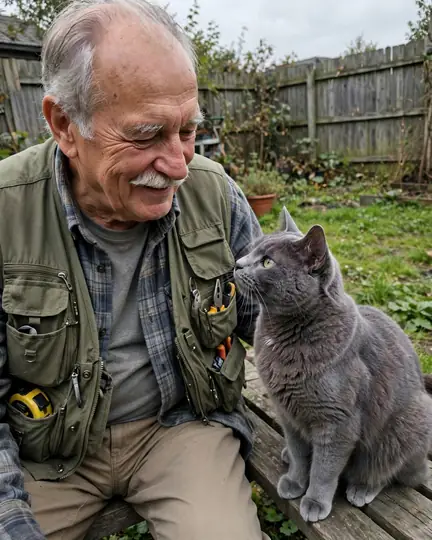
Earl Parked by the Field to Check the Crops. Pewter Had a Better Idea.
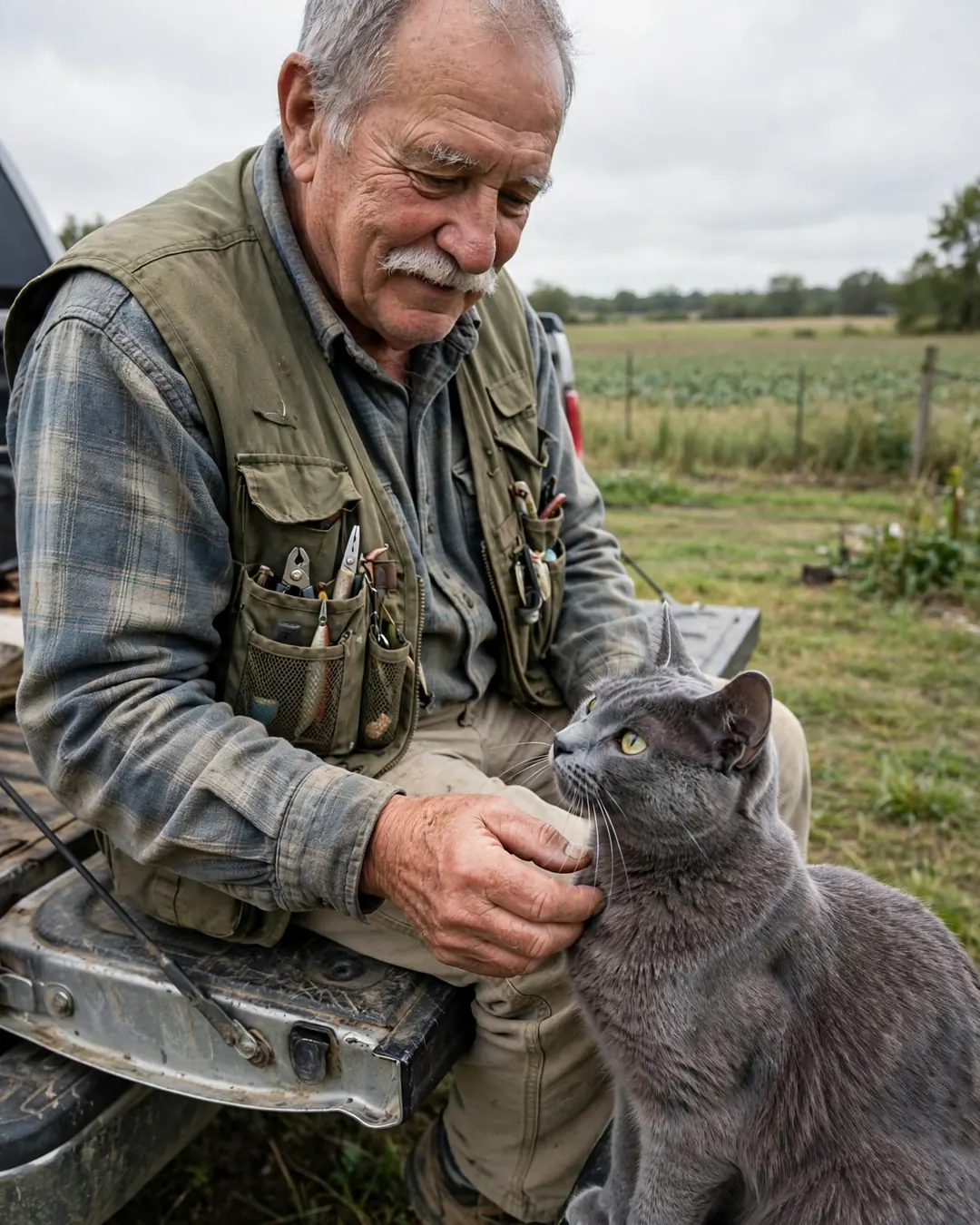
The sky is overcast and the rows of crops stretch out green and even toward a distant tree line. Earl has parked his old truck at the edge of the field and is sitting on the dented tailgate, his vest pockets bristling with pliers and tools. Pewter has hopped up beside him, and he is giving her the slow, careful chin scratch she loves, her eyes narrowing in pure contentment. A wooden fence post and tall grass frame the open country behind them.
Many cats adore chin and cheek scratches, and there is a reason for it. Cats have scent glands around their face, and rubbing those areas helps them mark familiar people and objects as part of their territory. That is why a cat may push into your hand or rub her face on your knees. Gentle strokes along the cheeks, chin, and the base of the ears are usually welcome, while belly rubs are often a different story. Watching body language helps: slow blinks, kneading, and leaning in mean she is enjoying it, while a twitching tail or flattened ears mean it is time for a break. Outdoors, it is safest to keep a cat on a harness and leash, especially near trucks and open fields.
Earl may have come out to check on the crops, but the most productive part of the afternoon is clearly happening right there on the tailgate.