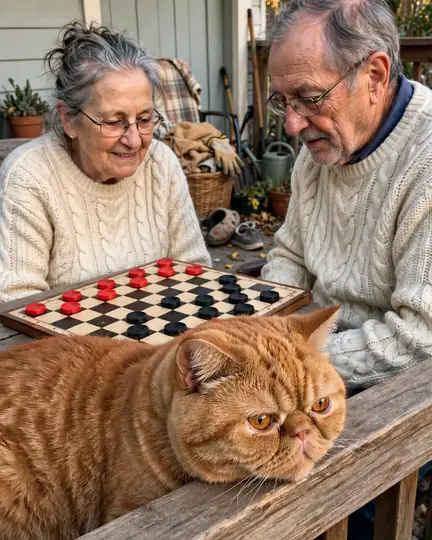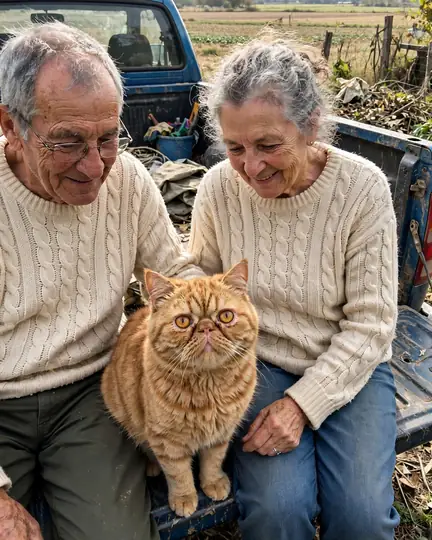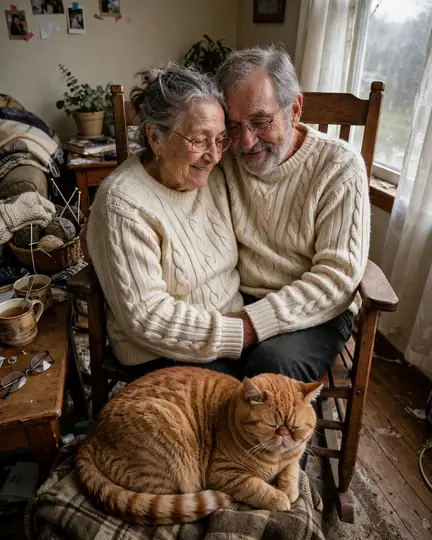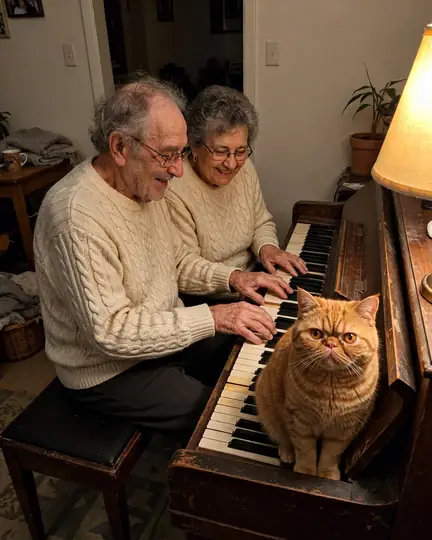
Harold Watered the Flowers. Bev Pulled the Weeds. Toffee Had His Own Job.
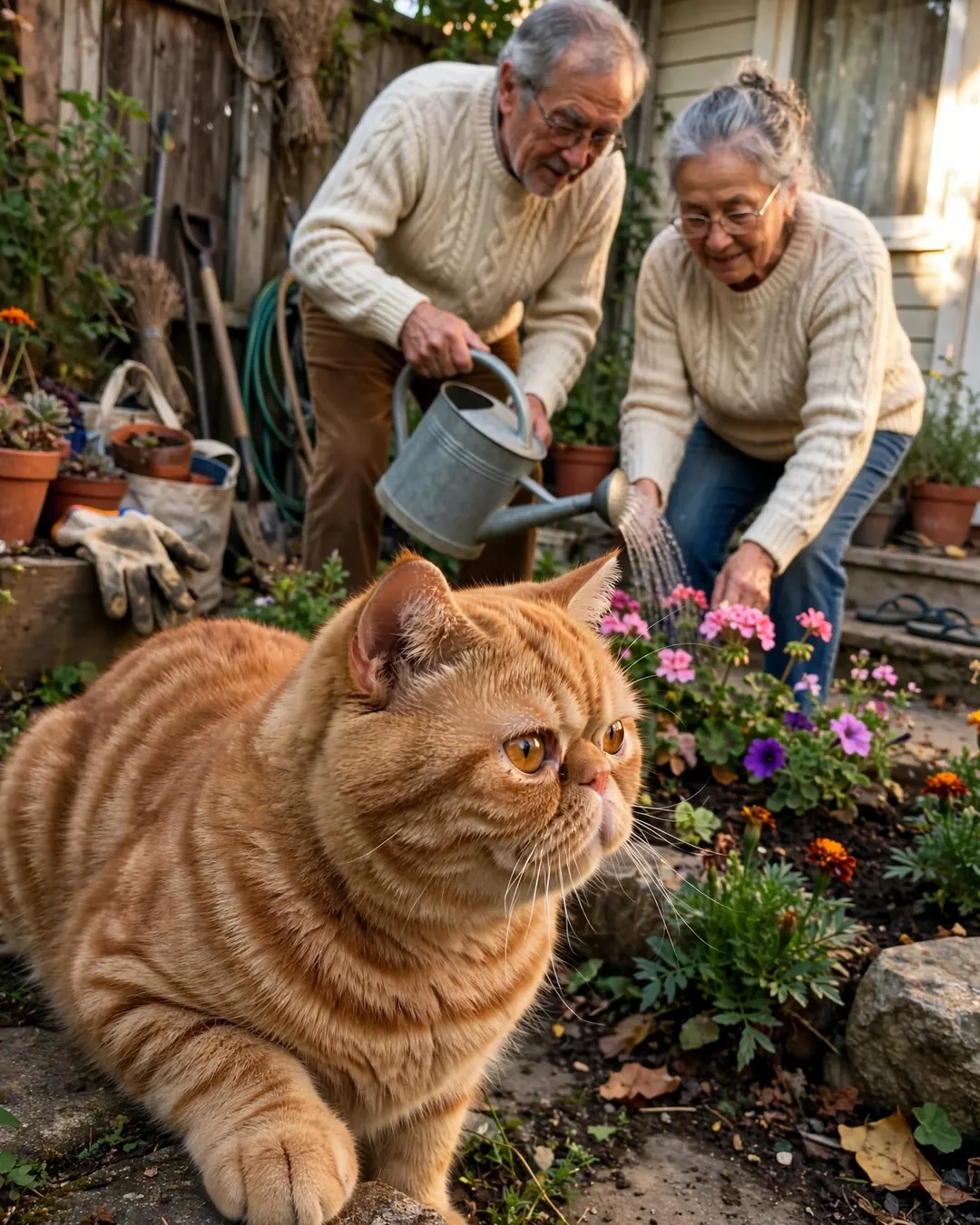
Water arcs from a gray metal watering can onto a bed of pink and purple blooms, and Harold tilts it carefully while Bev kneels close to pull a stray weed. Gardening gloves sit on a crate, clay pots crowd the fence line, and a coiled hose hangs on the shed wall in the soft evening light. Their cream sweaters have a few smudges of soil, which seems right for the job. Toffee has settled himself on the path just in front of the flower bed, stretched out like a sphinx with his front paws together, looking off to the side with a patient, slightly unimpressed air. He is close enough to supervise and far enough to stay dry.
Gardens and cats can coexist happily, but it helps to know which plants are safe. Lilies are among the most dangerous plants for cats, and even small exposures to the flowers, leaves or pollen can cause serious kidney problems, so many cat owners skip them entirely. Other common garden plants, such as foxglove, oleander and some bulbs, can also be toxic. Fertilizers, slug bait and pesticides are worth storing out of reach, too. If you are planning a new flower bed and share your home with a cat, a quick check of a pet-safe plant list is a good idea, and if you ever suspect your cat has chewed something harmful, call your vet right away.
The flowers get their drink, the couple gets their quiet hour, and Toffee gets a warm patch of path. Everyone leaves the garden happy.