By the Last Embers of the Fire, a Spotted Goat Rested Her Head on a Sleeping Siamese
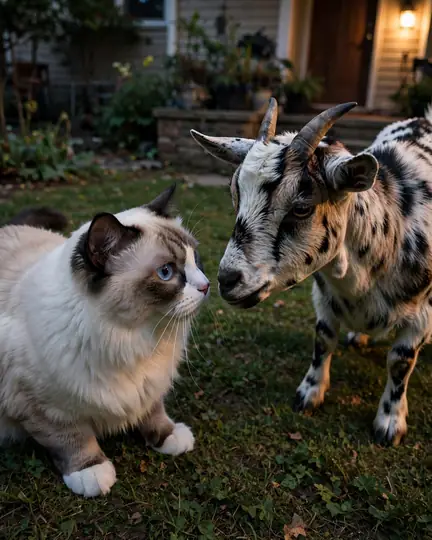
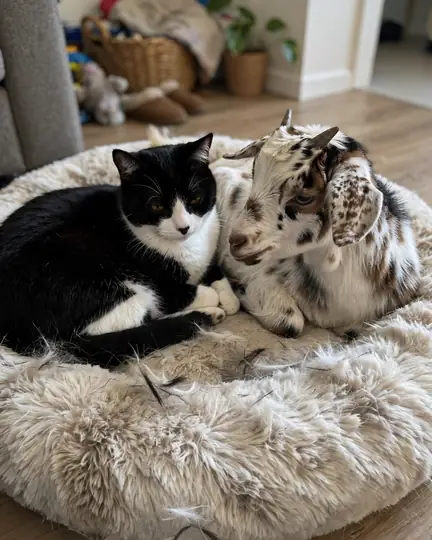
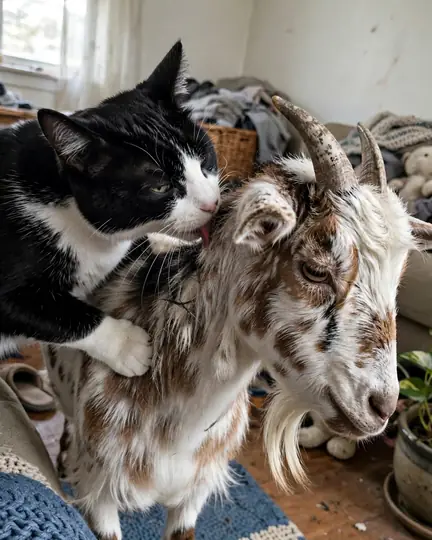
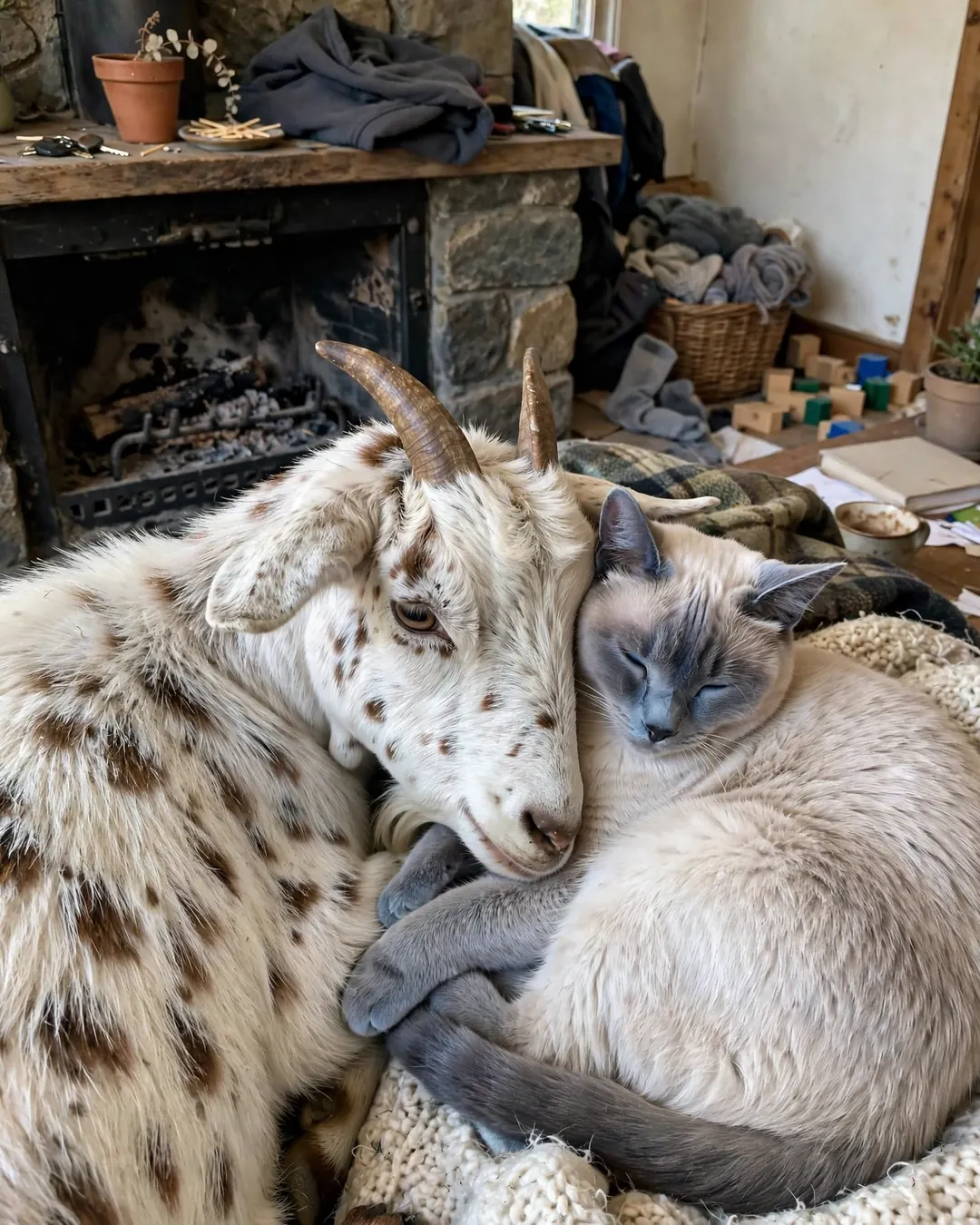
A stone fireplace holds the last glowing embers of the evening fire, and in front of it, on a chunky knit blanket, two friends have settled in for the night. A cream-colored goat with brown speckles and long curved horns lies with her head resting gently against a sleeping blue point Siamese. The cat is curled into a neat crescent, slate-grey paws tucked under her chin, eyes peacefully closed. The goat's own eyes are half open, sleepy and content. Around them, a basket of laundry, toy blocks, an open book, and a mantel with a potted plant and a tossed jacket complete the homey scene.
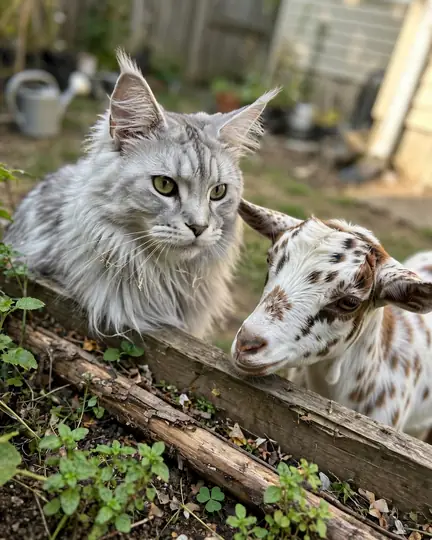
One of the most striking things about goats is their eyes. Goats have horizontal, rectangular pupils rather than round ones, a shape shared by many grazing animals. This shape is thought to give them a very wide panoramic view of their surroundings, which helps them spot predators approaching from almost any direction while their heads are down eating. Their eyes can even rotate to keep those pupils level with the ground when they lower their heads. Healthy goat eyes should be bright and clear. Cloudiness, discharge, or pale inner eyelids are reasons to call a livestock vet.
Right now, though, there are no predators to watch for, only a warm fire and a sleeping friend. Those wide-seeing eyes seem perfectly happy to drift closed.