The Cat Leaned In and the Old Tortoise Stretched His Neck Out
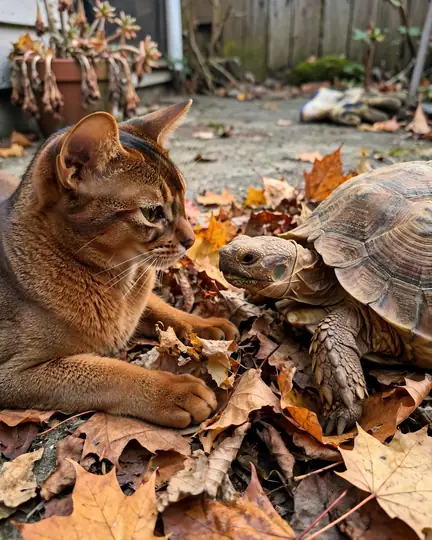
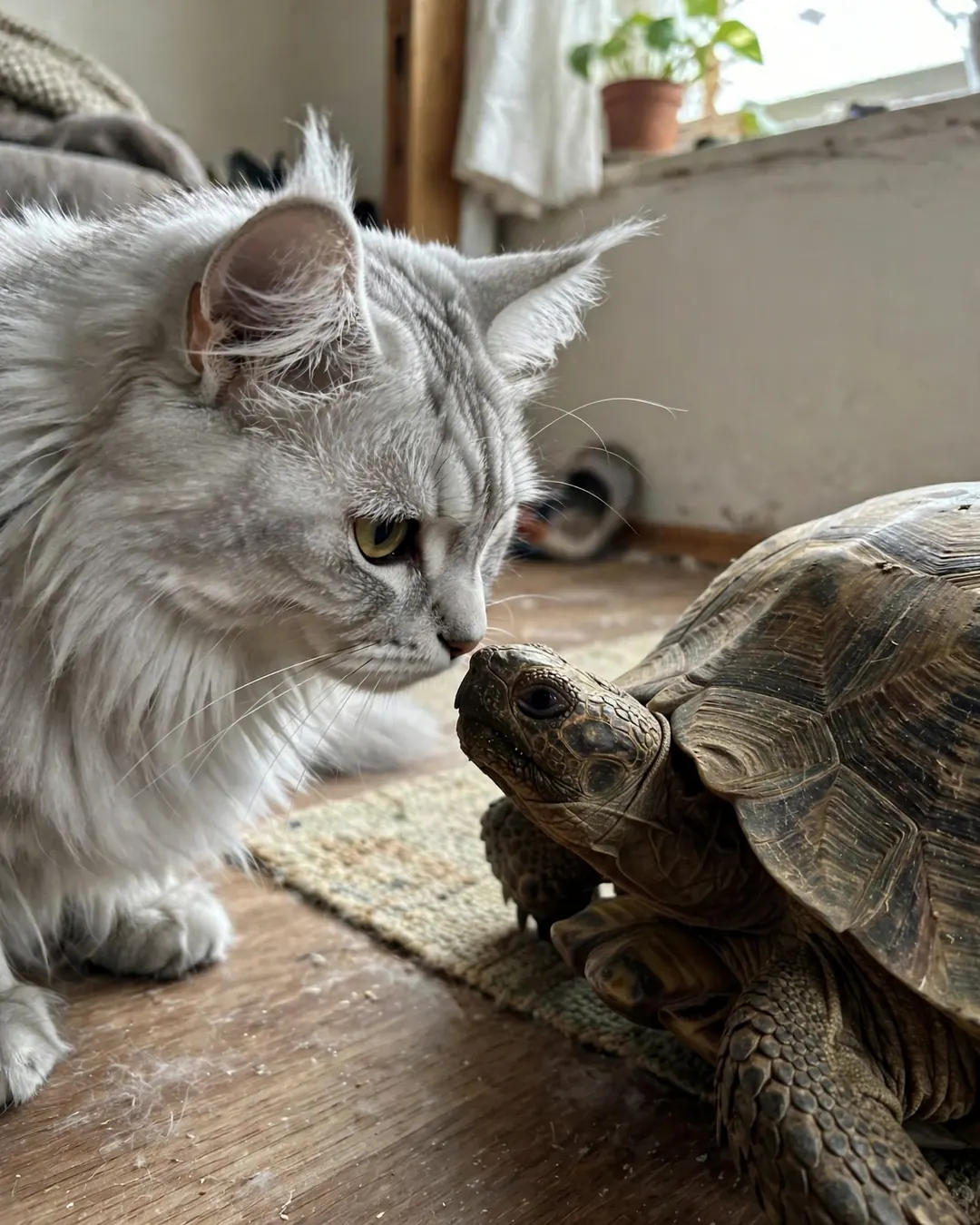
Two very different faces meet in the middle of the floor. A fluffy silver Norwegian Forest Cat leans in with her tufted ears forward and pale green eyes fixed, whiskers spread wide. Just in front of her, an old tortoise stretches his wrinkled neck out of his domed shell until his beak nearly touches her nose. Neither one blinks. Behind them, a sunny windowsill holds a potted plant, and a rag rug lies on the planks.
Let's call the tortoise Old Gus. Tortoises can live for many decades, so a pet tortoise may become a lifelong family member, and some outlive their owners. They move slowly because they are built that way, using energy carefully. Norwegian Forest Cats come from cold northern climates and have thick, water-resistant coats, as well as a calm, friendly nature. When a cat meets a tortoise, the safest approach is slow and supervised. A cat may be curious and paw at a shell, which is mostly harmless, but a tortoise can be easily stressed. A vet who knows reptiles can help with the care of a tortoise.
The cat holds very still, and so does Gus. A long moment passes. Then the tortoise gives the tiniest nod, which could mean anything, and the cat blinks slowly, which in cat language is a polite hello. It is a quiet greeting between two animals in no hurry at all. For them, a good introduction takes all the time in the world.