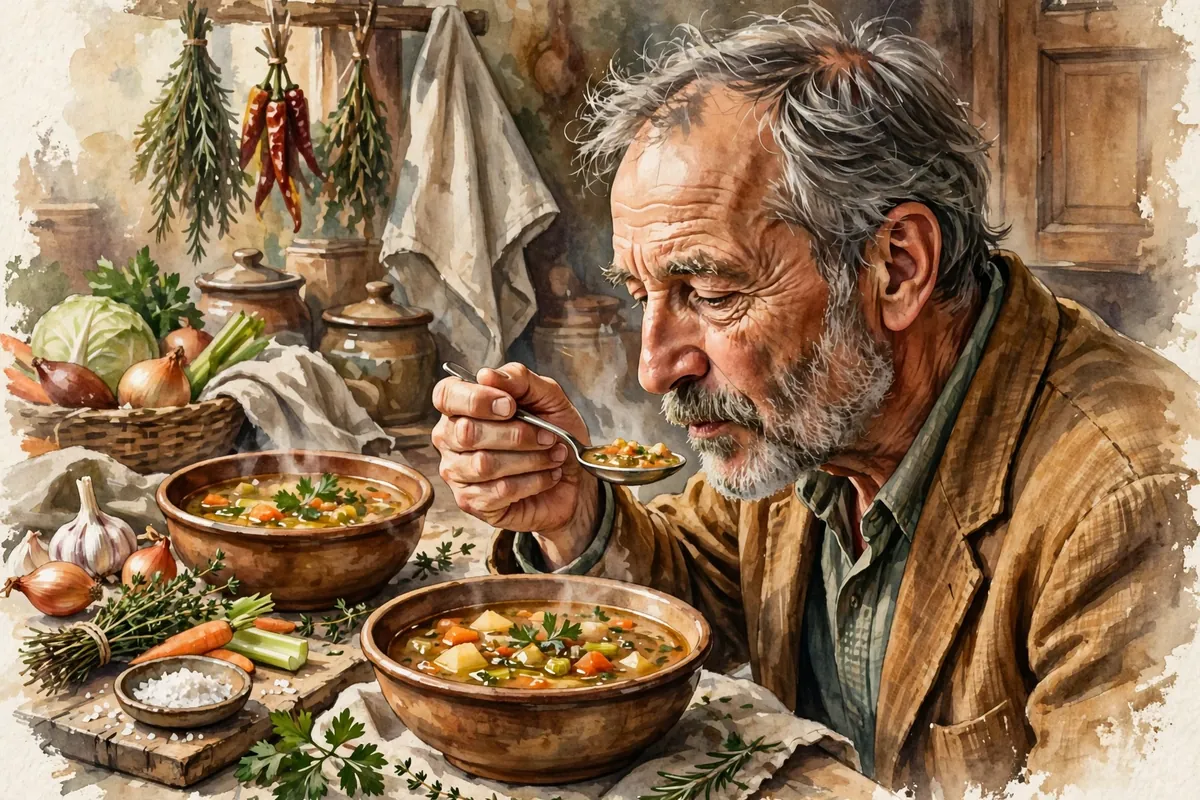
Plenty of people say the same thing as they get older: tomatoes don't taste like they used to, and that old family stew seems to need more salt. It's easy to blame the farm, the store, or the cook. But sometimes the change is happening on our side of the spoon.
The short answer is that our sense of taste really does fade with age. By around age 80, the number of taste buds can drop by up to half. At the same time, the sense of smell naturally declines in old age, and smell is a big part of what we think of as flavor. Together, those changes can make food seem less appealing.
Meet Your Taste Buds
The average human tongue has somewhere between 2,000 and 8,000 taste buds. Each one is a small cluster of taste receptor cells. Most sit on the tongue, but taste receptors are also found on the soft palate, the upper esophagus, the cheeks, and the epiglottis.
Taste buds don't last long. The average one is estimated to live about 10 days before it's replaced. They help us detect five basic tastes: sweet, salty, sour, bitter, and savory, also known as umami.
You may remember a tongue map from school, with sweet on the tip and bitter at the back. That's a popular myth. In reality, each of these tastes can be detected by any area of the tongue.
Flavor Is a Team Effort
What we call taste is really a blend of senses. The basic tastes from the tongue are only part of the story. Flavor also depends on smell, texture, temperature, and sensations like the cool of mint or the heat of chili peppers.
That's why smell matters so much as we age. Scientists even have a name for the natural decline in the sense of smell in old age: presbyosmia. When the nose picks up less, food can seem flatter, even if the tongue is still doing its job.
Some people lose their sense of smell entirely, a condition called anosmia. In the United States, about 3 percent of people over age 40 are affected.
The Medicine Cabinet Connection
Age isn't the only factor. Medications have been linked to roughly 22 to 28 percent of all cases of dysgeusia, the medical term for a distorted or altered sense of taste. Older adults are often on several medications at once, which puts them at higher risk for taste changes.
One common culprit is dry mouth. Many drugs can reduce the flow of saliva, and less saliva can lead to taste problems. Since food has to dissolve in saliva to reach the taste receptors, a dry mouth can make a real difference.
Why It Matters at the Table
Fading taste isn't just a matter of enjoyment. When food becomes less appealing, people may eat less, and nutrition can suffer. People with an altered sense of taste are also advised to be careful about piling on extra salt and sugar to make up for it.
If you notice your sense of taste or smell changing, especially suddenly, talk to your doctor. It can help to mention any medications you take, since those may be part of the picture.
Our tastes shift in other ways over a lifetime, too. Children tend to enjoy sour flavors more than adults do, and sour candy is a common treat. So if your palate has changed over the years, you're in good company. Every stage of life seems to come with its own favorite flavors.